After rebuking his audience for their lack of spiritual growth, the Hebrew writer told them they needed to leave the elementary teachings – those things that made up the foundation of their faith – and press on to maturity (Hebrews 6:1). Included in this foundation was the “instruction about washings” or the “doctrine of baptisms” (Hebrews 6:2).
Commentators are divided as to what the writer meant by this phrase. Many believe the washings or baptisms refer to the ceremonial washings under the Old Law. The problem with this idea is that the text says the elementary teaching they were to leave, or build upon, was “about the Christ” (Hebrews 6:1). Therefore, it would stand to reason that the washings or baptisms under consideration related to things we read about in the New Testament.
We can see from Paul’s visit to Ephesus that having an understanding about different baptisms was certainly part of the foundation of the religion of Christ. After finding some disciples, Paul asked them, “Into what then were you baptized?” They answered, “Into John’s baptism” (Acts 19:3). In the next verse Paul explained the purpose of John’s baptism and his work in preparing the way for Jesus. Luke then recorded, “When they heard this, they were baptized in the name of the Lord Jesus” (Acts 19:5).
The immediacy of their second baptism indicates the fundamental importance of understanding the truth about various baptisms. There are several baptisms mentioned in the New Testament. Yet Paul said there is “one baptism” (Ephesians 4:5), meaning that only one of the baptisms talked about is good and necessary for us today. So let us notice the various baptisms mentioned in the New Testament.
The Baptism of John – The disciples Paul found in Ephesus had been baptized “into John’s baptism” (Acts 19:3). John’s purpose was to prepare the way for Christ (Isaiah 40:3; Malachi 3:1). His baptism was one of repentance (Acts 19:4), meaning that those who would be baptized by John were to repent of their sins and look for the imminent coming of the Lamb of God. After Christ came, John’s baptism was no longer of any use.
The Baptism of the Holy Spirit – John spoke of the coming Christ and told the people that He would baptize “with the Holy Spirit” (Matthew 3:11). There are two occasions of Holy Spirit baptism in the New Testament. Jesus told the apostles that they would be “baptized with the Holy Spirit not many days from now” (Acts 1:5). This happened on the day of Pentecost when the Holy Spirit came upon them (Acts 2:4). Later at the house of Cornelius “the Holy Spirit fell upon all those who were listening to the message” (Acts 10:44). Peter said that the fact that they “received the Holy Spirit just as [the apostles] did” was proof of God’s approval of Gentiles being part of His kingdom (Acts 10:47). These are the only two instances of Holy Spirit baptism we see in the New Testament. We have no indication in Scripture that this has ever happened since or will ever happen again.
The Baptism of Fire – In addition to baptizing with the Holy Spirit, John also said that Jesus would baptize with “fire” (Matthew 3:11). Some believe these refer to the same thing (baptism of the Holy Spirit and fire), but neither the apostles nor Cornelius’ household were baptized with fire. John explained what the baptism of fire was in the next verse: “His winnowing fork is in His hand, and He will thoroughly clear His threshing floor; and He will gather His wheat into the barn, but He will burn up the chaff with unquenchable fire” (Matthew 3:12). The baptism of fire is judgment against the wicked. This was a reminder that Jesus is not just the Savior, He is also the Judge who will punish those who do not follow Him (2 Corinthians 5:10; 2 Thessalonians 1:7-8).
Baptism for the Dead – In teaching the Corinthians about the resurrection, Paul mentioned baptism for the dead: “Otherwise, what will those do who are baptized for the dead? If the dead are not raised at all, why then are they baptized for them?” (1 Corinthians 15:29). Some in Corinth were teaching that there was no resurrection. Paul used this example of baptism for the dead to show their inconsistency. Paul was not endorsing this practice, he was just using it as an example. There is really no other information of this baptism in the New Testament, so we cannot go to the word of God to show what it is. It seems that some were being baptized for the benefit of those who were dead. But the Scriptures teach that we are each individually accountable before God (Ezekiel 18:20; 2 Corinthians 5:10). Our actions cannot save anyone – living or dead – who has refused to submit his life to God.
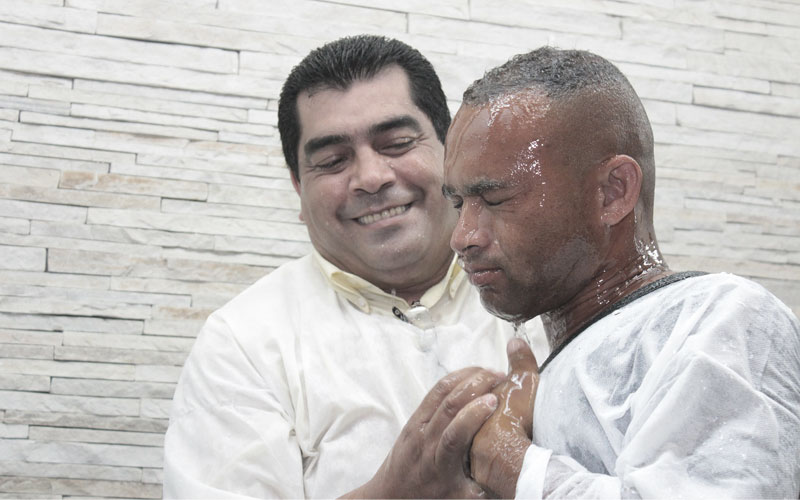
Baptism in the Name of Jesus Christ – When Paul found the disciples in Ephesus who had been baptized “into John’s baptism,” he taught them the truth. They were then “baptized in the name of the Lord Jesus” (Acts 19:3, 5). After the Holy Spirit came upon Cornelius and those of his household, Peter “ordered them to be baptized in the name of Jesus Christ” (Acts 10:48). From just these two passages, we can see that this baptism was commanded and that it is an urgent command to obey. Other passages teach that this baptism is an immersion or burial (Romans 6:4) in water (Acts 8:36, 38) for the purpose of obtaining the forgiveness of sins (Acts 2:38; 22:16). This baptism saves us (1 Peter 3:21) because it puts us into Christ (Romans 6:3; Galatians 3:27) where all spiritual blessings are found (Ephesians 1:3).
Baptism in the name of Jesus is the “one baptism” that Paul mentioned (Ephesians 4:5). It is essential that we understand the truth about baptism. John’s baptism is no longer effective. We should not wait to be baptized with the Holy Spirit. If you have not been baptized into Christ, please consider your condition in light of what the Scriptures teach about baptism. This is part of the foundation of the Christian life. If you have not been baptized in the name of Jesus, you need to be. If you have, you must do as the Hebrew writer said and “press on to maturity” (Hebrews 6:1).