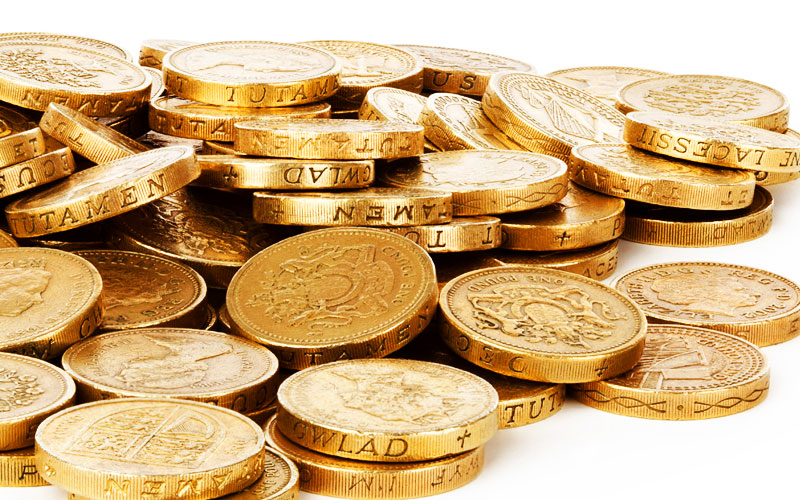
When the economy is weak and the future is uncertain, gold is a wise investment. You have probably heard something to this effect in advertisements from companies trying to sell you gold. We have seen the price of gold skyrocket over the past few years. With conditions the way they are, that trend may very well continue. If so, then one buying gold could simply be acting as a good steward of the blessings he has received. But we must be careful that we do not cross the line between stewardship and trusting in gold or anything else. Notice what Job said about this:
“If I have put my confidence in gold, and called fine gold my trust, if I have gloated because my wealth was great, and because my hand had secured so much; if I have looked at the sun when it shone or the moon going in splendor, and my heart became secretly enticed, and my hand threw a kiss from my mouth, that too would have been an iniquity calling for judgment, for I would have denied God above” (Job 31:24-28).
The question of whether or not gold is a wise investment is better answered elsewhere and by someone who is more qualified than I am to give financial advice. But I do know what the Scriptures teach about gold, riches, and wealth and how we are to perceive them.
Riches are uncertain – Whatever wealth or material possessions we may have are never guaranteed for the future. Job understood this well as he went from being “the greatest of all the men of the east” (Job 1:3) to losing all of his possessions in a short period of time (Job 1:13-19). Timothy was to warn the rich to not “fix their hope on the uncertainty of riches” (1 Timothy 6:17) since these riches could be destroyed or taken away (Matthew 6:19). This does not mean we should not try to make wise investments as good stewards; but it does mean that we are foolish to place our confidence and trust in something that is so uncertain as wealth, rather than in God where it rightly belongs.
Riches are temporary – While riches may be lost and possessions lose their value, that will not necessarily happen to all forms of wealth we might have. However, even if we retain whatever wealth we have until we die, the material things we possess belong to this world which is “passing away” (1 John 2:17). If one “gains the whole world and forfeits his soul” (Matthew 16:26), he has fixed his hope upon things that will one day be destroyed (2 Peter 3:10).
All blessings come from God – James wrote, “Every good thing given and every perfect gift is from above, coming down from the Father of lights” (James 1:17). Job recognized this. After he lost everything, he said, “The Lord gave and the Lord has taken away. Blessed be the name of the Lord” (Job 1:21). Therefore, let us be thankful to God for our blessings, rather than allow those blessings to choke out the word and leave us unfruitful (Luke 8:14).
We must put our trust in the Lord – Job said that by putting trust in gold, he was denying God (Job 31:28). We must choose between the two. Jesus said, “You cannot serve God and wealth” (Matthew 6:24). Rather than fixing our “hope on the uncertainty of riches,” we are to place our hope and trust “on God” (1 Timothy 6:17). He is the giver of all good things and with Him “there is no variation or shifting shadow” (James 1:17).
The best investment you could make is to “store up for yourselves treasures in heaven, where neither moth nor rust destroys, and where thieves do not break in or steal; for where your treasure is, there your heart will be also” (Matthew 6:20-21).