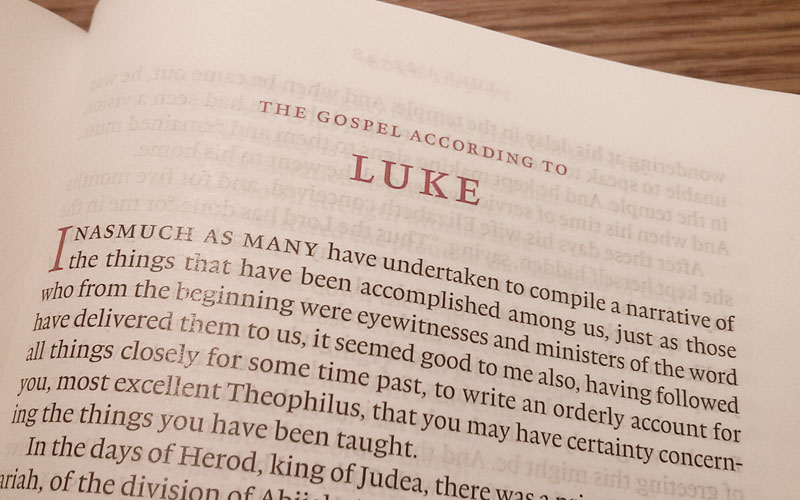
When Luke wrote his gospel account, he addressed it to an individual named Theophilus. If we look at the writer’s introduction to the book, we will see some important lessons that we can apply to our efforts to share the gospel with others today.
“Inasmuch as many have undertaken to compile an account of the things accomplished among us, just as they were handed down to us by those who from the beginning were eyewitnesses and servants of the word, it seemed fitting for me as well, having investigated everything carefully from the beginning, to write it out for you in consecutive order, most excellent Theophilus; so that you may know the exact truth about the things you have been taught” (Luke 1:1-4).
Let us consider some points about Luke sharing the gospel with Theophilus.
First, do not use the efforts of others as an excuse for you not to teach. Luke acknowledged that “many” had been writing about the events that were recorded in his gospel (Luke 1:1). However, that did not mean that his writing to Theophilus was unnecessary. Hopefully, the Christians around us and the churches in which we assemble are busy spreading the gospel (Acts 8:4; 1 Thessalonians 1:8). No matter how committed they are to these efforts, we must each work as individuals to teach others (1 Peter 3:15). We each have opportunities and connections that are unique to us. If we excuse ourselves from teaching because of the teaching efforts of others, many of those that we could personally reach will go untaught.
Second, remember that the standard is what was handed down through the apostles. Luke said the record he presented to Theophilus was in harmony with what was “handed down” to the apostles – the “eyewitnesses and servants of the word” (Luke 1:2; cf. 1 John 1:1-3; 2 Corinthians 4:5). The basis of the gospel record is not the word of just anyone who had knowledge of Jesus, but those who were His chosen ambassadors (2 Corinthians 5:20). Jesus told His apostles, “You shall be My witnesses” (Acts 1:8). While others might have wrongly said that Jesus was “John the Baptist…Elijah…Jeremiah, or one of the prophets” (Matthew 16:14), it mattered what the apostles said – that He was “the Christ, the Son of the living God” (Matthew 16:15-16). Jesus told His apostles that the Holy Spirit would “guide [them] into all the truth” (John 16:13). Their words would hold the same weight as the words of Christ (1 Corinthians 14:37; 2 Peter 3:2). Therefore, we must “retain the standard of sound words” which the apostles taught (2 Timothy 1:13).
Third, investigate everything carefully in order to teach. Luke told Theophilus that it was “fitting” for him to write about this because he had “investigated everything carefully” (Luke 1:3). Those who teach about spiritual matters have a divine obligation to “speak as the oracles of God” (1 Peter 4:11, NKJV). Some want “to be teachers of the Law, even though they do not understand either what they are saying or the matters about which they make confident assertions” (1 Timothy 1:7). We must not be that way. Timothy was told, “Pay close attention to yourself and to your teaching…for as you do this you will ensure salvation both for yourself and for those who hear you” (1 Timothy 4:16). We must “be diligent” to be sure we are “accurately handling the word of truth” (2 Timothy 2:15).
Fourth, teach in an order that will be beneficial. When Luke wrote his gospel account to Theophilus, he wrote it “in consecutive order” (Luke 1:3). This was so it would be understandable. The point to take from this is that we must teach in an order that will be beneficial to the hearer/reader. Some passages are more difficult to understand (2 Peter 3:16). The Scriptures contain teachings that are necessary for new Christians (1 Peter 2:2) and mature Christians (Hebrews 5:12-14). When Paul taught the Philippian jailer, the man went from knowing little or nothing about Jesus to being baptized “that very hour of the night” (Acts 16:33). Paul would not have had time for a lengthy discussion about the genealogies in Genesis or the cleanliness laws of Leviticus. Passages like those are important (Romans 15:4; 2 Timothy 3:16-17). But we need to be sure people first understand “the elementary principles of the oracles of God” (Hebrews 5:12) before we “press on to maturity” and build upon the foundation of “the elementary teaching about the Christ” (Hebrews 6:1).
Fifth, teach in such a way that others can know the exact truth. Luke wrote so that Theophilus could “know the exact truth” (Luke 1:4). Truth is not subjective. Jesus said He came to “testify to the truth” (John 18:37) – there is just one truth, not many. That truth is found in God’s word (John 17:17; Psalm 119:160). The word of God is understandable (Ephesians 3:3-4; 5:17); therefore, we must “use great plainness of speech” (2 Corinthians 3:12, KJV) so that others can know what is right.
It is important that Christians work – collectively (through the local church) and as individuals – to spread the gospel. We would do well to remember Luke’s words to Theophilus so that we might be active and effective in teaching others.











Andy, very good thoughts. I always enjoy your articles and appreciate your good way of thinking. Not everyone can do it so well and I always enjoy reading what you write. Sharing the gospel is so vital in our day and time!
Thanks, Wayne. I always appreciate your encouraging comments.