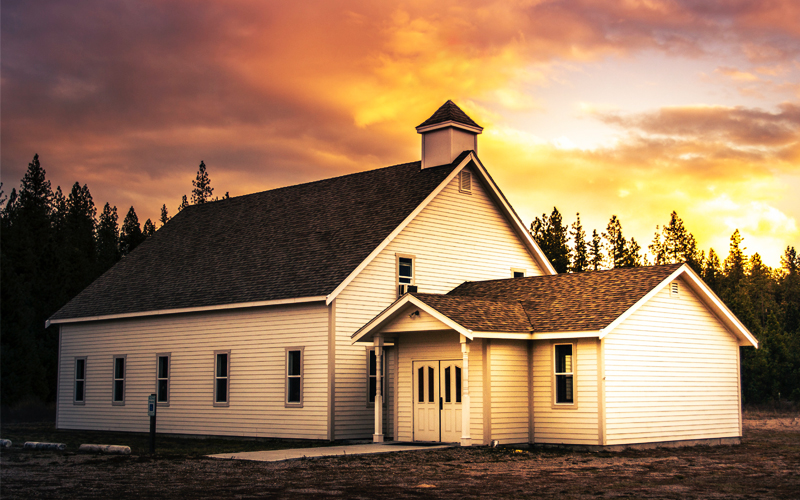
In this lesson,* we are going to be looking ahead into the future and trying to determine how our local congregation fits into it. My purpose is not to make any predictions or prophecies. Like Amos would say, “I am not a prophet, nor am I the son of a prophet” (Amos 7:14). Instead, the purpose for this lesson is to examine the direction we are going so we can plan, prepare, and adapt as best we can.
The future has always been uncertain, yet it seems as though there is even more uncertainty now than ever. There are a few reasons for this.
- Post-pandemic – The COVID-19 pandemic was possibly the most significant disruption we will experience in our lifetimes.
- Digital/virtual world – With the rise of the internet and social media, we are experiencing “the biggest communication shift in the last five hundred years.”
- Increasingly godless society – This means that we have less common ground with those around us and more hostility toward those who claim to be Christians.
As we go through this lesson, we are going to break it up into three parts:
- Conditions today – the current state of our society and the religious landscape in which we live
- General principles – some things that will always be true about the future of the church
- Specific issues – some specific things affecting the church today and will continue to do so in the future
So let us begin our consideration of this question: Where will your church be in twenty years?
Conditions Today
Let me provide a disclaimer before we begin. As we notice some statistics about “churches” or “Christianity,” keep in mind that these terms are defined by the world, not necessarily how the New Testament defines them. That means that statistics like these are going to be recording a broader group than those with whom we would have fellowship. However, this information is still going to be helpful to us.
- Statistics regarding churches – Among Protestant churches, the number of church closures is now greater than the number of churches that are opening. In 2014, there were 4,000 churches that opened and 3,700 that closed. Five years later, the number of openings dropped to 3,000 and the number of closures jumped up to 4,500. Also, according to an article published earlier this year from The Globe and Mail, “church leaders” estimated 20-30% of their parishioners will not return after the pandemic.
- Statistics regarding online behavior – A report issued by Hootsuite found that people spend an average of 2.5 hours per day on social media and that 80% of the U.S. population are active users. Since the internet and social media have become such an integral part of people’s behavior, that is generally how people will find or learn about your congregation. According to that same report, 61% of people say that the main reason they use the internet is to find information.
- Statistics regarding society – There has been much talk about the rise of the “nones.” These are individuals who are atheist, agnostics, or their religion is “nothing in particular.” All together, they make up about a fourth of our country’s population. As more people adopt a worldview that is not in harmony with the Bible, it is expected that hostility toward “Christianity” will increase. As a result, 1 in 7 of those who claim to be Christians worldwide faced significant persecution in 2021. That same article explained that the number of martyrs – those killed for their faith – increased 24% in 2021.
These are the current conditions in which we find ourselves. So how do we approach this? First, let us notice some general principles. Afterward, we will get into some specific applications.
General Principles
To understand the future of the church, we first need to recognize the difference between the universal church and local churches. The Lord’s church (the universal church) will never be destroyed. Jesus said, “I will build My church; and the gates of Hades will not overpower it” (Matthew 16:18). In prophesying about the church, Daniel said, “In the days of those kings the God of heaven will set up a kingdom which will never be destroyed, and that kingdom will not be left for another people; it will crush and put an end to all these kingdoms, but it will itself endure forever” (Daniel 2:44).
Even if every living Christian dies and there are, therefore, no local churches, the Lord’s church would still have not been destroyed. Why not? The seed remains – the word of God (Luke 8:11); it endures forever (1 Peter 1:25). Peter wrote, “For you have been born again not of seed which is perishable but imperishable, that is, through the living and enduring word of God” (1 Peter 1:23). One must be born again (baptized) in order to be part of the kingdom (John 3:3, 5), which is the church (Matthew 16:18-19). When the gospel was preached on the day of Pentecost, “those who had received the word were baptized” (Acts 2:41) and were added by God to the church (Acts 2:47). Because the seed remains, the prospect of people being added to the church remains.
However, local churches are also important (this is what we are focusing on in this lesson). Paul described the church as a self-edifying body: “From whom the whole body, being fitted and held together by what every joint supplies, according to the proper working of each individual part, causes the growth of the body for the building up of itself in love” (Ephesians 4:16).
As local churches work to build themselves up, they are in a constant state of transition. Paul told Timothy of the importance of training others to help in this transition: “The things which you have heard from me in the presence of many witnesses, entrust these to faithful men who will be able to teach others also” (2 Timothy 2:2).
Local churches do not remain static. The New Testament records a very concise history of the church in Ephesus. It went from infancy (Acts 19:1-7) to maturity with elders overseeing the congregation (Acts 20:17). Afterward the church went through turmoil (Acts 20:29-30) and eventually apostasy (Revelation 2:4). Even if change is slow, every congregation is in transition. Think of where your local church was twenty years ago compared to where it is now. That may give you some idea of just how much can change in the next twenty years. The reality is that every member will someday be a former member – they will either pass away (2 Timothy 4:6), move away (Acts 18:1-2; 1 Corinthians 16:19), or fall away (2 Timothy 4:10). But that does not mean that every congregation will be in a state of decline. Churches can grow in spite of this and must work toward doing so.
However, it is important that we understand that the future of our local churches is not completely in our control. Man has free will (cf. Joshua 24:15; 2 Corinthians 5:11). We cannot force people to convert or remain faithful. But we must do what we can. Paul said, “I planted, Apollos watered, but God was causing the growth” (1 Corinthians 3:6). We must do the work God has given us to do.
Understanding that each local church is in a constant state of transition, who will be part of these congregations in the future? There are five groups that will (potentially) make up the future of each local church.
- Children – This is what we typically think of when we talk about the future of the church – children growing up in the church. One of the qualifications of elders, and the goal of all Christian parents, is to have “faithful children” (Titus 1:6, KJV).
- Current members – This group is sometimes overlooked when we think about the future of the church. While we know that we will not be around forever, we should have the same dedication that Paul had to be active in the cause of Christ as long as he lived: “For to me, to live is Christ and to die is gain. But if I am to live on in the flesh, this will mean fruitful labor for me…” (Philippians 1:21-22).
- Brethren from other churches – Sometimes brethren leave one church and place membership with another congregation. This is often due to a move (Acts 18:1-2; 1 Corinthians 16:19) or problems that could not be resolved at one’s previous church (3 John 10).
- New converts – When people obey the gospel, God adds them to the church (Acts 2:41, 47). They must then join a local church (Acts 9:26).
- Restored brethren – When a Christian falls away, he may later return and be restored (James 5:19-20).
Unless we are content with a congregation slowly dying as members pass away or move away, we must strive to get people from each of these groups into the future of the church. How do we do this?
- Children – Parents have the primary responsibility to teach their children. Paul said, “Fathers, do not provoke your children to anger, but bring them up in the discipline and instruction of the Lord” (Ephesians 6:4). They must be taught “from childhood…the sacred writings which are able to give [them] the wisdom that leads to salvation through faith which is in Christ Jesus” (2 Timothy 3:15). Churches may supplement that teaching through Bible classes and the preaching done in the assembly (1 Timothy 3:15), but parents must recognize their primary role in this.
- Current members – In order to keep current members, we need to encourage them so that they do not fall away. “Take care, brethren, that there not be in any one of you an evil, unbelieving heart that falls away from the living God. But encourage one another day after day, as long as it is still called ‘Today,’ so that none of you will be hardened by the deceitfulness of sin” (Hebrews 3:12-13). We must work to build up one another (Ephesians 4:12, 16). Growth is expected so that current members can, in the future, potentially provide necessary teaching and leadership (Hebrews 5:12; 1 Timothy 3:1, 6).
- Brethren from other churches – We should be careful with this one. In this instance, one congregation grows at the expense of another. This should not be done unnecessarily. While brethren may decide, for various reasons, to move from one congregation to another, we should not be trying to actively recruit new members from sound neighboring churches. Instead, what we should do is what must be done at all times – stand for the truth. “Retain the standard of sound words…” (2 Timothy 1:13). At any given time, there may be faithful brethren who are looking for a congregation that is committed to this.
- New converts – Obviously, in order to get new converts into the future of the church, we must evangelize – collectively (1 Thessalonians 1:8) and individually (1 Peter 3:15). In addition to this, we must also have the attitude Paul described to Titus: “Be peaceable, gentle, showing every consideration for all men. For we also once were foolish ourselves, disobedient, deceived, enslaved to various lusts and pleasures…” (Titus 3:2-3). While we must not tolerate sin, we should be welcoming to those who could potentially come to Christ.
- Restored brethren – Again, we must not ignore sin. But when a brother falls away, we must not write him off completely. Paul wrote, “If anyone does not obey our instruction in this letter, take special note of that person and do not associate with him, so that he will be put to shame. Yet do not regard him as an enemy, but admonish him as a brother” (2 Thessalonians 3:14-15). Then, once a brother repents and returns, we must forgive and “reaffirm [our] love for him” (2 Corinthians 2:6-8).
These are some general principles. The future of every local congregation is uncertain. The only sure thing is change. As we move toward the future, let us do what we can today to strengthen the church of tomorrow. So let us now consider some more specific issues that we will have to deal with over the next twenty years or so.
Specific Issues
First, we are living in a post-pandemic world. The COVID-19 pandemic was difficult in a lot of ways. However, one of the unexpected “benefits” of the pandemic was that many Christians began to realize the importance of – or develop a greater appreciation for – the local church. The isolation that was experienced in the pandemic took a major toll on people’s mental health. Yet assembling with the local church helped to guard against this. A Gallup survey found that in the United States, every demographic (race, gender, marital status, age, income, etc.) suffered a decrease in their mental health except one – those who attend religious services weekly. Understanding what the New Testament teaches about the local church and the assembly of the saints, this should not be surprising. The Hebrew brethren were told of the importance of the assembly, especially in view of the difficult times they were facing: “Not forsaking our own assembling together, as is the habit of some, but encouraging one another; and all the more as you see the day drawing near” (Hebrews 10:25). From the time when the church was first established, Christians were spending time with one another: “Day by day continuing with one mind in the temple, and breaking bread from house to house, they were taking their meals together with gladness and sincerity of heart” (Acts 2:46). We each need regular encouragement from our brethren so that we will not become “hardened by the deceitfulness of sin” (Hebrews 3:13). Pandemic or no pandemic, we need this encouragement from our fellow Christians. Churches need to be together in order to survive. Those who do not do this will see their members either fall away or go elsewhere to find the encouragement they need.
Second, we are living in a digital or virtual world. We need to recognize the place of digital communication and social media in the mission of the church. Obviously, there are limitations. As we noticed in our last point, it is vital that Christians are gathered together – both in and out of the assembly. The New Testament emphasizes this togetherness (Acts 2:46; 20:7). Virtual “assemblies” are not the same thing and will never replace the physical gathering of disciples for worship and fellowship. There are also certain dangers that are inherent in the social internet, including addiction (we are not to be “mastered by anything” – 1 Corinthians 6:12), outrage (there is a danger that we learn the ways of an angry man the more time we spend with him – Proverbs 22:24-25), and evil influences (listening to the wicked will lead us to do evil – Proverbs 17:4). However, while we may be tempted to bemoan what the internet and social media have done to our society, we cannot ignore the fact that it is firmly ingrained in our world to the extent that it is not going away. For this reason, we cannot ignore it. Instead, we need to use the internet wisely (both individually and collectively) and try to reach others through it.
Third, we are living in an increasingly godless society. This means we need to prepare for persecution. On one hand, this will always be a reality for all Christians. “Indeed, all who desire to live godly in Christ Jesus will be persecuted” (2 Timothy 3:12). Yet as godlessness becomes more prevalent, the severity of persecution and the frequency of occurrences will increase. Peter wrote, “Beloved, do not be surprised at the fiery ordeal among you, which comes upon you for your testing, as though some strange thing were happening to you…but if anyone suffers as a Christian, he is not to be ashamed, but is to glorify God in this name” (1 Peter 4:12, 16). In addition to this, the fact that we live in an increasingly godless society means that we must adjust how we try to reach others. Of course, we need to recognize that the gospel does not change (cf. Galatians 1:6-9; Jude 3); yet we may need to begin with a new starting point since belief in God and acceptance of the Bible as the word of God may no longer be the “common ground” it once was.
Fourth, we have a new generation (Gen Z) coming of age now with another one that will be rising up after them. Not long ago I read the book, Faith For Exiles: 5 Ways for a New Generation to Follow Jesus in Digital Babylon by David Kinnaman and Mark Matlock. In it, they discussed the common traits of those who grew up in “the church” and remained faithful (proved to be “resilient” disciples) once they became adults. As we seek to raise the next generation (either as parents or as churches) they recommended emphasizing the following points:
- “To form a resilient identity, experience intimacy with Jesus.” Young people must develop a faith that is their own.
- “In a complex and anxious age, develop the muscles of cultural discernment.” We cannot ignore what is going on in society – such as issues like transgenderism – but must deal with them openly, honestly, and Biblically.
- “When isolation and mistrust are the norms, forge meaningful, intergenerational relationships.” This emphasizes the importance of the local church and the regular gathering of Christians which we already discussed.
- “To ground and motivate an ambitious generation, train for vocational discipleship.” Every part of our lives needs to be part of our service to God. Our Christian lives do not begin and end in the assembly.
- “Curb entitlement and self-centered tendencies by engaging in countercultural mission.” We need to impress upon young people (and remind ourselves as well) the fact that there is a larger purpose than their own wants and desires.
Much more could be said on each of those points. The point to remember is that, despite the challenges that come with “kids these days,” it is possible to help raise and guide them to be faithful Christians so that they can be solid and stable members of the local church twenty years from now and beyond.
Conclusion
Where will your church be in twenty years? I cannot answer that question. No one but the Lord knows for sure. But we can and must prepare as best we can. So let us exercise wisdom, discernment, and faithfulness no matter what the future holds.
———
*This lesson was originally presented during the Diakonos Marketing Virtual Bible Summit 2022. It is included in the lecture book for the event. The video presentation of this lesson is available at this link or you can watch below.