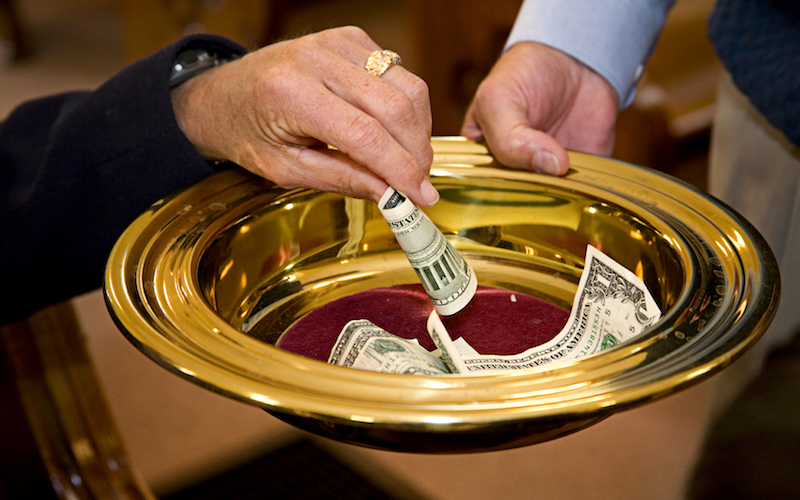
Before beginning a study, we must first have a clear understanding as to what is under discussion. What sort of giving are we talking about? The giving under consideration here has to do with the monetary contributions that are made to the church. We read of this when the church in Jerusalem was engaged in the act of giving – Christians were selling property and bringing the proceeds to the apostles. These funds were then distributed to needy saints (Acts 4:32-35).
Paul also spoke of giving to the Corinthians when he wrote “concerning the collection” (1 Corinthians 16:1) and gave them certain instructions regarding this practice. These instructions that were given to the Christians in Corinth were not peculiar to that congregation. The churches in the first century had a uniform teaching. Paul spoke of this when he told them of Timothy – another gospel preacher – who would come with the same message he had brought them. That message that Paul brought was the same message he preached “everywhere in every church” (1 Corinthians 4:17). So the instructions concerning the collection found in the New Testament apply to us today, regardless of where we are or the congregation of which we are members.
How was the collection to be gathered? First, we can see that individuals gave directly to the church. The example of Joseph (later called Barnabas) shows us that this is what was done. He “owned a tract of land, sold it and brought the money and laid it at the apostles’ feet” (Acts 4:36-37). Paul told the Corinthians, “Each one of you is to put aside and save” (1 Corinthians 16:2). We do not find any mention of anyone acting as a sort of “middle man,” collecting money from others and giving that to the church. Individuals gave directly to the church.
Secondly, the New Testament gives us a specific time when this is to be done. “On the first day of every week each one of you is to put aside and save” (1 Corinthians 16:2). We know the church met on the first day of the week to observe the Lord’s Supper (Acts 20:7). We also know this was the only day on which this memorial was observed because Paul, despite his hurried schedule, waited in Troas seven days to be able to take the Lord’s Supper with the church in that place (Acts 20:6). As was mentioned before, the churches in the first century had a uniform teaching. The first day of the week was the day they assembled to observe the Lord’s Supper (1 Corinthians 11:33). So the church met on the first day of the week and the collection was to be taken up on the first day of the week. Since the collection is about individuals giving directly to the church, we can conclude that the collection was done when the church came together.
This is the only means we read about in the New Testament by which the church raised money. Yet man has devised many other ways to generate funds for the church. Some have turned to selling goods (bake sales, bazaars) or services (car washes). Others use games of chance (bingo). Some sell raffle tickets to raise money. All of these are inventions of men. We cannot read about anything like these things in the Bible. God’s word authorizes just one method for the church to raise money – the collection taken up on the first day of the week consisting of contributions made by individuals. We need to respect the will of God in this matter.
Now Concerning the Collection | 1 | 2 | 3 | 4 | 5 | 6 | 7 | 8 | 9 | 10