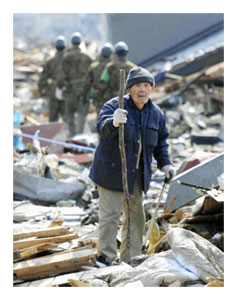
 It is truly sad to read news reports and see pictures and videos of the devastating effects of the earthquake and tsunami that occurred in northern Japan. While our hearts go out to the victims and our prayers are for all those affected, it is also important to remember some important lessons that this tragedy teaches us.
Riches are uncertain — Paul told Timothy, “Instruct those who are rich in this present world not to be conceited or to fix their hope on the uncertainty of riches, but on God, who richly supplies us will all things to enjoy” (1 Timothy 6:17). The material possessions we currently have are not guaranteed to remain in the future. While we may use and enjoy the things of this life, we must remember that they are not of lasting significance. Jesus said, “not even when one has an abundance does his life consist of his possessions” (Luke 12:15). Therefore, He says, “Do not store up for yourselves treasures on earth, where moth and rust destroy, and where thieves break in and steal. But store up for yourselves treasures in heaven, where neither moth nor rust destroys, and where thieves do not break in or steal; for where your treasure is, there your heart will be also” (Matthew 6:19-21).
Life is fragile — James reminds us of the uncertainty of life: “Come now, you who say, ‘Today or tomorrow we will go to such and such a city, and spend a year there and engage in business and make a profit.’ Yet you do not know what your life will be like tomorrow. You are just a vapor that appears for a little while and then vanishes away. Instead, you ought to say, ‘If the Lord wills, we will live and also do this or that” (James 4:13-15). James is not saying that we are wrong to plan for the future. Rather, he tells us that as we make plans, we must realize that we are not in perfect control of what our future holds. Our lives could change, or even end, at any moment. Despite the great plans in the mind of the rich man of whom Jesus spoke, these plans were never carried out. Instead he was told, “You fool! This very night your soul is required of you” (Luke 12:16-21).
Always be prepared — The reason why the rich man in Jesus’ parable was called a fool was because he neglected his spiritual well-being in order to focus solely on his material pursuits. When he had a harvest so great that he needed to tear down his barns and build larger ones, he said to his soul, “Soul, you have many goods laid up for many years to come; take your ease, eat, drink and be merry” (Luke 16:19). Jesus said he “stored up treasure for himself, [but was] not rich toward God” (Luke 16:21). Not only is it true that our lives could end at any time (James 4:14), but the Lord could also return at any time, coming “just like a thief in the night” (1 Thessalonians 5:2). We must be in a constant state of readiness for this event.
Jesus told a parable of ten virgins waiting for the arrival of the bridegroom to the wedding feast (Matthew 25:1-12). Five wise virgins were prepared for his arrival, five foolish ones were not. When the bridegroom arrived and the foolish virgins scrambled to make the necessary preparations then, they were locked out. Jesus concludes by saying, “Be on the alert then, for you do not know the day nor the hour” (Matthew 25:13).
Do not put your trust in the material things of this life. Do not fool yourself into thinking you have the assurance of tomorrow. If you are not ready for your inevitable appointment “before the judgment seat of Christ” (2 Corinthians 5:10), then use today to make those necessary preparations.











[…] we can use current events today to show and remind people of the teachings of Scripture. The recent tsunami in Japan is one example of this. There are few examples that will leave as powerful an impression of the […]