When we read about different individuals in the Bible, we often try to learn from their example in the things that they did. However, there are also times when we can learn from them as they finished what they were doing. In this article, we are going to notice the example of Moses and the times in which the Scriptures indicate that he finished something.
Moses Finished the Work
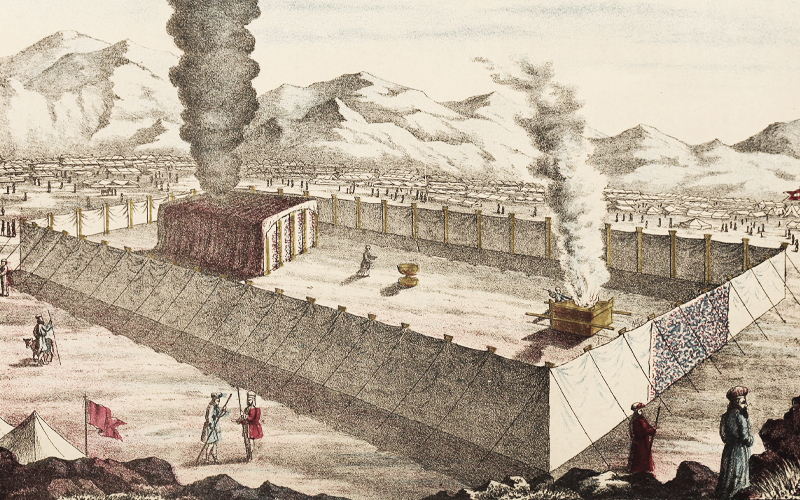
“Now in the first month of the second year, on the first day of the month, the tabernacle was erected. […] He erected the court all around the tabernacle and the altar, and hung up the veil for the gateway of the court. Thus Moses finished the work” (Exodus 40:17, 33).
While we typically think of the book of Exodus as being about the Israelites’ exodus from Egypt, the last third of the book (approximately) is devoted to the tabernacle. God gave instructions regarding how this was to be made and Moses carried out the work according to what God revealed. Throughout the final chapter as the work was being completed, we are told repeatedly that the tabernacle was built “just as the Lord had commanded Moses” (Exodus 40:19, 21, 23, 25, 27, 29, 32). Moses did not adapt or alter God’s plan as he saw fit; instead, he finished the work by carefully following God’s instructions.
Moses Finished Writing
“It came about, when Moses finished writing the words of this law in a book until they were complete, that Moses commanded the Levites who carried the ark of the covenant of the Lord, saying, ‘Take this book of the law and place it beside the ark of the covenant of the Lord your God, that it may remain there as a witness against you’” (Deuteronomy 31:24-26).
The law of God was “given through Moses” (John 1:17). When they assembled at Mount Sinai following their deliverance from Egypt, Moses “recounted to the people all the words of the Lord and all the ordinances; and all the people answered with one voice and said, ‘All the words which the Lord has spoken we will do!’” (Exodus 24:3). Near the end of his life, Moses wrote down this law in a book. He was “finished” when the written copy of the law was “complete.” This means that he wrote down all of God’s law without leaving anything out. It also means that he did not add anything to it. Moses wrote down all of God’s law and only God’s law and left it as a record so that the people would know the will of God.
Moses Finished Speaking
“When Moses had finished speaking all these words to all Israel, he said to them, ‘Take to your heart all the words with which I am warning you today, which you shall command your sons to observe carefully, even all the words of this law. For it is not an idle word for you; indeed it is your life. And by this word you will prolong your days in the land, which you are about to cross the Jordan to possess’” (Deuteronomy 32:45-47).
Also near the end of his life before the Israelites entered the land of Canaan, Moses finished what he had to say to them. However, his message did not originate with him. Rather than passing along his opinions or human wisdom, he imparted the will of God to them. This was done as a reminder for them to keep God’s law and pass it on to their children. Just as he did when he finished writing, when Moses finished speaking he had imparted to them everything he could tell them of God’s will without mixing in his own human wisdom.
The Lesson for Us
There are a few lessons for us to learn from Moses as he finished the work of the tabernacle, finished writing the words of God’s law, and finished speaking it to the people. As we seek to serve God today, we need to finish as Moses did. How do we do this?
- We need to start – We will never finish the work God wants us to do if we never start it. Paul never would have “finished the course” (2 Timothy 4:7) if he did not recognize Jesus as Lord on the road to Damascus and then begin following His instructions he received when he reached the city (Acts 9:4-6, 18; 22:16).
- We need to do the work – It is one thing to want God’s will to be done and another to actually do it. Jesus asked the question, “Why do you call Me, ‘Lord, Lord,’ and do not do what I say?” (Luke 6:46). In teaching about discipleship, Jesus used the illustration of one who started to build a tower, could not finish, and was ridiculed by others for failing to complete it (Luke 14:27-30). Starting to serve the Lord is important, but we need to remain committed to carrying out His work.
- We need to follow the plan – Just as Moses made “all things according to the pattern” God gave him (Hebrews 8:5), we are to “hold fast the pattern of sound words” (2 Timothy 1:13, NKJV) that has been revealed in the New Testament. Paul wrote, “Whatever you do in word or deed, do all in the name of the Lord Jesus” (Colossians 3:17). We are not at liberty to do God’s work in whatever way seems best to us; we are to do it according to what He has instructed and authorized in His word.
- We need to know when the end is – Whether it was the tabernacle, the written law, or his speech, Moses kept going until he was finished. When it comes to our service to God, we have work to do as long as we are still living. We are not finished until our life here is over. John wrote, “And I heard a voice from heaven, saying, ‘Write, “Blessed are the dead who die in the Lord from now on!”’ ‘Yes,’ says the Spirit, ‘so that they may rest from their labors, for their deeds follow with them’” (Revelation 14:13). We can have rest from our labors when this life is over if we will be “diligent to enter that rest” (Hebrews 4:11) and be “faithful until death” (Revelation 2:10).
We can learn from the example of Moses in what he did and also in how he finished. Let us make sure we are diligently doing the Lord’s will, following His instructions in how to do it, and then continue to do that as long as we live. Or if you have yet to start serving the Lord, now is the best time to begin.