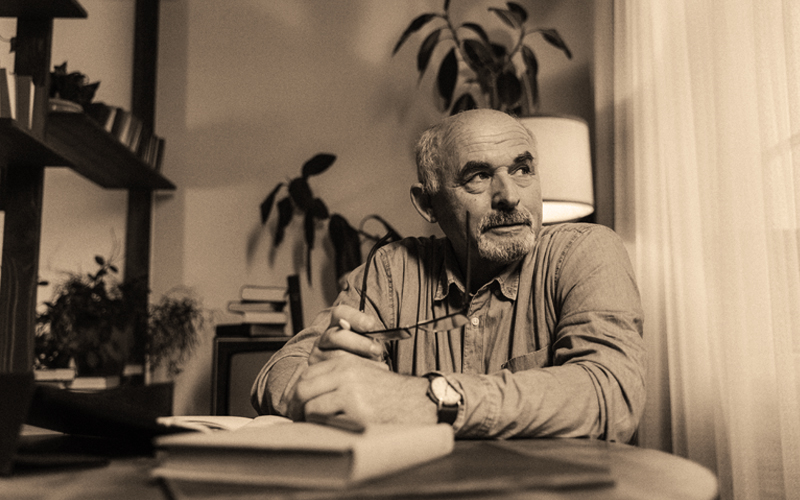
In the book of Ecclesiastes, the wise man spoke about the futility of life “under the sun.” One of the reasons why he saw his earthly existence as futile was that he would leave the fruit of his labor to someone else. In the passage below, he described the real possibility that his earthly possessions would be left to someone who would squander them or act foolishly with them.
“So I hated life, for the work which had been done under the sun was grievous to me; because everything is futility and striving after wind.
“Thus I hated all the fruit of my labor for which I had labored under the sun, for I must leave it to the man who will come after me. And who knows whether he will be a wise man or a fool? Yet he will have control over all the fruit of my labor for which I have labored by acting wisely under the sun. This too is vanity.
“Therefore I completely despaired of all the fruit of my labor for which I had labored under the sun. When there is a man who has labored with wisdom, knowledge and skill, then he gives his legacy to one who has not labored with them. This too is vanity and a great evil.
“For what does a man get in all his labor and in his striving with which he labors under the sun? Because all his days his task is painful and grievous; even at night his mind does not rest. This too is vanity” (Ecclesiastes 2:17-23).
What’s the point? In essence, this was what the wise man was asking. He viewed with despair the prospect of the material things he worked hard to obtain and maintain going to someone who would not appreciate or use them properly.
When we reach the age at which our time on earth is growing shorter, we will likely start having similar thoughts as the wise man. We may ask, What should happen with our wealth or possessions when we die? Are there principles and instructions in God’s word that will help us with this? Yes! We will consider some points in this article.
The Reality of Death and Our Possessions
The first point we need to understand is that death is a reality. The Hebrew writer explained, “And inasmuch as it is appointed for men to die once and after this comes judgment” (Hebrews 9:27). Whenever death comes, we cannot take our possessions with us when we go. “For we have brought nothing into the world, so we cannot take anything out of it either” (1 Timothy 6:7). Furthermore, our possessions cannot help us beyond this life. Jesus posed the question, “For what will it profit a man if he gains the whole world and forfeits his soul? Or what will a man give in exchange for his soul?” (Matthew 16:26). Even if we could obtain all of the wealth of this world, it would not help the condition of our soul when this life is over.
However, our possessions are useful here in this life. The wise man explained that wealth provides some protection against the hardships of life: “The rich man’s wealth is his fortress, the ruin of the poor is their poverty” (Proverbs 10:15). In a verse that some may be surprised to learn is in the Bible, the author of Ecclesiastes wrote, “Men prepare a meal for enjoyment, and wine makes life merry, and money is the answer to everything” (Ecclesiastes 10:19). Oftentimes, if something needs to be done, acquired, or fixed, it can happen with the proper amount of money. However, that is its limit. Unfortunately, though, this usefulness has caused many people to “fix their hope on the uncertainty of riches,” rather than “on God, who richly supplies us with all things to enjoy” (1 Timothy 6:17). Money can be used as a blessing from God, but it can never replace God.
While we live in this world, we are free to choose how we use our wealth and possessions. Peter stated this principle to Ananias regarding the property he sold: “While it remained unsold, did it not remain your own? And after it was sold, was it not under your control?” (Acts 5:4) Of course, the choices we make are not without consequences, and we will have to give an account of them before God. After all, Ananias was killed by God because he lied to the Holy Spirit about the proceeds of the sale he brought for the work of the church (Acts 5:1-5). Even still, Ananias was free to decide how to use his possessions, and we can do the same.
A Worldly Perspective About This
When the wise man spoke of leaving the fruit of his labor to one who would come after him, he said it was “vanity” (Ecclesiastes 2:18-19). Why?
One reason was that the recipient of these things could be “a fool” (Ecclesiastes 2:19). Upon receiving the wealth that had accumulated through years of work, he could squander it. Because he did not work for it, he may not appreciate it as much as the one who worked to acquire it. So the wise man said it was “vanity and a great evil” for one to work “with wisdom, knowledge and skill” and then give “his legacy to one who has not labored with them” (Ecclesiastes 2:21). This was not an unreasonable concern on the part of the wise man. This sort of thing happens all the time. It was the basis for Jesus’ parable of the prodigal son who received his share of the inheritance and quickly “squandered his estate with loose living,” and then “began to be impoverished” (Luke 15:11-14). Not only was the son in this parable wrong for asking to receive his inheritance while his father was still alive, but he acted foolishly with the inheritance as soon as he received it.
Another reason the wise man saw this as “vanity” was because he was focused on things “under the sun” (Ecclesiastes 2:17, 18, 19, 20, 22). The entire book of Ecclesiastes is about the futility of life when we fail to look beyond our physical existence. Notice what he wrote leading up to the passage we are discussing:
“The words of the Preacher, the son of David, king in Jerusalem. ‘Vanity of vanities,’ says the Preacher, ‘Vanity of vanities! All is vanity.’ What advantage does man have in all his work which he does under the sun? A generation goes and a generation comes, but the earth remains forever” (Ecclesiastes 1:1-4).
“I have seen all the works which have been done under the sun, and behold, all is vanity and striving after wind” (Ecclesiastes 1:14).
“Thus I considered all my activities which my hands had done and the labor which I had exerted, and behold all was vanity and striving after wind and there was no profit under the sun” (Ecclesiastes 2:11).
Of course, by the end of the book, he recognized his purpose: to “fear God and keep His commandments” (Ecclesiastes 12:13). This realization changes everything about our perspective. But as long as we are only looking at the things of this life and never beyond that, we eventually see them as futility and vanity, just as the wise man did.
A Heavenly Perspective About This
We know we are going to pass from this life. Whatever we have will be left behind for someone else to use. While we are here, we must use whatever wealth we have to “do good, to be rich in good works, to be generous and ready to share” (1 Timothy 6:18). This is especially important in view of our departure from this life, as we seek to lay “a good foundation for the future” and “take hold of that which is life indeed” (1 Timothy 6:19).
Remember what Paul wrote earlier in this passage: “For we have brought nothing into the world, so we cannot take anything out of it either” (1 Timothy 6:7). When we die, our earthly possessions will be left behind. And just as we are free to choose how we will use our wealth and possessions in this life (cf. Acts 5:4), we can make arrangements for what happens with them when we are gone. What might that include?
- Taking care of our family – This should be our primary concern. While we are living, we are responsible to “provide for [our] own, and especially for those of [our] household” (1 Timothy 5:8). Jesus condemned the Pharisees for failing to do this while making the self-righteous claim that the money that could have helped their parents had been “given to God” (Matthew 15:3-6). This noble-sounding claim did not absolve them of their responsibility to care for their parents in need. However, even after our earthly life, we are to consider how we can help our family. Paul stated this principle in his second letter to the church in Corinth that “parents [save up] for their children” (2 Corinthians 12:14). The wise man spoke of the “good man” who “leaves an inheritance to his children’s children” (Proverbs 13:22). Obviously, circumstances beyond one’s control may prevent someone from having wealth to pass on to his children or grandchildren. However, the character traits that make it possible – selflessness, diligence, and stewardship – are traits we all need to possess. Then, if we are blessed to have something to pass on at the end of our lives, we should prioritize taking care of our family first.
- Leaving something for the Lord – We do this in life as we participate in “the collection…every first day of the week” (1 Corinthians 16:1-2). However, even past this life, we can “honor the Lord from [our] wealth” (Proverbs 3:9) and make arrangements to leave some of the blessings God provided us with a congregation – particularly the one of which we are a member in life – to help in the work the Lord gave the church to do.
- Leaving something for good works – We do this already as opportunities arise. Paul wrote, “So then, while we have opportunity, let us do good to all people, and especially to those who are of the household of the faith” (Galatians 6:10). Of course, we are limited now. We may want to contribute more to the needs we see around us, but we cannot do so because we do not want to put ourselves in a position of need. Again, we are responsible to “provide for [our] own” first (1 Timothy 5:8). We are to “make it [our] ambition to,” among other things, “not be in any need” (1 Thessalonians 4:11-12). However, once we pass from this life, we no longer have our needs to consider. That could be an opportunity for us to make arrangements to use our wealth for good and provide a blessing to others after we are gone.
Conclusion
Whatever we have in this life is a blessing from God. We want to be good stewards and do good with these blessings, and part of this will involve deciding what to do with the fruit of our labor after we are gone. As we consider this, let us strive to make arrangements that will honor God and bring glory to Him.










