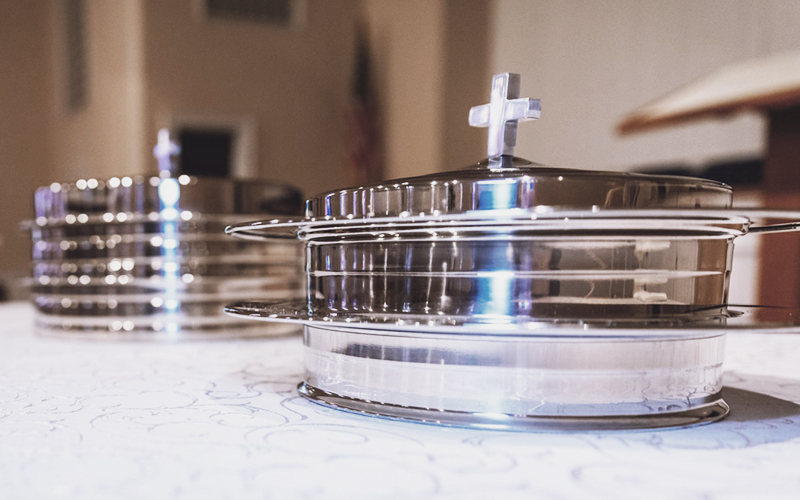
In my limited personal experience in every church where I have been a member, the observance of the Lord’s Supper in the assembly has been simple and relatively brief. Even when visiting on a Sunday with other congregations, that experience has been the same.
Lately, I have been hearing of more churches rearranging their Sunday service schedule in order to have one service wholly dedicated to the Lord’s Supper and another service in which they engage in the other acts of worship (singing, praying, preaching/teaching). As of the time I am writing this, I have not visited a church that has gone to this type of arrangement. However, based upon comments I have seen online, those who have done this seem to have an overwhelmingly positive view of this new format.
This begs the question: How much time should we spend on the Lord’s Supper? In this article, I want us to consider some thoughts regarding that question.
First, let me offer a disclaimer. I do not presume to be in a position to make rules for any local church. By the Lord’s design, local churches are autonomous.* Each congregation must make its own decision on this topic based on what is best for the spiritual health of its members while also acting within the bounds of what is authorized in the New Testament. That being said, it is helpful to consider some principles when we decide within our local churches whether we plan to spend five minutes or one hour (or even more) on the Lord’s Supper.
One more point before we begin… In discussing the amount of time we spend on the Lord’s Supper, I am assuming that we all agree that we are to observe this each first day of the week. If you disagree with or are uncertain about that, see the article linked at the bottom.**
The Lord’s Supper in the New Testament
Jesus instituted the Lord’s Supper when He met with His disciples shortly before His arrest and crucifixion. Notice what He said:
“While they were eating, Jesus took some bread, and after a blessing, He broke it and gave it to the disciples, and said, ‘Take, eat; this is My body.’ And when He had taken a cup and given thanks, He gave it to them, saying, ‘Drink from it, all of you; for this is My blood of the covenant, which is poured out for many for forgiveness of sins. But I say to you, I will not drink of this fruit of the vine from now on until that day when I drink it new with you in My Father’s kingdom’” (Matthew 26:26-29).
When Jesus first instituted this memorial, He made a few brief comments, offered a prayer to bless the emblems, distributed them to the disciples, and they partook. Nothing in the text indicates that this was an extended, drawn-out event.
“For I received from the Lord that which I also delivered to you, that the Lord Jesus in the night in which He was betrayed took bread; and when He had given thanks, He broke it and said, ‘This is My body, which is for you; do this in remembrance of Me.’ In the same way He took the cup also after supper, saying, ‘This cup is the new covenant in My blood; do this, as often as you drink it, in remembrance of Me.’ For as often as you eat this bread and drink the cup, you proclaim the Lord’s death until He comes” (1 Corinthians 11:23-26).
In Paul’s first letter to Corinth, he reminded them how they were to partake of the Lord’s Supper by going back to the original instructions Jesus gave before His death. In other words, the church in Corinth was to practice it in the same way the apostles did that night under the direction of Jesus. The same is true for churches today.
“On the first day of the week, when we were gathered together to break bread, Paul began talking to them, intending to leave the next day, and he prolonged his message until midnight” (Acts 20:7).
When Paul and his traveling companions met with the church at Troas, they gathered for worship on the first day of the week. While we can assume that they engaged in all acts of worship, two are specifically mentioned in this verse – preaching/teaching and observing the Lord’s Supper (breaking bread). We are not told how much time was spent on either of these activities, but two things seem apparent in the text: (1) both were done in the same worship service, and (2) there was much more time devoted to teaching than to the observance of the Lord’s Supper.
What Is Authorized?
Other New Testament passages discuss the significance and importance of the Lord’s Supper. Yet the passages above provide instructions and examples about how it was practiced. The Lord’s Supper was a simple memorial commemorating Jesus’ death on the cross. It involved disciples remembering Jesus’ sacrifice and partaking of the two emblems (the bread and the fruit of the vine).
Therefore, when we observe the Lord’s Supper, we need to allow enough time for everyone in the assembly to do these two things – remembering and partaking. A long period of time is not required for either of these. Even if we factor in the logistical matter of distributing the emblems to those who are assembled to partake, that still does not require an extended period of time. [Of course, this will vary depending on the size of the assembly and the method of distributing the emblems to the partakers.]
When it comes to what is required by the Lord, a local church is to observe the Lord’s Supper on the first day of the week when they assemble. The actual time necessary to devote to this does not need to be any more than the time it takes to distribute the emblems, remember Jesus’ death, and partake of the Lord’s Supper. In other words, it could take just a few minutes.
That being said, it is often true that we may be authorized to do more than what is required. For example, we can show from the New Testament that a local church is required to assemble on the first day of the week. A congregation may meet once on Sunday and fulfill that requirement. Yet a congregation would also be authorized to meet more than once on Sunday if they chose to do so. Many congregations that I am familiar with meet twice on Sunday (once in the morning, then again in the evening). A church could even meet three or more times on Sunday if they decided it would be beneficial. Similarly, they could meet for one hour, or two, or three, or even ten on Sunday, provided that they worship according to the instructions that God has given in His word.
In the same way, a local church can fulfill the basic requirement of partaking of the Lord’s Supper in a relatively short period of time in their assembly. But just as a congregation may choose to assemble twice on Sunday or have an extended worship service, a church may choose to spend more time focused on the Lord’s Supper. This could include singing multiple songs about the sacrifice of Christ, having extended comments (teaching) about His death on the cross, and even allowing more time for personal reflection as people partake of the emblems. This would be more than what is required, but would still be authorized. Therefore, a congregation could choose to devote more time to the Lord’s Supper if they decided that it would be beneficial to the ones who assembled.
Potential Problems with an Extended Lord’s Supper Service
While it may be authorized to spend more time on the Lord’s Supper than what is traditionally done (at least in my experience), there are some potential problems with this, especially if it is done on a regular basis.
First, having an extended period of time for the Lord’s Supper could, ironically, cause us to lose focus on what the Lord’s Supper is actually supposed to be about. As we saw when Jesus instituted it, the Lord’s Supper is designed to focus on the death of Christ on the cross. Paul reiterated this in his letter to the church in Corinth. We “proclaim the Lord’s death” through the observance of the Lord’s Supper (1 Corinthians 11:26). Can we spend an hour focusing on the suffering and crucifixion of Jesus? Absolutely! The challenge, though, if we make this our regular practice, is to fill this time every week focusing just on what Jesus said this memorial is supposed to be about without feeling the need to talk, think, sing, or pray about other things – things which may be good and right, but are not what the Lord’s Supper is about.
Besides that, this question has come up because some churches have moved the Lord’s Supper into a separate worship service. In other words, this is not just about extending the Lord’s Supper; it is about segregating the Lord’s Supper from the rest of our corporate worship. The example we noticed earlier of the church in Troas indicates that the Lord’s Supper was part of the regular assembly (Acts 20:7), not separated in its own service. Yet by isolating the Lord’s Supper by itself, we create the potential and very realistic situation of a congregation welcoming a Christian into an assembly on the first day of the week but refusing to offer the Lord’s Supper to him because he was not able to come during the “right” service. The principle behind the instruction to “wait for one another” (1 Corinthians 11:33) is that we should not refuse to allow brethren to partake of the Lord’s Supper when they meet with the church on the first day of the week.
[Note: As I mentioned at the beginning, I have not worshipped with a congregation that has the Lord’s Supper in its own service. Perhaps some make provisions for those who can only attend the non-Lord’s Supper service and offer the Lord’s Supper there, much like many congregations do during their Sunday evening service. I personally do not know how they handle that situation.]
Another potential issue with this practice is that it can lead to a skewed perspective on worship as a whole. Many already have the concept that the Lord’s Supper is the “most important” thing we do when we assemble on Sundays. Certainly, we need to emphasize the importance of the Lord’s Supper and recognize its place in our assemblies. However, the New Testament never uses this type of language designating the Lord’s Supper (or anything else) as the “most important” thing we do in our worship. This misconception likely contributed to this practice of giving the Lord’s Supper its own special service. I fear that the practice will reinforce this misconception and lead to the other acts of worship – particularly preaching/teaching – being devalued in the minds of brethren. Any thinking that devalues the preaching and teaching of the Bible is dangerous. When Paul met with the Ephesian elders, he declared that he was “innocent of the blood of all men” because he proclaimed to them “the whole purpose of God” (Acts 20:26-27), teaching them “night and day for a period of three years” (Acts 20:31). When he gave his farewell to them, he commended them “to God and to the word of His grace, which is able to build you up and to give you the inheritance among all those who are sanctified” (Acts 20:32). Is it any wonder then, that when Paul was “intending to leave [Troas] the next day,” he did not lead them in an extended observance of the Lord’s Supper; instead, he “prolonged his message until midnight” (Acts 20:7). The Lord’s Supper is important, but we should not think of it in such a way that causes us to view the other parts of worship as being less important.
Potential Problems with a Brief Observance in a Regular Worship Service
As we have already seen, having a simple and brief observance of the Lord’s Supper is all that is required. Yet we can keep it simple and brief and still not partake in a way that is pleasing to God. After reminding the Corinthians about the Lord’s instructions regarding the Lord’s Supper, Paul issued this warning:
“Therefore whoever eats the bread or drinks the cup of the Lord in an unworthy manner, shall be guilty of the body and the blood of the Lord. But a man must examine himself, and in so doing he is to eat of the bread and drink of the cup. For he who eats and drinks, eats and drinks judgment to himself if he does not judge the body rightly” (1 Corinthians 11:27-29).
When observing the Lord’s Supper, we must not merely “go through the motions” and perform the action without focusing our minds on the death of Christ on the cross. If we fail to discern the Lord’s body (that is, we fail to remember the suffering and death of Jesus for our sins) and the Lord’s Supper becomes nothing more than a box to check off so we can say we worshiped “in spirit and truth” (John 4:24), then we eat and drink “judgment” to ourselves. Yes, it is possible during an extended observance of the Lord’s Supper for someone to partake without actually remembering Jesus’ sacrifice, but it is much easier to overlook the reason for the memorial if there is not much time before the one officiating at the table says, “That concludes the Lord’s Supper.”
This problem (or perceived problem) of brethren merely “going through the motions” may be the motivation behind the new practice of extending the Lord’s Supper and moving it to its own service. Yet the solution could be as simple as reminding brethren of the purpose and importance of the Lord’s Supper and encouraging them to focus on the death of Christ. This can be done without changing the duration or assembly time of the Lord’s Supper.
Conclusion
The Lord’s Supper is the memorial that Jesus instituted to remember His death on the cross. We continue to partake of it each first day of the week “until He comes” (1 Corinthians 11:26). As we do this, it is good to consider how we might best help the members of our congregations focus on the crucifixion of Christ while remaining within the bounds of what has been authorized. Yet we must be careful not to adopt every new fad that comes along and end up creating problems we did not anticipate.
———
* For more on this topic of autonomy, see the article, The Blessing of Autonomy.
** For more on the frequency of the observance of the Lord’s Supper, see the article, Proper Practice of the Lord’s Supper.