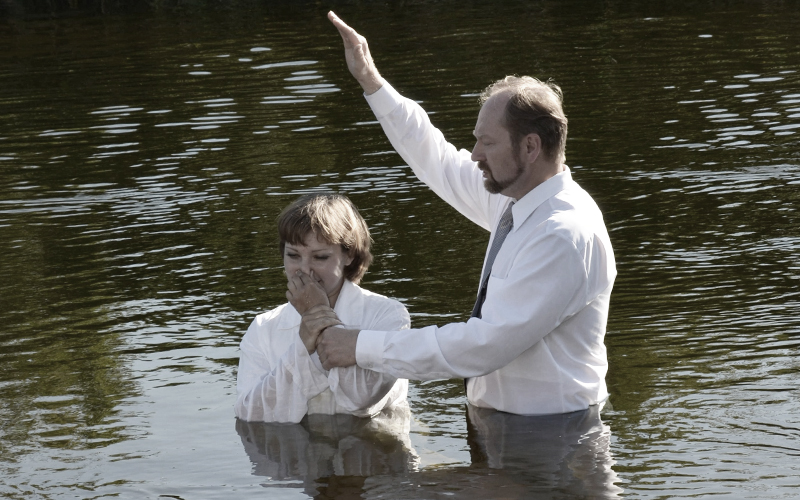
 It is a thrilling thing to witness someone respond to the invitation at the end of a sermon, make their way to the front of the auditorium, confess their faith in Christ, and then be baptized to have their sins washed away. Of course, this is not the only setting in which one could obey the gospel. Baptisms can occur in bathtubs, swimming pools, rivers, and anywhere else there is sufficient water for someone to be “buried with [Christ] in baptism” (Colossians 2:12) after they made the decision to become a Christian.
But why do people decide to become Christians? What motivates them to obey the gospel? We will briefly consider some possibilities in this article. However, we first need to understand what it means to obey the gospel.
Obeying the Gospel
When Paul wrote to the saints in Rome, he spoke about how they “became obedient from the heart to that form of teaching to which you were committed” (Romans 6:17). What is the “form” of teaching he referred to? He explained earlier in the chapter that they had followed the pattern of Jesus’ death, burial, and resurrection.
“Or do you not know that all of us who have been baptized into Christ Jesus have been baptized into His death? Therefore we have been buried with Him through baptism into death, so that as Christ was raised from the dead through the glory of the Father, so we too might walk in newness of life” (Romans 6:3-4).
The form of teaching they followed included repentance (becoming dead to sin), baptism, and continued faithfulness (walking in newness of life). Of course, belief is also implied (there is no reason to obey the gospel if one does not believe in Christ).
This is consistent with what we see in the preaching of the apostles and in Jesus’ instructions about carrying out the Great Commission. The “form of teaching” that we are to obey includes belief (Acts 2:37; Mark 16:16), repentance (Acts 2:38; Luke 24:46-47), and baptism (Acts 2:38; Matthew 28:19; Mark 16:16). Following this, we begin our new life in Christ and follow the doctrine He gave His apostles to teach (Acts 2:42; Matthew 28:20).
The Result of Obeying the Gospel
In order to understand why someone would obey the gospel, we need to know what happens when they do.
When someone obeys the gospel, what happens?
- Their sins are forgiven – This was the promise from God that Peter proclaimed on the day of Pentecost: “Repent, and each of you be baptized in the name of Jesus Christ for the forgiveness of your sins; and you will receive the gift of the Holy Spirit. For the promise is for you and your children and for all who are far off, as many as the Lord our God will call to Himself” (Acts 2:38-39).
- They are added to the church – After the church was established on the day of Pentecost, God continued to add to it “day by day those who were being saved” (Acts 2:47).
- They become a child of God – Jesus spoke to Nicodemus about the need to be “born again” to see the kingdom of God (John 3:3). Paul explained to the Galatians that we are sons of God by faith, as we are “baptized into Christ” (Galatians 3:26-27).
- They receive the hope of heaven – In his first epistle, Peter explained that Christians are “born again to a living hope…to obtain an inheritance which is imperishable and undefiled and will not fade away, reserved in heaven” (1 Peter 1:3-4). This new birth is the same as the one Jesus described to Nicodemus (John 3:3, 5).
These are incredible blessings, but what motivates one to become a Christian in order to take advantage of them?
Different Motivations
There are a few possibilities as to why one would make the decision to surrender their life to the Lord and enter into Christ through the waters of baptism.
- Fear of hell – The Bible declares that it is “a terrifying thing to fall into the hands of the living God” (Hebrews 10:31). Hell is a place of “eternal punishment” that has been “prepared for the devil and his angels” (Matthew 25:46, 41). Yet it will also be the fate of those whose names are “not found written in the book of life” (Revelation 20:15). Anyone who understands how awful this is will want to seek after the Lord so they can avoid this place. This is why Paul wrote, “Therefore, knowing the fear of the Lord, we persuade men…” (2 Corinthians 5:11).
- Desire for heaven – Paul told the brethren in Philippi that “our citizenship is in heaven,” and we “eagerly wait for a Savior, the Lord Jesus Christ” to return and bring us home with Him (Philippians 3:20). This is why Jesus told His disciples that He was going to “prepare a place for [them]” (John 14:2). The reward of heaven would motivate them to faithfully follow Him, just as it does for us today.
- Sense of obligation – When Jesus gave the Great Commission, He began by reminding His apostles of His authority: “All authority has been given to Me in heaven and on earth” (Matthew 28:18). The authority of Christ is the reason why people were to obey the gospel when they heard it. Jesus said we are to adopt the mindset of “unworthy slaves” who simply do “that which we ought to [do]” (Luke 17:10).
- Love for God – The apostle John wrote, “For this is the love of God, that we keep His commandments…” (1 John 5:3). Jesus made a similar statement to His apostles: “If you love Me, you will keep My commandments” (John 14:15). Love for the Lord should be sufficient motivation to obey the gospel He sent out to the world.
All of these are appropriate, and God put each in place in order to motivate us to follow Him. However, as we mature, our primary motivations should change.
- Fear becomes less of a terror at the prospect of eternal punishment. We are able to “have confidence and not shrink away from Him in shame at His coming,” because we “[practice] righteousness” and are “born of Him” (1 John 2:28-29). Instead, fear becomes more of a reverent respect for God that produces continued obedience to His will. The wise man succinctly summarized our purpose in life: “Fear God and keep his commandments, for this is the whole duty of man” (Ecclesiastes 12:13, ESV).
- We will still desire heaven because it is a place of rest (Revelation 14:13) where we will be free from the troubles of this life (Revelation 21:4). But as we grow in the Lord, we will also look forward more and more to being in His presence. As John described, “The throne of God and the Lamb will be in it, and His bond-servants will serve Him; they will see His face…” (Revelation 22:3-4).
- We must fulfill our duty to serve God because that is what “we ought to [do]” (Luke 17:10). However, the more we learn about God and His word, the more we see that His instructions are for our good. “His commandments are not burdensome” (1 John 5:3).
- We love God because of who He is and what He has done for us, and this love should increase as time goes on. As we have already seen, love leads us to obey Him (1 John 5:3; John 14:15). We must strive to “please Him in all respects” (Colossians 1:10) and give our entire lives as a “living and holy sacrifice” to Him (Romans 12:1).
Conclusion
There are several valid motivations for one to obey the gospel. The ones we considered can be helpful in leading one to make the decision to become a Christian. Then, after one is converted to Christ, he must continue to grow and mature in his faith, strive to follow the Lord in every area of life, and look forward to being with the Lord for eternity.