The Apostles vs. Franklin Graham (03/26/26)

Subscribe: Apple PodcastsSpotify | RSS

Plain Bible Teaching Podcast

This week, we’re talking about an event in Peru where Franklin Graham preached to 90,000 people, which reportedly led to thousands of conversions. That sounds great, right? It does until you know about the message being preached. It is not the same gospel message that the apostles taught in the first century. We’re going to examine that in our episode today.Continue Reading

Salvation: Past, Present, and Future

BaptismFor many religious people, when they talk about salvation, they talk about “getting” saved. It is common to hear phrases like these:


  • When did you get saved?
  • I got saved when I was fifteen years old.
  • Several people were getting saved at the revival.

However, despite how frequently we hear phrases like those in conversations with religious people, the Bible never talks about salvation in this way. Instead, the New Testament refers to people being saved.

This is significant because it emphasizes our dependence upon God for our salvation. Salvation is not something we “get” on our own. Instead, we are dependent upon God to save us. Even when there are conditions we must meet (which we will discuss), we are relying upon God to save us. Therefore, the New Testament talks about being saved (passive, something that is done for us) rather than getting saved (active, something we do or obtain for ourselves).

In fact, the New Testament describes aspects of our salvation (being saved) that relate to the past, present, and future. Let us consider a few different passages.Continue Reading

What Is the Gift of the Holy Spirit?

Acts 2:38

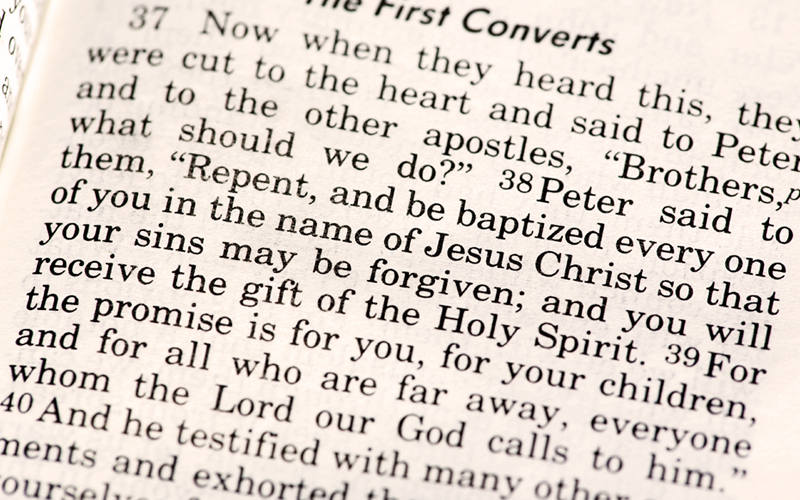
Peter said to them, ‘Repent, and each of you be baptized in the name of Jesus Christ for the forgiveness of your sins; and you will receive the gift of the Holy Spirit. For the promise is for you and your children and for all who are far off, as many as the Lord our God will call to Himself’” (Acts 2:38-39).

When Peter preached the first gospel sermon on the day of Pentecost, he convicted his audience of being guilty of putting the Savior to death. Yet the Lord provided a way for them to be forgiven of their sins and be saved. One of the promises they would receive when they obeyed the gospel was “the gift of the Holy Spirit.” What did Peter mean by this? There are a few ideas that have been suggested:

  • Some believe that this “gift” is the Holy Spirit Himself.
  • Others have concluded that this refers to the miraculous gifts of the Spirit.
  • Some see “the gift of the Holy Spirit” as synonymous with salvation.

Which of these views is correct? Or did Peter mean something else by this phrase?Continue Reading

Are All Religions Paths to God? (09/26/24)

Subscribe: Apple PodcastsSpotify | RSS

Plain Bible Teaching Podcast

This week we’re talking about some recent comments from the Pope in which he claimed that ALL religions are paths to God. He said that different religions are like different languages that people might speak, but they all arrive at the same God. We’re going to talk about this in our episode today.Continue Reading

Our Common Salvation

Woman being baptized

Beloved, while I was making every effort to write you about our common salvation, I felt the necessity to write to you appealing that you contend earnestly for the faith which was once for all handed down to the saints” (Jude 3).

The verse above is often cited to show the need for Christians to engage in a spiritual battle for the cause of Christ. We are to “put on the full armor of God” (Ephesians 6:11), which enables us to “fight the good fight of faith” (1 Timothy 6:12). In doing this, Jude explained that we must “contend earnestly for the faith.” This is just as important today as it was when Jude penned these words in the first century.*

However, Jude’s original intention was to write about another topic – “our common salvation.” This was (and is) a vitally important subject, but because of the pressing need to “contend earnestly for the faith,” the Holy Spirit saw fit to have the inspired writer deliver a different message than Jude originally intended. Whether Jude ever delivered a follow-up message on that topic – in person or in writing – we do not know. However, the idea of “our common salvation” is worthy of our consideration, so we will discuss that in this article.Continue Reading

Why Do We Obey God?

Man sitting and thinking with the Bible

Sadly, most people in the world do not recognize God. Therefore, it is unsurprising that they do not obey Him. Yet for those who claim to be Christians, obedience ought to be a way of life. But why should we live a life of obedience? 

The New Testament clearly indicates that we do not obey God in order to earn our salvation. Because all of us have sinned (Romans 3:23), the only thing we have earned is eternal punishment (Romans 6:23). Jesus said, “So you too, when you do all the things which are commanded you, say, ‘We are unworthy slaves; we have done only that which we ought to have done’” (Luke 17:10). Even if we could perfectly carry out every command the Lord has given, we are still “unworthy slaves” who are dependent upon the grace of God.

At the same time, Jesus implied in the statement above that His people would obey Him (“when” – not IF – “you do all the things which are commanded…”). When He commissioned His apostles to go out and make disciples, they were to teach them “to observe all that I commanded” (Matthew 28:20). Obedience is expected of those who would be Jesus’ disciples.

That brings us back to our question: Why do we obey God? There are a few reasons presented to us in the Scriptures:Continue Reading

You Are a Peculiar People

Crossroads

As the world around us grows more corrupt and people become more ungodly, faithful disciples of Christ will stand out. We may even become targets of ridicule, harassment, and persecution. This will make it tempting for us to try to hide our distinguishing characteristics as Christians in order to blend in with the world.

However, there are blessings that come from being different from the world as we strive to be what God wants us to be as His people. When the apostle Peter wrote his first epistle, he reminded Christians that they were “a peculiar people” (KJV) or “a people for God’s own possession” (NASB).

But you are a chosen race, a royal priesthood, a holy nation, a people for God’s own possession [a peculiar people, KJV], so that you may proclaim the excellencies of Him who has called you out of darkness into His marvelous light; for you once were not a people, but now you are the people of God; you had not received mercy, but now you have received mercy” (1 Peter 2:9-10).

Let us briefly notice how Christians are different from the world and why that is a blessing for us.Continue Reading