Add to Your Faith (Part 9): The Entrance into the Eternal Kingdom

Add to Your Faith

Over the course of this study, we have been looking at qualities we are to add to our faith – moral excellence, knowledge, self-control, perseverance, godliness, brotherly kindness, and love. Now, we are going to wrap up the series by looking at Peter’s conclusion.

For if these qualities are yours and are increasing, they render you neither useless nor unfruitful in the true knowledge of our Lord Jesus Christ. For he who lacks these qualities is blind or short-sighted, having forgotten his purification from his former sins. Therefore, brethren, be all the more diligent to make certain about His calling and choosing you; for as long as you practice these things, you will never stumble; for in this way the entrance into the eternal kingdom of our Lord and Savior Jesus Christ will be abundantly supplied to you” (2 Peter 1:8-11).

Let us consider four points from the verses above.Continue Reading

Add to Your Faith (Part 1): The Foundation of Faith

Add to Your Faith

At the beginning of his second epistle, Peter spoke of various qualities that Christians are to possess and continue to develop throughout their lives. He just reminded them that they had “escaped the corruption that is in the world by lust” (2 Peter 1:4), so they were to live differently from the world. But what would this look like? Notice the characteristics that he listed:

Now for this very reason also, applying all diligence, in your faith supply moral excellence, and in your moral excellence, knowledge, and in your knowledge, self-control, and in your self-control, perseverance, and in your perseverance, godliness, and in your godliness, brotherly kindness, and in your brotherly kindness, love. For if these qualities are yours and are increasing, they render you neither useless nor unfruitful in the true knowledge of our Lord Jesus Christ” (2 Peter 1:5-8).

All of these qualities are essential, and we will discuss them as we progress through this series. However, it is important to note at the beginning that these characteristics are built upon a foundation of FAITH. So as we begin, let us consider this foundation of faith upon which the character of a Christian must be built.Continue Reading

After the Time of the Apostles

The Crucifixion of Peter

Peter wrote his second epistle shortly before his death. In fact, he told the brethren that “the laying aside of [his] earthly dwelling [was] imminent” (2 Peter 1:14). Though not recorded in the Bible, historical accounts suggest that Peter was crucified in Rome.* Over the next several years, all the apostles would depart from this life, with most of their deaths resulting from persecution. Eventually, these brethren would be without Peter and any of the other apostles.

Today, we also have no living apostles.** Like the brethren at the end of the first century, we live in the world without personal direction from the ones chosen to be the “ambassadors for Christ” (2 Corinthians 5:20). We work to teach others without the ones commissioned by the Lord to “go into all the world and preach the gospel to all creation” (Mark 16:15). We carefully study the words they wrote as they revealed “the mind of Christ” (1 Corinthians 2:10-16) without the ability to hear them teach or to ask questions to help our understanding.

It might seem as though we are at a disadvantage. For the Christians living in the last part of the first century, the prospect of losing access to the living apostles may have felt the same. However, in this letter written near the end of his life, Peter assured them (and this applies to us as well) that they had everything they needed to serve God and obtain His promises.

Let us notice what Peter said about this just in the verses leading up to his statement about his death being “imminent” (2 Peter 1:14). What would they still have after the time of the apostles? What do we still have?Continue Reading

How to Please God

Man reading the Bible

It is reasonable to assume that all those who believe in God, understand who He is, and recognize all that He has done for us will want to please Him in the things that they do. But how do we live in such a way as to please God?

Paul wrote to the brethren in Ephesus about “trying to learn what is pleasing to the Lord” (Ephesians 5:10). If this is something we are “trying to learn,” then that tells us two things:

  1. It is not something we instinctively know. The prophet Jeremiah said, “I know, O Lord, that a man’s way is not in himself, nor is it in a man who walks to direct his steps” (Jeremiah 10:23).
  2. God is not pleased with just anything we might do for Him. Jesus spoke of those who would claim to do many things “in [His] name” but were rejected by Him because they were practicing “lawlessness” (Matthew 7:22).

If we are going to please God, we need to learn how to please Him and be sure we are learning the proper way to do it. Since we cannot look to ourselves (or other men) to determine this, we need to look to God Himself and the word He has revealed to us. Paul wrote, “For who among men knows the thoughts of a man except the spirit of the man which is in him? Even so the thoughts of God no one knows except the Spirit of God” (1 Corinthians 2:11). Just as you and I do not know what the other is thinking unless we tell each other, we cannot know the mind of God unless He tells us. Thankfully, He has revealed the Scriptures to us so that we may be “equipped for every good work” (2 Timothy 3:16-17). In other words, everything we need to know to please the Lord can be learned through a study of the Scriptures.

So what do the Scriptures teach about what we must do to please the Lord? Let us consider a few points:Continue Reading

Big Words in the Bible (Part 4): Justification

Big Words in the Bible

We have already discussed how we are reconciled to God and set apart as His special people (sanctified). This means we can be in a right standing before God. Yet it is important to understand how this comes about. Paul used the example of Abraham to explain this.

What then shall we say that Abraham, our forefather according to the flesh, has found? For if Abraham was justified by works, he has something to boast about, but not before God. For what does the Scripture say? ‘Abraham believed God, and it was credited to him as righteousness.’ Now to the one who works, his wage is not credited as a favor, but as what is due. But to the one who does not work, but believes in Him who justifies the ungodly, his faith is credited as righteousness…” (Romans 4:1-5).

The Greek word for justification (dikaiosis), which is used in verses that follow our text (Romans 4:25; 5:18), refers to God declaring man to be free from guilt and right before Him. The word in our text (dikaioo) means that one is declared to be acceptable to God. The words translated righteous (dikaios) and righteousness (dikaiosyne) are related to this. God can declare us to be right before Him because of Jesus’ death on the cross. Without His sacrifice, we could not be right (justified) before God.Continue Reading

What Makes an Outstanding Young Person?

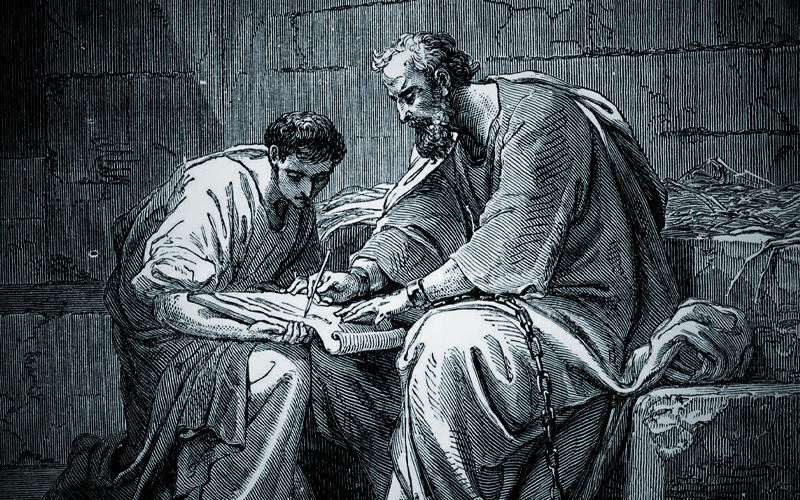
Paul and Timothy

During the apostle Paul’s second preaching tour, he met a young man named Timothy. Paul was so impressed with him that he wanted Timothy to accompany him on his journey (Acts 16:3). As Luke introduced Timothy in this passage, we can see that it was not just Paul who held this young man in high regard.

Paul came also to Derbe and to Lystra. And a disciple was there, named Timothy, the son of a Jewish woman who was a believer, but his father was a Greek, and he was well spoken of by the brethren who were in Lystra and Iconium” (Acts 16:1-2).

What made Timothy such an outstanding young man? The passage above does not give us much information (other than the fact that he was “a disciple”), yet we learn more from Paul’s second letter to Timothy about what set him apart from others.Continue Reading

Why Do We Obey God?

Man sitting and thinking with the Bible

Sadly, most people in the world do not recognize God. Therefore, it is unsurprising that they do not obey Him. Yet for those who claim to be Christians, obedience ought to be a way of life. But why should we live a life of obedience? 

The New Testament clearly indicates that we do not obey God in order to earn our salvation. Because all of us have sinned (Romans 3:23), the only thing we have earned is eternal punishment (Romans 6:23). Jesus said, “So you too, when you do all the things which are commanded you, say, ‘We are unworthy slaves; we have done only that which we ought to have done’” (Luke 17:10). Even if we could perfectly carry out every command the Lord has given, we are still “unworthy slaves” who are dependent upon the grace of God.

At the same time, Jesus implied in the statement above that His people would obey Him (“when” – not IF – “you do all the things which are commanded…”). When He commissioned His apostles to go out and make disciples, they were to teach them “to observe all that I commanded” (Matthew 28:20). Obedience is expected of those who would be Jesus’ disciples.

That brings us back to our question: Why do we obey God? There are a few reasons presented to us in the Scriptures:Continue Reading