Blasphemy against the Holy Spirit

Man nervousPeople sometimes have questions about sin and forgiveness. Are some sins unforgivable? If so, and they commit those sins, are they forever lost without any hope? These are important questions, and we need to examine the Bible to answer them.

There is one sin in the Bible that many point to as being the unforgivable or unpardonable sin. It was identified by Jesus as blasphemy against the Holy Spirit.

‘Truly I say to you, all sins shall be forgiven the sons of men, and whatever blasphemies they utter; but whoever blasphemes against the Holy Spirit never has forgiveness, but is guilty of an eternal sin’—because they were saying, ‘He has an unclean spirit’” (Mark 3:28-30).

What is this sin? Why will it not be forgiven? And is it truly unforgivable? In other words, is someone beyond hope if they commit this sin just one time? Let us consider what the Bible teaches about this.Continue Reading

Salvation: Past, Present, and Future

BaptismFor many religious people, when they talk about salvation, they talk about “getting” saved. It is common to hear phrases like these:

  • When did you get saved?
  • I got saved when I was fifteen years old.
  • Several people were getting saved at the revival.

However, despite how frequently we hear phrases like those in conversations with religious people, the Bible never talks about salvation in this way. Instead, the New Testament refers to people being saved.

This is significant because it emphasizes our dependence upon God for our salvation. Salvation is not something we “get” on our own. Instead, we are dependent upon God to save us. Even when there are conditions we must meet (which we will discuss), we are relying upon God to save us. Therefore, the New Testament talks about being saved (passive, something that is done for us) rather than getting saved (active, something we do or obtain for ourselves).

In fact, the New Testament describes aspects of our salvation (being saved) that relate to the past, present, and future. Let us consider a few different passages.Continue Reading

Christ Is Better Than the World

Jesus Saves

Therefore as you have received Christ Jesus the Lord, so walk in Him, having been firmly rooted and now being built up in Him and established in your faith, just as you were instructed, and overflowing with gratitude. See to it that no one takes you captive through philosophy and empty deception, according to the tradition of men, according to the elementary principles of the world, rather than according to Christ” (Colossians 2:6-8).

In the verses above, Paul encouraged the brethren in Colossae to remain faithful to Christ, while also warning them of the danger of being taken captive. In essence, there were two paths before them – the way of Christ and the way of the world.

It is just as true today as it was then that the world uses various tactics to make its way seem appealing (philosophy, deception, traditions of men, and the elementary principles of the world). In the verses that follow, Paul explained why Christ is better than the world, so that they would remain faithful to Him.

Let us consider the five reasons Paul gave to explain why Christ is better than the world.Continue Reading

Big Words in the Bible (Part 2): Reconciliation

Big Words in the Bible

In the previous article, we discussed propitiation, which referred to the act of Jesus’ sacrifice on the cross. In this article, we are focusing on the result of Jesus’ sacrifice. Notice what Paul wrote:

For while we were still helpless, at the right time Christ died for the ungodly. For one will hardly die for a righteous man; though perhaps for the good man someone would dare even to die. But God demonstrates His own love toward us, in that while we were yet sinners, Christ died for us. Much more then, having now been justified by His blood, we shall be saved from the wrath of God through Him. For if while we were enemies we were reconciled to God through the death of His Son, much more, having been reconciled, we shall be saved by His life. And not only this, but we also exult in God through our Lord Jesus Christ, through whom we have now received the reconciliation” (Romans 5:6-11).

The Greek word for reconciliation is katallage. It refers to a restoration of divine favor after the enmity that existed between man and God is removed. The New Century Version uses the phrase, “Through him we are now God’s friends again” (Romans 5:11). The King James Version uses the term atonement, which shows how it is connected to our previous article on propitiation. Through Jesus’ death on the cross, He made a propitiatory sacrifice which enabled us to be reconciled to God.Continue Reading

Why Did Jesus Die on the Cross?

Crucifixion

Many people talk about our purpose as Christians in terms that seem to have reduced it to things that pertain to this world – loving others, being a good neighbor, being part of a close-knit community of Christians, and so on. All those are good and important, but is that all there is to being a Christian?

If the Lord’s purpose for us is that we would essentially be part of one big social club that makes a positive impact on those around us, we might ask the question: Why did Jesus have to die on the cross?

After all, even atheists and religious people who do not believe in Christ (Muslims, Hindus, Jews, etc.) can form close relationships with others and help the people around them. Yet none of them acknowledge the Lordship of Christ, and they believe the crucifixion of Jesus of Nazareth was nothing more than a historical fact (if that).

If we reduce Christianity to being nothing more than eating together, helping one another, and showing concern for those around us, how are we different from atheists and unbelievers who simply try to get along with others and help those in need?Continue Reading

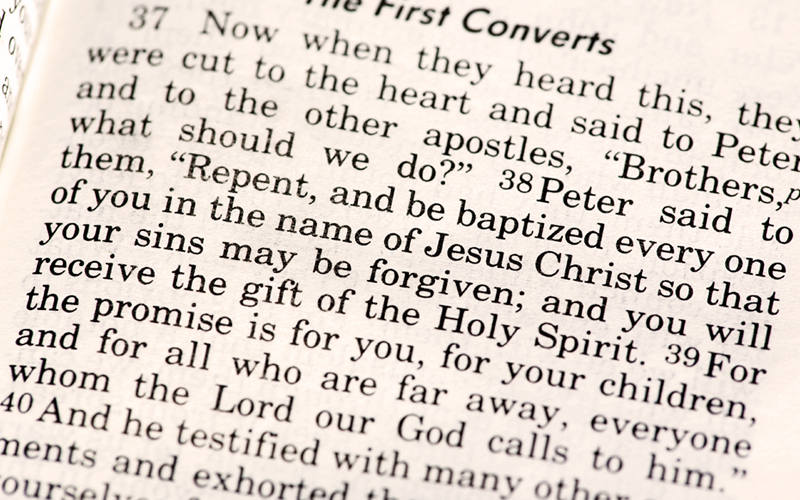
What Is the Gift of the Holy Spirit?

Acts 2:38

Peter said to them, ‘Repent, and each of you be baptized in the name of Jesus Christ for the forgiveness of your sins; and you will receive the gift of the Holy Spirit. For the promise is for you and your children and for all who are far off, as many as the Lord our God will call to Himself’” (Acts 2:38-39).

When Peter preached the first gospel sermon on the day of Pentecost, he convicted his audience of being guilty of putting the Savior to death. Yet the Lord provided a way for them to be forgiven of their sins and be saved. One of the promises they would receive when they obeyed the gospel was “the gift of the Holy Spirit.” What did Peter mean by this? There are a few ideas that have been suggested:

  • Some believe that this “gift” is the Holy Spirit Himself.
  • Others have concluded that this refers to the miraculous gifts of the Spirit.
  • Some see “the gift of the Holy Spirit” as synonymous with salvation.

Which of these views is correct? Or did Peter mean something else by this phrase?Continue Reading

Renewed Day by Day

Sunrise

Therefore we do not lose heart, but though our outer man is decaying, yet our inner man is being renewed day by day” (2 Corinthians 4:16).

Many see the start of a new year as a time of renewal – an opportunity to change the direction of their lives, to improve themselves in some way, and so on. The basic idea of this is good. However, as with all things, we need to think about it Biblically.

There are a few passages in the New Testament that talk about being renewed. When it is mentioned in the Bible, it is not tied to a certain day on the calendar. It is also not about just anything that might be new in our lives (new job, diet, exercise routine, etc.). Instead, the renewal discussed in the New Testament is always about improving our spiritual lives.

In this article, we will consider what the New Testament says about renewal – when it happens, what it means, and what the result of it is in our lives.Continue Reading