Add to Your Faith (Part 8): Add Love

Add to Your Faith

As we reach the end of Peter’s list of qualities we are to add to our faith, we come to one that Paul described in another context as “the greatest of these” (1 Corinthians 13:13) – love. It is fitting for this to be the final trait, though not because it is the least important. As faith is the foundation upon which all of these others are added, love must be the motivation for all that we do in these areas.

Now for this very reason also, applying all diligence, in your faith supply moral excellence, and in your moral excellence, knowledge, and in your knowledge, self-control, and in your self-control, perseverance, and in your perseverance, godliness, and in your godliness, brotherly kindness, and in your brotherly kindness, love. For if these qualities are yours and are increasing, they render you neither useless nor unfruitful in the true knowledge of our Lord Jesus Christ” (2 Peter 1:5-8).


Continue Reading

Add to Your Faith (Part 7): Add Brotherly Kindness

Add to Your Faith

The first few qualities that Peter said we are to add to our faith relate to behaviors, attitudes, or traits that impact us personally. We are to learn what is right (knowledge), do what is right (moral excellence), refrain from doing what is wrong (self-control), and continue to do these things (perseverance). In the previous lesson, we saw how our attitude toward God affects our behavior (godliness). The next characteristic (brotherly kindness) focuses on how we treat other people.

Now for this very reason also, applying all diligence, in your faith supply moral excellence, and in your moral excellence, knowledge, and in your knowledge, self-control, and in your self-control, perseverance, and in your perseverance, godliness, and in your godliness, brotherly kindness, and in your brotherly kindness, love. For if these qualities are yours and are increasing, they render you neither useless nor unfruitful in the true knowledge of our Lord Jesus Christ” (2 Peter 1:5-8).
Continue Reading

Living for Christ

Man with Open Bible

For the love of Christ controls us, having concluded this, that one died for all, therefore all died; and He died for all, so that they who live might no longer live for themselves, but for Him who died and rose again on their behalf” (2 Corinthians 5:14-15).

Jesus’ sacrifice on the cross was an act of love. Before His death, He told His apostles, “Greater love has no one than this, that one lay down his life for his friends” (John 15:13). This love should produce a deep sense of gratitude in us. Yet, as Paul explained, it must do more than that. It should also motivate us to live our lives for Him.

But what does it mean to live for Christ? It is more than just a belief in Him or an appreciation for what He has done. Our belief and appreciation should affect our behavior. So let us learn what it means to live for Christ. To do this, we will consider a few passages that contain analogies and instructions that help explain this concept.Continue Reading

Why Do We Obey God?

Man sitting and thinking with the Bible

Sadly, most people in the world do not recognize God. Therefore, it is unsurprising that they do not obey Him. Yet for those who claim to be Christians, obedience ought to be a way of life. But why should we live a life of obedience? 

The New Testament clearly indicates that we do not obey God in order to earn our salvation. Because all of us have sinned (Romans 3:23), the only thing we have earned is eternal punishment (Romans 6:23). Jesus said, “So you too, when you do all the things which are commanded you, say, ‘We are unworthy slaves; we have done only that which we ought to have done’” (Luke 17:10). Even if we could perfectly carry out every command the Lord has given, we are still “unworthy slaves” who are dependent upon the grace of God.

At the same time, Jesus implied in the statement above that His people would obey Him (“when” – not IF – “you do all the things which are commanded…”). When He commissioned His apostles to go out and make disciples, they were to teach them “to observe all that I commanded” (Matthew 28:20). Obedience is expected of those who would be Jesus’ disciples.

That brings us back to our question: Why do we obey God? There are a few reasons presented to us in the Scriptures:Continue Reading

Characteristics of Love

1 Corinthians 13, Love

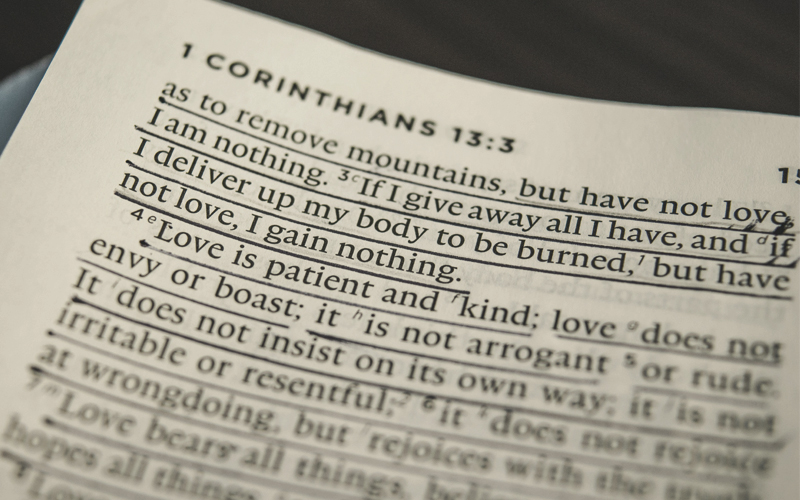
Near the end of his first letter to Corinth, Paul told the brethren, “Let all that you do be done in love” (1 Corinthians 16:14). However, he did not leave them in the dark as to what it meant to do things “in love.” He defined this earlier in the same letter when he described the characteristics of love (1 Corinthians 13:4-7). They were to walk in love as he described it to them.

Love is patient, love is kind and is not jealous; love does not brag and is not arrogant, does not act unbecomingly; it does not seek its own, is not provoked, does not take into account a wrong suffered, does not rejoice in unrighteousness, but rejoices with the truth; bears all things, believes all things, hopes all things, endures all things” (1 Corinthians 13:4-7).

We need to be reminded of these characteristics as well. The world tries to define love in such a way that it includes tolerating sin and encouraging others in their choices that are contrary to the will of God. Let us briefly notice these characteristics so we know how to walk in love.Continue Reading

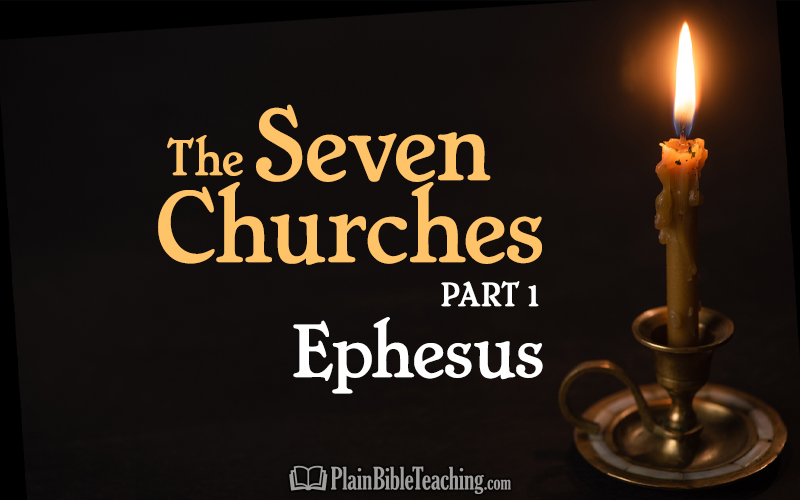
The Seven Churches (Part 1): Ephesus

The Seven Churches (Part 1): Ephesus

The first of the seven churches addressed by the Lord in the book of Revelation was located in Ephesus. The New Testament tells us more about this church and the city in which it was located than any of the other churches of Revelation. This letter teaches us the importance of doing what is right for the right reason.

To the angel of the church in Ephesus write: The One who holds the seven stars in His right hand, the One who walks among the seven golden lampstands, says this: ‘I know your deeds and your toil and perseverance, and that you cannot tolerate evil men, and you put to the test those who call themselves apostles, and they are not, and you found them to be false; and you have perseverance and have endured for My name’s sake, and have not grown weary. But I have this against you, that you have left your first love. Therefore remember from where you have fallen, and repent and do the deeds you did at first; or else I am coming to you and will remove your lampstand out of its place—unless you repent. Yet this you do have, that you hate the deeds of the Nicolaitans, which I also hate. He who has an ear, let him hear what the Spirit says to the churches. To him who overcomes, I will grant to eat of the tree of life which is in the Paradise of God’” (Revelation 2:1-7).

Continue Reading

Members One of Another

Group Praying

For through the grace given to me I say to everyone among you not to think more highly of himself than he ought to think; but to think so as to have sound judgment, as God has allotted to each a measure of faith. For just as we have many members in one body and all the members do not have the same function, so we, who are many, are one body in Christ, and individually members one of another” (Romans 12:3-5).

Paul told the saints in Rome they were “members one of another.” They were part of the same body; therefore, they were to act in a certain way toward one another.

The same is true for us today. As we are members of the Lord’s church – particularly members of a local congregation – certain responsibilities come with that. In order to help us learn how to treat our brethren and fellow members of the body of Christ, we are going to consider what Paul told the Christians in Rome about their treatment of “one another.”Continue Reading