Why Do We Obey God?

Man sitting and thinking with the Bible

Sadly, most people in the world do not recognize God. Therefore, it is unsurprising that they do not obey Him. Yet for those who claim to be Christians, obedience ought to be a way of life. But why should we live a life of obedience? 

The New Testament clearly indicates that we do not obey God in order to earn our salvation. Because all of us have sinned (Romans 3:23), the only thing we have earned is eternal punishment (Romans 6:23). Jesus said, “So you too, when you do all the things which are commanded you, say, ‘We are unworthy slaves; we have done only that which we ought to have done’” (Luke 17:10). Even if we could perfectly carry out every command the Lord has given, we are still “unworthy slaves” who are dependent upon the grace of God.

At the same time, Jesus implied in the statement above that His people would obey Him (“when” – not IF – “you do all the things which are commanded…”). When He commissioned His apostles to go out and make disciples, they were to teach them “to observe all that I commanded” (Matthew 28:20). Obedience is expected of those who would be Jesus’ disciples.

That brings us back to our question: Why do we obey God? There are a few reasons presented to us in the Scriptures:Continue Reading


“The Spirit Is Willing, but the Flesh Is Weak”

Jesus in the Garden with His Disciples Sleeping

Then Jesus came with them to a place called Gethsemane, and said to His disciples, ‘Sit here while I go over there and pray.’ And He took with Him Peter and the two sons of Zebedee, and began to be grieved and distressed. Then He said to them, ‘My soul is deeply grieved, to the point of death; remain here and keep watch with Me.’ And He went a little beyond them, and fell on His face and prayed, saying, ‘My Father, if it is possible, let this cup pass from Me; yet not as I will, but as You will.’ And He came to the disciples and found them sleeping, and said to Peter, ‘So, you men could not keep watch with Me for one hour? Keep watching and praying that you may not enter into temptation; the spirit is willing, but the flesh is weak’” (Matthew 26:36-41).

Jesus prayed to His Father in the Garden of Gethsemane shortly before His arrest. As was recorded in the passage above, three of His disciples (Peter, James, and John) accompanied Him. They were told to pray and to keep watch, but they fell asleep.

It was at this point when Jesus said, “The spirit is willing, but the flesh is weak” (Matthew 26:41). This statement applied directly to those three disciples. However, it also has applications for us today. Furthermore, the principle was illustrated in Jesus and the events that followed.

Let us see what we can learn from this statement.Continue Reading

Stop Sinning: Can You? Should You? Will You?

Stop sign

In His word, God has defined certain things as sin – fornication, idolatry, covetousness, strife, drunkenness, murder, lying, and more (1 Corinthians 6:9-10; Galatians 5:19-21; 1 Timothy 1:9-10; Revelation 21:8; et al.). The Scriptures also present a very clear instruction with regard to sin: “Become sober-minded as you ought, and stop sinning” (1 Corinthians 15:34).

It is to be expected that those in the world will ignore this instruction. Yet, sadly, many Christians seem to ignore this as well. They have believed the Calvinist’s lie that our flesh is inherently sinful and that we cannot help but sin. As we will see, the Scriptures present a different reality. Living in the flesh means it is possible for us to sin (1 John 1:10-2:1); but we are called to “be perfect, as [our] heavenly Father is perfect” (Matthew 5:48). With that in mind, let us consider three questions in this article.
Continue Reading

“You Were Unwilling” (11/5)

Thought from today’s Bible reading from Matthew 23; Luke 20-21.

Calvinism teaches that salvation is unconditional and that grace is irresistible. The reason for this is that man (allegedly) has no free will. Therefore, man would be unable to make the decision on his own to serve the Lord. Many passages refute this idea. One such passage is the following:

Jerusalem, Jerusalem, who kills the prophets and stones those who are sent to her! How often I wanted to gather your children together, the way a hen gathers her chicks under her wings, and you were unwilling. Behold, your house is being left to you desolate!” (Matthew 23-37-38).

Jesus had just condemned the Pharisees and scribes for various sins. He concluded with this lament. Notice what Jesus said here about salvation:
Continue Reading

God Wants Men to Be Free

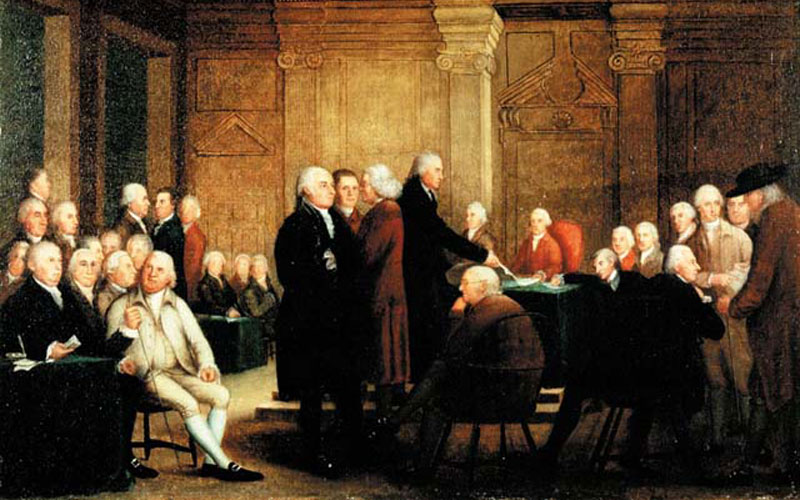
Congres Voting for Independence

July 4, 1776, thirteen American colonies declared their independence from the British Empire. One of the fundamental reasons cited for doing this was the fact that each individual has been given freedom by God. The Declaration of Independence states that all men “are endowed by their Creator with certain unalienable Rights, that among these are Life, Liberty and the pursuit of Happiness.” To this day we celebrate the birth of this nation that was founded on these principles.

As we reflect upon the principles of liberty and freedom, it is important to do so from a Biblical perspective. God wants men to be free. Let us notice what the Bible says about God’s desire for our freedom.
Continue Reading

Tools to Help Us Overcome Temptation

Tools

There are certain things that every one of us will face in life. One of these things is the temptation to sin. The Bible teaches us that “each one is tempted when he is carried away and enticed by his own lust” (James 1:14). James went on to show the end result of one giving in to temptation: “Then when lust has conceived, it gives birth to sin; and when sin is accomplished, it brings forth death” (James 1:15).

Sadly, all men and women of accountable age must acknowledge that there have been times when they have given in to temptation and have sinned. “If we say that we have no sin, we are deceiving ourselves and the truth is not in us” (1 John 1:8). The Scripture plainly says, “All have sinned and fall short of the glory of God” (Romans 3:23).

In spite of this, we can find encouragement in God’s promise about temptation: “No temptation has overtaken you but such as is common to man; and God is faithful, who will not allow you to be tempted beyond what you are able, but with the temptation will provide the way of escape also, so that you will be able to endure it” (1 Corinthians 10:13).
Continue Reading