Why Did Jesus Die on the Cross?

Crucifixion

Many people talk about our purpose as Christians in terms that seem to have reduced it to things that pertain to this world – loving others, being a good neighbor, being part of a close-knit community of Christians, and so on. All those are good and important, but is that all there is to being a Christian?

If the Lord’s purpose for us is that we would essentially be part of one big social club that makes a positive impact on those around us, we might ask the question: Why did Jesus have to die on the cross?

After all, even atheists and religious people who do not believe in Christ (Muslims, Hindus, Jews, etc.) can form close relationships with others and help the people around them. Yet none of them acknowledge the Lordship of Christ, and they believe the crucifixion of Jesus of Nazareth was nothing more than a historical fact (if that).

If we reduce Christianity to being nothing more than eating together, helping one another, and showing concern for those around us, how are we different from atheists and unbelievers who simply try to get along with others and help those in need?Continue Reading


“The Spirit Is Willing, but the Flesh Is Weak”

Jesus in the Garden with His Disciples Sleeping

Then Jesus came with them to a place called Gethsemane, and said to His disciples, ‘Sit here while I go over there and pray.’ And He took with Him Peter and the two sons of Zebedee, and began to be grieved and distressed. Then He said to them, ‘My soul is deeply grieved, to the point of death; remain here and keep watch with Me.’ And He went a little beyond them, and fell on His face and prayed, saying, ‘My Father, if it is possible, let this cup pass from Me; yet not as I will, but as You will.’ And He came to the disciples and found them sleeping, and said to Peter, ‘So, you men could not keep watch with Me for one hour? Keep watching and praying that you may not enter into temptation; the spirit is willing, but the flesh is weak’” (Matthew 26:36-41).

Jesus prayed to His Father in the Garden of Gethsemane shortly before His arrest. As was recorded in the passage above, three of His disciples (Peter, James, and John) accompanied Him. They were told to pray and to keep watch, but they fell asleep.

It was at this point when Jesus said, “The spirit is willing, but the flesh is weak” (Matthew 26:41). This statement applied directly to those three disciples. However, it also has applications for us today. Furthermore, the principle was illustrated in Jesus and the events that followed.

Let us see what we can learn from this statement.Continue Reading

The Gates of Hades Will Not Prevail

Rusty gate

Now when Jesus came into the district of Caesarea Philippi, He was asking His disciples, ‘Who do people say that the Son of Man is?’ And they said, ‘Some say John the Baptist; and others, Elijah; but still others, Jeremiah, or one of the prophets.’ He said to them, ‘But who do you say that I am?’ Simon Peter answered, ‘You are the Christ, the Son of the living God.’

And Jesus said to him, ‘Blessed are you, Simon Barjona, because flesh and blood did not reveal this to you, but My Father who is in heaven. I also say to you that you are Peter, and upon this rock I will build My church; and the gates of Hades will not overpower it” (Matthew 16:13-18).

In the passage above, Jesus asked His disciples what others said about Him and what they would say. Peter confessed that Jesus was the Christ, the Son of the living God. This was the basis for Jesus’ promise to build His church. His identity would be the foundation.

Immediately after making this promise, He said that not even “the gates of Hades” would “overpower it” or “prevail against it” (KJV). Hades is described in the Bible as the realm of departed spirits where they will experience either comfort or torment (Luke 16:19-31). Jesus’ point was this: Death would not stop His plan for His church. Let us notice four ways in which this is true.Continue Reading

Great Days in History (Part 3): The Day of Jesus’ Crucifixion

Great Days in History

Wishing to satisfy the crowd, Pilate released Barabbas for them, and after having Jesus scourged, he handed Him over to be crucified. The soldiers took Him away into the palace (that is, the Praetorium), and they called together the whole Roman cohort. They dressed Him up in purple, and after twisting a crown of thorns, they put it on Him; and they began to acclaim Him, ‘Hail, King of the Jews!’ They kept beating His head with a reed, and spitting on Him, and kneeling and bowing before Him. After they had mocked Him, they took the purple robe off Him and put His own garments on Him. And they led Him out to crucify Him. […] Then they brought Him to the place Golgotha, which is translated, Place of a Skull. They tried to give Him wine mixed with myrrh; but He did not take it. And they crucified Him…” (Mark 15:15-24).

After being born into this world and living a relatively short life here, Jesus died. However, more than anyone else, His death was significant. The day of Jesus’ crucifixion was the day in which He died on the cross for our sins. As we have already seen, this was part of God’s plan from the beginning (Revelation 13:8).Continue Reading

“My God, My God, Why Have You Forsaken Me?” (Sermon #11)

Subscribe: iTunes | Stitcher | RSS

"My God, My God, Why Have You Forsaken Me?" (Sermon #11)

We’re in between season 5 and season 6 which will start on April 25th. During the break we’re posting audio sermons each week instead of the regular episodes. The sermon for this week was preached on January 22, 2017 at the Eastside church of Christ in Morgantown, KY.

If you found this episode to be useful, please share it with others. Also, if you enjoyed the podcast, please leave a rating on iTunes or Stitcher. This also helps others hear about the podcast. Thanks.

The Death of Jesus

Crucifixion of Christ

In the previous article, we considered the life of Jesus. He perfectly fulfilled the Father’s will – even in His death. This article will focus on the death of Jesus and what we should understand about it.
Continue Reading

What Would Jesus Do?

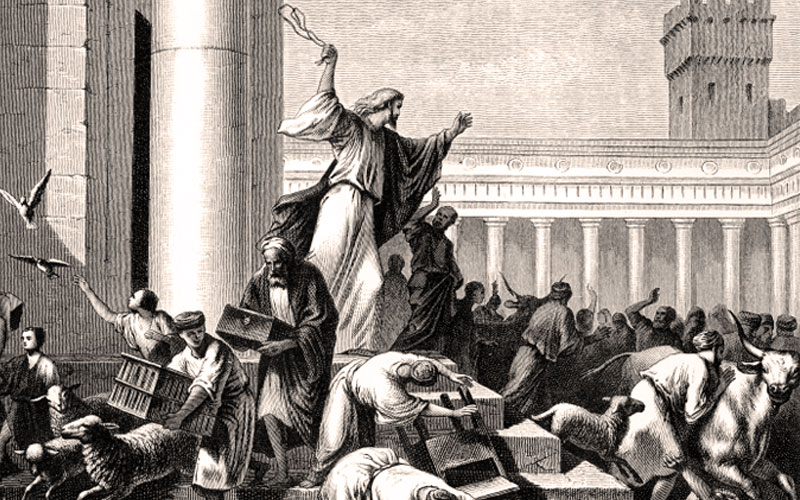
Jesus and the moneychangers

What would Jesus do? This is a question that many religious people ask themselves when they attempt to decide if a particular decision or activity is right. Their intentions might be good – trying to focus on Jesus and please Him. However, this question is the wrong question!

Why is this the wrong question? It is too subjective. It turns our responsibility into nothing more than what we think Jesus would do in a given situation. Instead of asking a subjective question like this (What would Jesus do?), let us consider some other questions to ask – questions for which we can find objective and definitive answers from the Scriptures.
Continue Reading