Big Words in the Bible (Part 2): Reconciliation

Big Words in the Bible

In the previous article, we discussed propitiation, which referred to the act of Jesus’ sacrifice on the cross. In this article, we are focusing on the result of Jesus’ sacrifice. Notice what Paul wrote:

For while we were still helpless, at the right time Christ died for the ungodly. For one will hardly die for a righteous man; though perhaps for the good man someone would dare even to die. But God demonstrates His own love toward us, in that while we were yet sinners, Christ died for us. Much more then, having now been justified by His blood, we shall be saved from the wrath of God through Him. For if while we were enemies we were reconciled to God through the death of His Son, much more, having been reconciled, we shall be saved by His life. And not only this, but we also exult in God through our Lord Jesus Christ, through whom we have now received the reconciliation” (Romans 5:6-11).

The Greek word for reconciliation is katallage. It refers to a restoration of divine favor after the enmity that existed between man and God is removed. The New Century Version uses the phrase, “Through him we are now God’s friends again” (Romans 5:11). The King James Version uses the term atonement, which shows how it is connected to our previous article on propitiation. Through Jesus’ death on the cross, He made a propitiatory sacrifice which enabled us to be reconciled to God.Continue Reading

Big Words in the Bible (Part 1): Propitiation

Big Words in the Bible

Of all the words we will discuss in our series, this one may be the most difficult to understand simply because it is not typically used in everyday conversation. Yet it is a vitally important concept because of its connection to Jesus’ death on the cross. See what the apostle Paul wrote about this:

But now apart from the Law the righteousness of God has been manifested, being witnessed by the Law and the Prophets, even the righteousness of God through faith in Jesus Christ for all those who believe; for there is no distinction; for all have sinned and fall short of the glory of God, being justified as a gift by His grace through the redemption which is in Christ Jesus; whom God displayed publicly as a propitiation in His blood through faith. This was to demonstrate His righteousness, because in the forbearance of God He passed over the sins previously committed; for the demonstration, I say, of His righteousness at the present time, so that He would be just and the justifier of the one who has faith in Jesus” (Romans 3:21-26).

The Greek word hilasterion is translated as propitiation. The New International Version uses the phrase sacrifice of atonement. It refers to a sacrifice to appease or satisfy God in order to turn His wrath away from those who sinned. Jesus’ sacrifice on the cross was a propitiatory sacrifice in that it turned away God’s wrath and provided us with an opportunity to be saved.Continue Reading

Why Did Jesus Die on the Cross?

Crucifixion

Many people talk about our purpose as Christians in terms that seem to have reduced it to things that pertain to this world – loving others, being a good neighbor, being part of a close-knit community of Christians, and so on. All those are good and important, but is that all there is to being a Christian?

If the Lord’s purpose for us is that we would essentially be part of one big social club that makes a positive impact on those around us, we might ask the question: Why did Jesus have to die on the cross?

After all, even atheists and religious people who do not believe in Christ (Muslims, Hindus, Jews, etc.) can form close relationships with others and help the people around them. Yet none of them acknowledge the Lordship of Christ, and they believe the crucifixion of Jesus of Nazareth was nothing more than a historical fact (if that).

If we reduce Christianity to being nothing more than eating together, helping one another, and showing concern for those around us, how are we different from atheists and unbelievers who simply try to get along with others and help those in need?Continue Reading

The Death of Jesus

Crucifixion of Christ

In the previous article, we considered the life of Jesus. He perfectly fulfilled the Father’s will – even in His death. This article will focus on the death of Jesus and what we should understand about it.
Continue Reading

Atonement (Season 3, Episode 5)

Subscribe: iTunes | Stitcher | RSS

Atonement (Season 3, Episode 5)

Three weeks ago we discussed the five types of offerings found in the book of Leviticus. One of these was the sin offering. These were made periodically, whenever someone would sin unintentionally. However, there was also an annual day of atonement – the one time a year in which the high priest would enter the most holy place. In this episode, we’re going to discuss the day of atonement and how the sacrifices were a foreshadowing of the work of Christ.

Mentioned in this episode:

If you found this episode to be useful, please share it with others. Also, if you enjoyed the podcast, please leave a rating on iTunes or Stitcher. This also helps others hear about the podcast. Thanks.

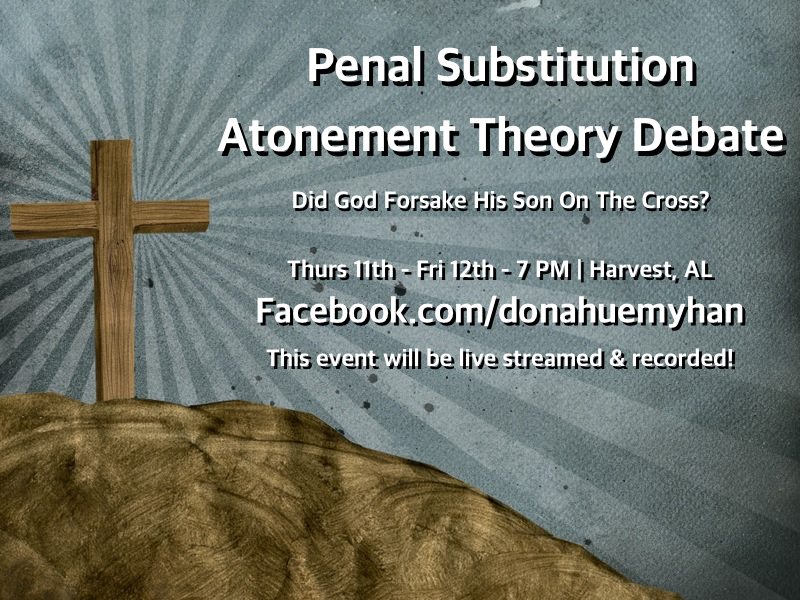
Donahue – Myhan Debate

Donahue-Myhan Debate

This debate will be streamed live online December 11 & 12 at 7:00pm CST. You can watch the debate here.
Continue Reading

Seated at the Right Hand of God

At the beginning of the book of Hebrews, the writer began by reminding the brethren that Jesus was God’s spokesman for “these last days” (Hebrews 1:2). He then explained how Jesus was qualified for this position:

And He is the radiance of His glory and the exact representation of His nature, and upholds all things by the word of His power. When He had made purification for sins, He sat down at the right hand of the Majesty on high” (Hebrews 1:3).

In this short article, I want to focus on part of this description of Christ. So for a few moments, I invite you to consider with me the last part of this verse: “When He had made purification for sins, He sat down at the right hand of the Majesty on high.” If we understand this phrase, we will have a fundamental understanding of the gospel of Christ and why His new law is superior to the Law of Moses.
Continue Reading