Big Words in the Bible (Part 5): Resurrection

Big Words in the Bible

The final word we will discuss in our series is resurrection. It is likely the one with which we are the most familiar. There is a lot we could say about it, but we will consider some highlights to show why this word is so important. As we will see, without this, none of the other words we have studied in this series would matter.

Paul, a bond-servant of Christ Jesus, called as an apostle, set apart for the gospel of God, which He promised beforehand through His prophets in the holy Scriptures, concerning His Son, who was born of a descendant of David according to the flesh, who was declared the Son of God with power by the resurrection from the dead, according to the Spirit of holiness, Jesus Christ our Lord, through whom we have received grace and apostleship to bring about the obedience of faith among all the Gentiles for His name’s sake, among whom you also are the called of Jesus Christ…” (Romans 1:1-6).

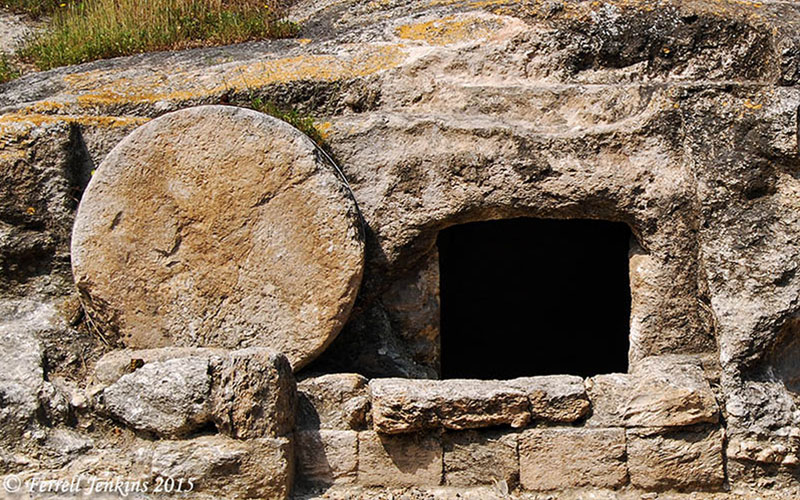
The word translated as “resurrection” (anastasis) means a raising from the dead. It describes one being raised to new life. Jesus died on the cross and was raised from the dead, which gives us hope beyond this life.Continue Reading

The Spirit as a Pledge

Handshake

For we know that if the earthly tent which is our house is torn down, we have a building from God, a house not made with hands, eternal in the heavens. For indeed in this house we groan, longing to be clothed with our dwelling from heaven, inasmuch as we, having put it on, will not be found naked. For indeed while we are in this tent, we groan, being burdened, because we do not want to be unclothed but to be clothed, so that what is mortal will be swallowed up by life. Now He who prepared us for this very purpose is God, who gave to us the Spirit as a pledge” (2 Corinthians 5:1-5).

In the passage above, after describing the eternal home in heaven that the Lord has prepared for His people, Paul talked about God giving the Holy Spirit “as a pledge.” We might wonder what this means. What is a pledge? Why did God do this? How is the Spirit given in this way?

Paul used the same language in his letter to the church in Ephesus, when he wrote, “In Him, you also, after listening to the message of truth, the gospel of your salvation having also believed, you were sealed in Him with the Holy Spirit of promise, who is given as a pledge of our inheritance, with a view to the redemption of God’s own possession, to the praise of His glory” (Ephesians 1:13-14). That passage also mentioned being “sealed…with the Holy Spirit.” The same thought is expressed earlier in Paul’s second letter to Corinth: “Who also sealed us and gave us the Spirit in our hearts as a pledge” (2 Corinthians 1:22).

It is helpful to understand what Paul meant in these passages. This is intended to assure Christians of their hope. So in this article, we will examine what it means for the Spirit to be a “pledge” and what benefit this has for us.Continue Reading

Why Did Jesus Die on the Cross?

Crucifixion

Many people talk about our purpose as Christians in terms that seem to have reduced it to things that pertain to this world – loving others, being a good neighbor, being part of a close-knit community of Christians, and so on. All those are good and important, but is that all there is to being a Christian?

If the Lord’s purpose for us is that we would essentially be part of one big social club that makes a positive impact on those around us, we might ask the question: Why did Jesus have to die on the cross?

After all, even atheists and religious people who do not believe in Christ (Muslims, Hindus, Jews, etc.) can form close relationships with others and help the people around them. Yet none of them acknowledge the Lordship of Christ, and they believe the crucifixion of Jesus of Nazareth was nothing more than a historical fact (if that).

If we reduce Christianity to being nothing more than eating together, helping one another, and showing concern for those around us, how are we different from atheists and unbelievers who simply try to get along with others and help those in need?Continue Reading

The Seven Churches (Part 2): Smyrna

The Seven Churches (Part 2): Smyrna

The second church addressed by the Lord in the book of Revelation was the church in Smyrna. Neither the church nor the city are mentioned anywhere else in the New Testament. Yet the Lord’s letter to them provides a message of hope because the tribulations they were experiencing at that moment would not last long.

And to the angel of the church in Smyrna write: The first and the last, who was dead, and has come to life, says this: ‘I know your tribulation and your poverty (but you are rich), and the blasphemy by those who say they are Jews and are not, but are a synagogue of Satan. Do not fear what you are about to suffer. Behold, the devil is about to cast some of you into prison, so that you will be tested, and you will have tribulation for ten days. Be faithful until death, and I will give you the crown of life. He who has an ear, let him hear what the Spirit says to the churches. He who overcomes will not be hurt by the second death’” (Revelation 2:8-11).

Continue Reading

Onward and Upward (12.21.23)

Subscribe: Apple Podcasts | Google Podcasts | Spotify | RSS

Plain Bible Teaching Podcast

We’re nearing the end of the year, which has a lot of people looking for ways to improve their lives and make changes for the better. As Christians, we always need to be doing this – especially from a spiritual standpoint. When Paul wrote to the brethren in Philippi, he talked about pressing on toward the goal. What does that mean for us? We’re going to touch on some points in our episode today.Continue Reading

Seek the Welfare of the City

Babylon

The prophet Jeremiah sent a letter to God’s people who were in Babylonian captivity. The letter contained instructions about how they were to conduct themselves while they lived as strangers in a foreign land. It also explained what they could hope for in the future.

Today, we live as exiles in the world. As we consider what Jeremiah had to say to the Jews in captivity, the basic points he made to them are helpful to us as well.

However, before we get to the letter that Jeremiah sent, it would be helpful to understand a little bit about what happened just before this. Back in Jerusalem, Hananiah falsely prophesied that Babylon would soon be defeated (Jeremiah 28:1-4, 11), allowing the captives to return. Jeremiah refuted this (Jeremiah 28:12-14). Afterward, Jeremiah sent a letter to those who were in Babylon (Jeremiah 29:1-3).

The recipients of Jeremiah’s letter may have hoped that he was announcing deliverance in the near future. Instead, they were told that they would be in captivity for “seventy years” (Jeremiah 29:10). In other words, those who had been taken would die in captivity – something that would surely be difficult and disappointing to hear. Notice what Jeremiah wrote to them:Continue Reading

Pressing On Toward the Goal

Mountain Path

At the start of the new year, we focus a lot on goals we want to reach in the future. We may set goals regarding our health, work, or relationships. All of these may be good, but we need to make sure we never lose sight of what should be our primary goal. In writing about his goal to “attain to the resurrection from the dead” (Philippians 3:11), Paul said this:

Not that I have already obtained it or have already become perfect, but I press on so that I may lay hold of that for which also I was laid hold of by Christ Jesus. Brethren, I do not regard myself as having laid hold of it yet; but one thing I do: forgetting what lies behind and reaching forward to what lies ahead, I press on toward the goal for the prize of the upward call of God in Christ Jesus” (Philippians 3:12-14).

In these verses, Paul described three things that he was doing and that we also need to do as Christians. Let us consider them here.Continue Reading