More Righteous than the Religious

Jesus and the Pharisees

The title of this article may sound a little odd. But let me begin by stating that this article is not about how organized religion is wrong – it is not. The point of the article is not to say that religious people are not righteous – many of them are, and they should be. So what is the purpose of this article?

The title is based on one of Jesus’ statements from the Sermon on the Mount:

For I say to you that unless your righteousness surpasses that of the scribes and Pharisees, you will not enter the kingdom of heaven” (Matthew 5:20).

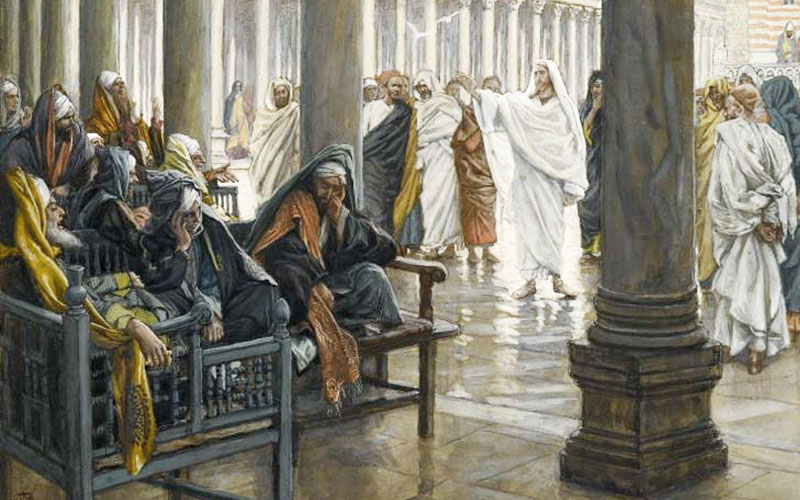
The scribes and Pharisees were regarded as the religious leaders of that day. Jesus’ point was that in order to follow Him, we must live up to a higher standard than what is commonly accepted – even commended to us – among the religious world. Doing just enough to blend in with those who are religious is not enough to be part of His kingdom.
Continue Reading

Hold Fast the Pattern

Blueprint

Hold fast the pattern of sound words” (2 Timothy 1:13, NKJV). This was Paul’s instruction to a young evangelist. Like most other instructions we read in the New Testament, it is just as applicable to us today as it was to Timothy in the first century. But not all of these instructions are emphasized much today. It is not common to hear a denominational preacher talk about the New Testament pattern. There are some in the Lord’s church who do not like to talk about it much either.

In fact, if you emphasize the pattern, some will label you as a legalist or a Pharisee. But we know we must follow the pattern because that is what Paul told Timothy to do. So let us see what the Bible says about holding fast the pattern.
Continue Reading

Love for Others

David and Mephibosheth

King David has been described as a man after God’s own heart (Acts 13:22). While there are many qualities of David we should emulate, we will focus on one in this article – his love for others.

David showed love for a broad range of people. We can see the love and kindness he shared with his friends – namely Jonathan (1 Samuel 18:1; 2 Samuel 1:26). He loved his enemies, even sparing Saul’s life twice when he had opportunity to kill him (1 Samuel 24:1-4; 26:2-11). Both instances came when Saul was pursuing David in order to kill him. We also can see David’s love given to those in need with his example of caring for Mephibosheth (2 Samuel 9).
Continue Reading

Forsaking Methodology

[This article was written by Brandon Trout.]

Teaching the Good News can be a difficult work. A Christian is required to anticipate teaching things that may be difficult, even offensive, to their audience. 2 Timothy 4:2 teaches that our responsibility is to “preach the word; be ready in season and out of season; reprove, rebuke, and exhort, with complete patience and teaching” [ESV – et seq.]. The writer then continues to caution that many will “turn away from listening to the truth,” seeking out teachers who will “suit their own passions.Continue Reading

True Love

Love is a favorite topic for many in the religious world. While it is good for us to talk about love, John warned us not to stop there: “Little children, let us not love with word or with tongue, but in deed and truth” (1 John 3:18). That is, we must display love in our actions, not just our words.
Continue Reading

“Now Concerning the Collection” – Part 8: Motivation for Giving

Collection Plate

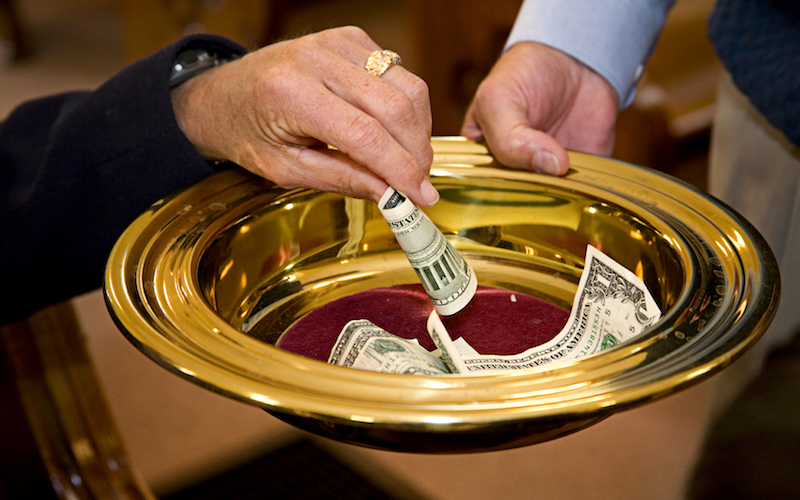
As Christians, we are to “consider how to stimulate one another to love and good deeds” (Hebrews 10:24). After discussing various things relating to the collection – the act itself, the nature of giving, our attitude – we should think about some things that will motivate us to improve our giving. Paul wrote to the Corinthians in order to motivate them to carry out their “previously promised bountiful gift” (2 Corinthians 9:5). In doing this, he appealed to three things to encourage them. These points are good for us to consider as well as we seek to improve our giving.
Continue Reading

Was Jesus a Liberal? (Part 3)

Was Jesus a Liberal? This is the accusation we set out to address. We have looked at His approach to Scripture, events in His life, and various teachings of His law. Do the things we have noticed fit into the definition of what it means to be “liberal”? Let us reexamine the terms used to describe the concept and see if Jesus fits the pattern.

Continue Reading