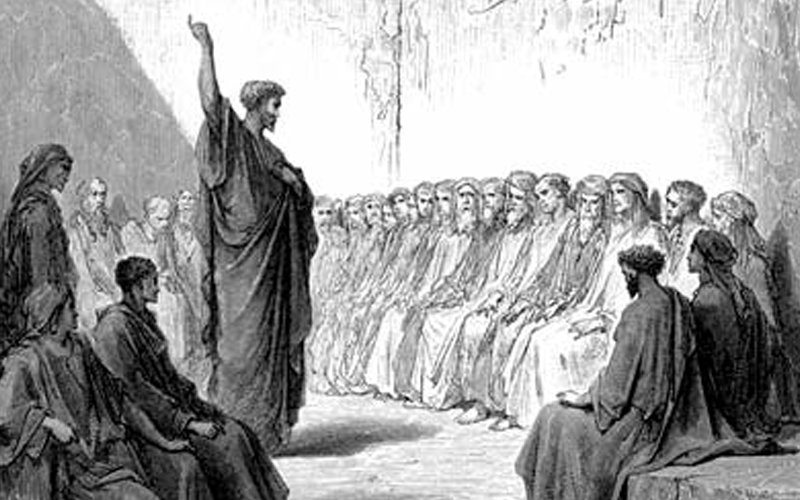
In Paul’s preaching, he appealed to reason. We see this example in his two visits to Ephesus. During his first brief visit, he “entered the synagogue and reasoned with the Jews” (Acts 18:19). When he returned to Ephesus, after being forced to leave the synagogue, he was “reasoning daily in the school of Tyrannus” (Acts 19:9).
This style of preaching was not reserved for the people of Ephesus because of their particular background or circumstances. Instead, this was the kind of preaching Paul did everywhere he went. When he went to Thessalonica, Luke records: “And according to Paul’s custom, he went to them, and for three Sabbaths reasoned with them from the Scriptures, explaining and giving evidence that the Christ had to suffer and rise again from the dead…” (Acts 17:2-3).
Paul’s preaching was very different from the preaching done by many in the religious world today. Notice what Paul did not do:
- He did not appeal to emotion – Emotions are natural; however, they can be deceptive. The wise man said, “There is a way which seems right to a man, but its end is the way of death” (Proverbs 14:12). Emotions can be a byproduct of our service to God, but they are not to be the basis for it.
- He did not appeal to greed – Televangelists are notorious for this. They promise that if you send them your money, God will bless you many times beyond this. Many others also appeal to greed, telling people that God will physically bless us if we follow Him. But following God is not the way to riches. Those who teach otherwise are described as “men of depraved mind and deprived of the truth” (1 Timothy 6:5). Jesus promised that if we follow His teachings our basic necessities will be met (Matthew 6:31-33), but nothing is guaranteed beyond that. This is why contentment is so important (Philippians 4:11).
- He did not appeal to tradition – Paul was teaching something new, not something that had been taught for years. But truth is not determined by the amount of time it has been taught. Jesus condemned the Pharisees because they “invalidated the word of God for the sake of [their] tradition” (Matthew 15:6). Long-held traditions can be wrong. We must appeal to truth, not human traditions.
- He did not appeal to the fact that his message was new – Sometimes when a false practice is done as a tradition, people will rightly reject the human tradition but wrongly adopt another practice that is new. The latest thing is not necessarily going to be right. But some get so caught up in the excitement of the new teaching or practice that they become like the ones Paul warned the Ephesians about becoming: “Children, tossed here and there by waves and carried about by every wind of doctrine” (Ephesians 4:14).
- He did not appeal to human wisdom – The wisdom of God and the wisdom of the world are at odds with one another (1 Corinthians 1:19-21). So Paul told the Corinthians, “I determined to know nothing among you except Jesus Christ, and Him crucified” (1 Corinthians 2:2). This was so that their “faith would not rest on the wisdom of men, but on the power of God” (1 Corinthians 2:5). Rather than preaching worldly wisdom, he preached “God’s wisdom” (1 Corinthians 2:7).
Instead of appealing to these things like many do today, we must reason from the Scriptures, explain them, and give evidence showing why our message is the truth. Reasoned preaching may seem boring and old-fashioned to many – hence the reason for the various appeals religious teachers make. But reasoned preaching is the divinely approved method of preaching.
Preachers, make sure you are preaching this way.
Christians, make sure you demand this kind of preaching in the pulpit.