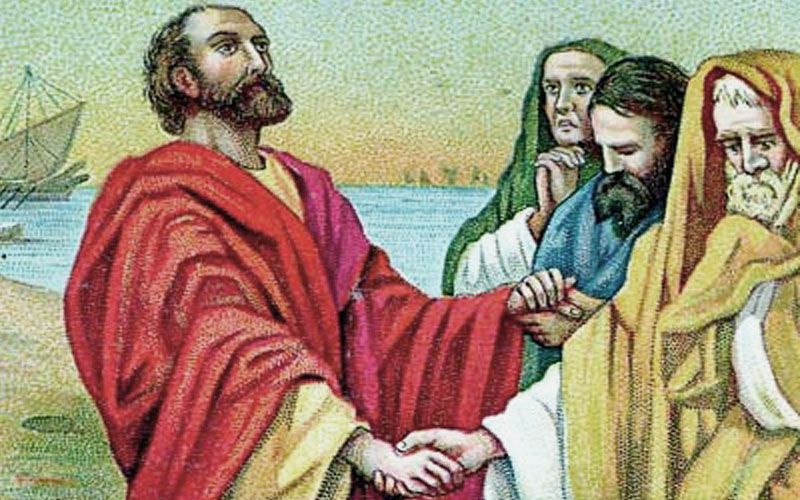
On his way to Jerusalem, Paul stopped in Miletus to meet with the elders from the church in Ephesus (Acts 20:17ff). In this farewell address, Paul reminded them that the message he brought to them was “the gospel of the grace of God” (Acts 20:24). This was the message that Paul preached “everywhere in every church” (1 Corinthians 4:17). He preached the gospel to those who were already Christians (Romans 1:15) and to those who had not yet heard of Jesus (Romans 15:20). The gospel is the message that Jesus told His apostles to preach (Mark 16:15) and is the message that we must preach today (Galatians 1:8-9).
The gospel both reveals and is part of God’s grace. This is why we must teach “the whole counsel of God” as Paul did. He wrote to the church in Ephesus, “By grace you have been saved through faith” (Ephesians 2:8). He explained to Titus that God’s grace not only saves us, but also instructs us how to live (Titus 2:11-12). The word of God contains “the things freely given to us by God” (1 Corinthians 2:12). So in preaching the message of grace, we must preach two things – what God has done to bring salvation and what God instructs us to do to receive salvation.
But what exactly are we to preach? What is inherent in “the gospel of the grace of God”? We can find the answers to these questions by looking at Paul’s instructions to the Ephesians. What was included in Paul’s message when he presented “the gospel of the grace of God”?
Jesus Has Come
This was what Paul first preached when he came to Ephesus (Acts 19:1-5). He found twelve men who had been baptized into John’s baptism. Being disciples of John the Baptist, they were looking for the Messiah to come. Paul showed them that the one they were anticipating was Jesus. Their immediate response was to be “baptized in the name of the Lord Jesus” (Acts 19:5).
When we consider the grace of God and what He has done to make salvation possible, the focal point is Christ: “God so loved the world, that He gave His only begotten Son” (John 3:16). The Father gave His Son to die on the cross and Jesus willingly laid down His life for us (John 10:15, 17). Christ’s sacrifice was the cornerstone of God’s plan (Acts 2:23). Immediately after sin entered the world, this plan was announced with the prophecy that the seed of woman would bruise the head of the serpent – Satan (Genesis 3:14-15). In preaching the gospel of the grace of God, we must begin with what God has done to make salvation possible, namely the sacrifice of Jesus Christ.
Conditions of Grace
By the grace of God, we can be saved; but there are conditions that one must meet in order to be saved. God’s grace “has appeared… to all men” (Titus 2:11), but not all will be saved (Matthew 7:13-14). The reason is because many will not do what God requires. So in preaching the gospel of the grace of God, we must preach the conditions that God has placed upon salvation.
Paul summarized the conditions in his meeting with the Ephesian elders: “Repentance toward God and faith in our Lord Jesus Christ” (Acts 20:21). Faith is a belief and trust that God and His way is right. Repentance means to turn to serving God from serving the devil – from disobedience to obedience. Faith is manifested in our actions (repentance) when we do the works God has given us to do (James 2:17, 26). It is also manifested in our words as we confess our faith in Christ (Romans 10:9-10) and “speak confidently” regarding things that have been divinely revealed (Titus 3:8).
When we consider the conditions of grace, we cannot ignore the importance of baptism, even though many want to do this. Many are content to talk about faith and repentance, but they reject baptism. However, baptism is an act of faith (Colossians 2:12) that puts us in Christ (Galatians 3:27). It is in baptism where one’s sins are washed away (Acts 22:16). The Ephesians were taught about baptism (Acts 19:5). It was so important that Paul baptized them during their first meeting. Baptism is one of the conditions that we must meet in order to be saved. After baptism, we must continue in faith and obedience (Revelation 2:10).
The Kingdom of God
Paul “went about preaching the kingdom” (Acts 20:25). This was part of his message in preaching “the gospel of the grace of God” (Acts 20:24). Many say we should just preach Christ and that our message should be centered around the grace of God. But we see in Paul’s statements to the Ephesian elders that preaching grace includes preaching about the kingdom. Philip went to Samaria “proclaiming Christ to them” (Acts 8:5). This included “preaching the good news about the kingdom of God” (Acts 8:12).
To preach the kingdom requires us to preach certain things. We must preach the rule and authority of Christ. Pilate understood this. When Jesus spoke to him about His kingdom, Pilate answered, “So you are a king?” (John 18:36-37). Every kingdom has a king. A king rules over His kingdom. Jesus told His disciples, “All authority has been given to Me in heaven and on earth” (Matthew 28:18). His authority was the basis for the teaching and preaching that would be done from that point forward (Matthew 28:19-20).
We must also teach that the kingdom has come. Many have the idea that the Lord will return one day and then establish His kingdom. But Paul wrote to the Colossians who had already been “transferred…to the kingdom” (Colossians 1:13). The kingdom is the church. Jesus used the terms interchangeably (Matthew 16:18-19). The kingdom was established on the day of Pentecost (Acts 2). The kingdom, or church, belongs to Christ. Because He has “all authority” (Matthew 28:18), man has no right to change the church to suit his own desires.
Warnings Against Apostasy
Preaching against false teachers and errors that may be creeping into the church is unpopular among many professed Christians. Many want to emphasize what they view as “positive” topics – love, hope, grace, and so on. Yet Paul, in preaching “the gospel of the grace of God” (Acts 20:24), warned against apostasy. He said he did this “night and day for a period of three years” (Acts 20:31). He warned about those who were outside and inside the church (Acts 20:29-30). These warning were not separate from the gospel of grace; rather, they were part of the gospel of grace.
Some may wonder how warnings about apostasy are part of God’s grace. We are saved by the grace of God (Ephesians 2:8), which means that God has given us everything we need to be saved. His word tells also us, “The wages of sin is death” (Romans 6:23). Those who “do not obey the gospel…will pay the penalty of eternal destruction” (2 Thessalonians 1:8-9). Regarding false teaching, Paul wrote, “If any man is preaching to you a gospel contrary to what you received, he is to be accursed” (Galatians 1:9). John wrote, “If anyone comes to you and does not bring this teaching, do not receive him” (2 John 10). The one who does “participates in his evil deeds” (2 John 11). Sin and error lead to eternal destruction. God, in His grace, shows us how to avoid destruction and have a home in heaven. If one wants to preach “the gospel of the grace of God,” he must warn against apostasy.
The New Testament contains warnings of specific errors and false teachers. Paul, by inspiration of the Spirit, warned of some going into apostasy and specifically mentioned the errors of forbidding marriage and abstaining from certain foods (1 Timothy 4:1-3). In the second letter to Timothy, Paul warned of false teachers and mentioned two by name: Hymenaeus and Philetus (2 Timothy 2:16-18). He did not just point out their error – that the resurrection was past – but specifically named them. We also must warn in the same way today, even if it is unpopular.
We must realize that these warnings are part of God’s grace. How? They help prevent us from falling away. Peter warned of the devil who “prowls around like a roaring lion, seeking someone to devour” (1 Peter 5:8). Just a few verses later, he said he wrote concerning “the true grace of God” (1 Peter 5:12). Satan can cause us to be lost. So warning about Satan is part of God’s grace. Sin, error, and false teachers can also cause us to be lost. So it is well within the message of grace to warn about these as well.
Conclusion
We have looked at Paul’s preaching to the Ephesians to see what is involved in preaching “the gospel of the grace of God” (Acts 20:24). It involves teaching about Jesus and His sacrifice that makes salvation possible, the conditions we must meet in order to be saved, the kingdom and authority of Christ, and warnings about things that could lead us astray.
Paul told the Ephesian elders, “I commend you to God and to the word of His grace, which is able to build you up and to give you the inheritance among all those who are sanctified” (Acts 20:32). We continue to preach in order to build one another up as we strive to “grow in the grace and knowledge of our Lord and Savior Jesus Christ” (2 Peter 3:18). We do this so we might receive the inheritance. Our ultimate reward is heaven. Paul wrote, “The free gift of God is eternal life in Christ Jesus our Lord” (Romans 6:23). This is why we preach. Let us keep preaching the gospel as Paul did, and not resort to a “different gospel” (Galatians 1:6).