Why did Jesus come to save us? There are several answers we could give that would be correct: He loved us (John 15:13), the Father loved us (John 3:16), He needed to fulfill “the eternal purpose” (Ephesians 3:11), He wanted to “bring us to God” (1 Peter 3:18), and so on. But why did we need to be saved? Notice what Jesus said:
“For the Son of Man has come to seek and to save that which was lost” (Luke 19:10).
Simply put, Jesus came to save us because we were lost. In Luke 15, Jesus used three parables to describe things that were lost: the lost sheep (Luke 15:3-7), the lost coin (Luke 15:8-10), and the lost son (Luke 15:11-24). When we consider these three parables, we learn several lessons: (1) why being lost is dangerous for us, (2) why the Lord saw fit to seek for us when we were lost, and (3) what our responsibility is in being saved.
The Lost Sheep
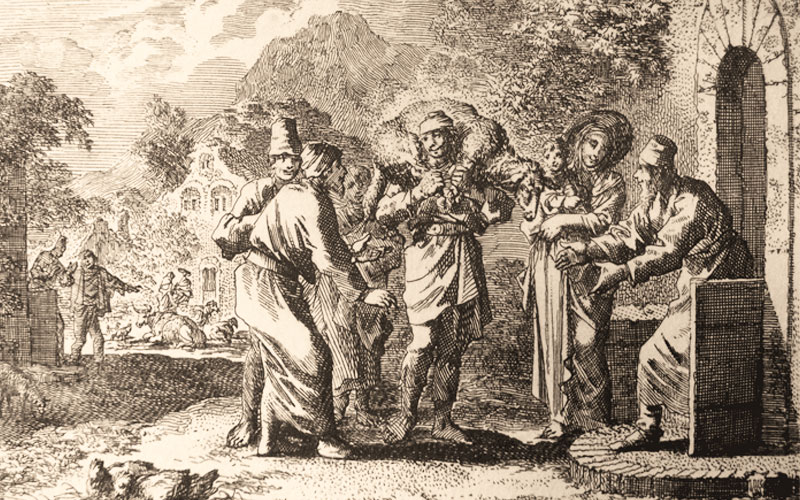
In the first parable, Jesus described a sheep that had wandered off (Luke 15:3-7). When one is lost and apart from Christ, he is just as helpless as the sheep that became separated from the shepherd. When Jesus came to die on the cross, man was “helpless” (Romans 5:6). Apart from Christ, man is unable to save himself from his sins. Like a sheep without a shepherd to lead, man is without direction in terms of finding the way to eternal life. Jeremiah said, “I know, O Lord, that a man’s way is not in himself, nor is it in a man who walks to direct his steps” (Jeremiah 10:23).
Though we are helpless like sheep when we are lost, there is another sense in which we are to be like sheep after we are saved. Sheep follow their shepherd. We must follow our shepherd – Jesus Christ. He said, “My sheep hear My voice, and I know them, and they follow Me” (John 10:27). Though we were previously “straying like sheep,” we are now to follow our “Shepherd” (1 Peter 2:25). He has shown us the path to take through His example (1 Peter 2:21-22) and His words (John 10:27).
The Lost Coin
In the second parable, Jesus spoke of a woman who lost one gold coin (Luke 15:8-10). Once she searched through the house and found it, she rejoiced. Why? It was because the coin was valuable. This is why Jesus came to save the lost – we are valuable to Him. He was willing to lay down His life (John 10:17-18) because we were valuable to Him. The Lord does not want to see any perish (2 Peter 3:9) because we are all valuable to Him.
Another interesting point to be made from the coin analogy is that coins often bear the image of one in authority. This was certainly true in the first century. When Jesus was asked about the lawfulness of the poll-tax, He called for a coin. When it was brought to Him, He asked, “Whose likeness and inscription is this?” They answered that it was Caesar’s (Matthew 22:17-21). Caesar was the one in power; therefore, the coins in circulation bore his image. Like a coin, we also bear the image of one in authority. However, we do not bear the image of a king or some other ruler. We have been made “in the image of God” (Genesis 1:27). Therefore, Jesus told those who questioned Him about the poll-tax: “Render to Caesar the things that are Caesar’s; and to God the things that are God’s” (Matthew 22:21). We must, therefore, “present [our] bodies a living a holy sacrifice” and “glorify God” in our bodies (Romans 12:1; 1 Corinthians 6:20).
The Lost Son
In the third parable, Jesus told of the lost son – often referred to as the prodigal son (Luke 15:11-24). Unlike the sheep who happened to wander off from the fold, the prodigal son made a conscious decision to leave his father. Using the parable of a lost son emphasizes the fact that we are free to choose the direction we will take in life – either to follow the Lord or to leave Him. The Scriptures emphasize the need for us to choose wisely. Joshua challenged the people of Israel: “Choose for yourselves today whom you will serve.” He had already made the choice himself: “As for me and my house, we will serve the Lord” (Joshua 24:15). Paul said, “Knowing the fear of the Lord, we persuade men” (2 Corinthians 5:11). Persuasion is necessary because we must exercise our free will in such a way that we choose to follow the Lord.
The fact that a son is mentioned also points to the inheritance awaiting us from God. God has seen fit to offer us “an inheritance which is imperishable and undefiled and will not fade away, reserved in heaven” (1 Peter 1:4). As “children of God” (1 John 3:1), we can look forward to this reward. But we must beware of the danger that exists of us missing out on this reward through disobedience. The Hebrew writer said, “Therefore, let us fear if, while a promise remains of entering His rest, any one of you may seem to have come short of it” (Hebrews 4:1). “Therefore let us be diligent to enter that rest, so that no one will fall, through following the same example of disobedience” (Hebrews 4:11). Rather than becoming unfaithful and losing our reward, let us “be faithful until death,” so that we may receive “the crown of life” (Revelation 2:10).