A movement began a couple hundred years ago in this country to try to restore New Testament Christianity. In this period, men discarded the creeds and churches of men to return to the pattern found in the New Testament. In 2 Kings 22, a similar restoration began. The goal was to return to the pattern found in the Law of Moses. The principles in this chapter show how faithful service to God can be restored and maintained. These principles were held by those who worked to restore New Testament Christianity in this country. The same principles can help us today to restore and maintain faithful service to God. Let us examine some lessons from the restoration of King Josiah’s day.
The Word of God is Our Standard
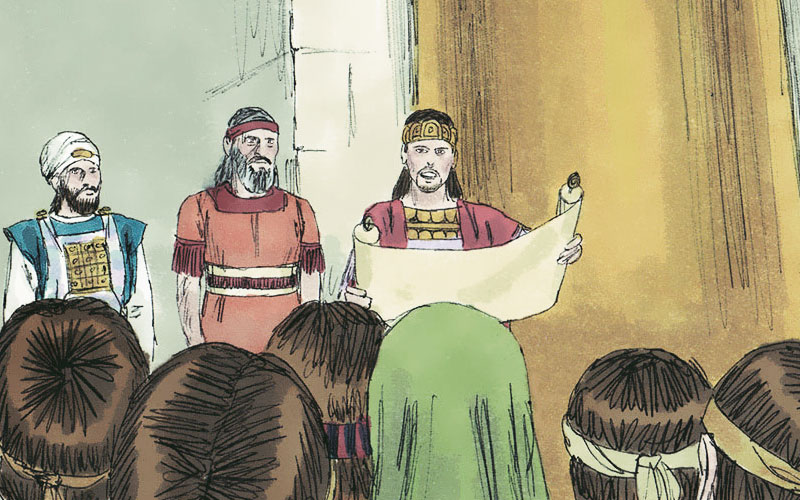
In the eighteenth year of Josiah’s reign, work was started to repair the temple. As the workmen labored there, they made a discovery. They found the book of the law – God’s law for Israel. “Then Hilkiah the high priest said to Shaphan the scribe, ‘I have found the look of the law in the house of the Lord.’ And Hilkiah gave the book to Shaphan who read it. Shaphan the scribe came to the king… Moreover, Shaphan the scribe told the king saying, ‘Hilkiah the priest has given me a book.’ And Shaphan read it in the presence of the king” (2 Kings 22:8-10). The next chapter goes on to describe changes that Josiah made in Israel as a result of hearing the teachings from God’s law. These changes would not have occurred if he had not gone back to the word of God. That was the standard the Israelites were to follow.
God’s word is the only logical place to look for our authority. If we want to know what we ought to be doing, we need to look to the Bible. The reason for this is that judgment will be according to that standard. In Josiah’s day, their standard was the Law of Moses. So Israel was “to observe and to do all his commandments” (Deuteronomy 28:1). If they did, they would be blessed (Deuteronomy 28:2). If they failed to follow this standard, they would be punished (Deuteronomy 28:15).
Today, we live under the new covenant, different from the covenant governing Israel in the days of Josiah. But the fact remains that the word of God is our standard. His law has changed, but this principle has not. We will be judged according to how we have lived under His new law – the gospel. Jesus said, “The word I spoke is what will judge him at the last day” (John 12:48). Paul said we would be judged “according to my gospel” (Romans 2:16). The message Paul described as “my gospel” was not a message that originated with Paul. It was the message of Christ that Paul taught. The gospel is the standard by which we will be judged. Therefore, it is the standard by which we must measure all that we do.
We Must Have a Humble and Tender Heart
After hearing the word of the Lord, Josiah realized that Israel had transgressed God’s law (2 Kings 22:13). So he told Hilkiah, Achbor, Shaphan, and Asaiah to “inquire of the Lord for me and the people and all Judah concerning the words of this book that has been found.” So these men came to Huldah the prophetess (2 Kings 22:14). The Lord gave this message to Josiah through her: “Because your heart was tender and you humbled yourself before the Lord when you heard what I spoke…and you have torn your clothes and wept before Me, I truly have heard you” (2 Kings 22:19). Josiah’s humble and tender heart caused him to desire to do God’s will and caused God to hear him.
The opposite of this, pride and a hard heart, will cause one to reject God’s word. “Pride goes before destruction, and a haughty spirit before stumbling” (Proverbs 16:18). “And not be like their fathers, a stubborn and rebellious generation, a generation that did not prepare its heart and whose spirit was not faithful to God” (Psalm 78:8). Instead, we need to have a tender heart, as Josiah did. After hearing the word of God, “he tore his clothes” (2 Kings 22:11). This was a sign of mourning. He understood that the nation had sinned and had not lived up to the standard of God. It is necessary to mourn over sin and error. Paul addressed the problem in Corinth of a man who was living with his father’s wife. He told them, “You have become arrogant and have not mourned instead, so that the one who had done this deed would be removed from your midst” (1 Corinthians 5:2). Mourning is necessary when sin exists because sin causes separation from God (Isaiah 59:2).
In the Sermon on the Mount, Jesus began by saying, “Blessed are the poor in spirit [those who are humble], for theirs is the kingdom of heaven” (Matthew 5:3). Humility is necessary because it leads to mourning over sin (Matthew 5:4), and eventually obedience. We see how mourning led to obedience on the day of Pentecost (Acts 2). Peter explained to the audience who Jesus was, that He was the Christ, and that they were guilty of crucifying Him. Many understood his point and were sorrowful for what they had done – “they were pierced to the heart” (Acts 2:37). This mourning over sin led them to ask the question, “Brethren, what shall we do?” Peter told them what was necessary: “Repent, and each of you be baptized in the name of Jesus Christ for the forgiveness of your sins” (Acts 2:38). Three thousand of them “received his word [and] were baptized” (Acts 2:41). Their hearts were humble and tender enough to mourn over their sin. Their mourning resulted in obedience.
We need to have a humble and tender heart today when we approach the word of God. This type of heart causes one to realize that God’s word is right no matter what. If what I believe and/or practice is different from what the word of God teaches, then I am wrong. We need to be humble enough to realize and admit when we are wrong. We should always study the Bible with an open mind and humble heart and conform our thinking and living to it.
Realize God’s Attitude Toward Sin and Disobedience
When Josiah heard the words from the Law of God, it caused him to mourn and send some to inquire of the Lord for guidance. He understood from the Law that “great is the wrath of the Lord that burns against us.” Why was this? He continued, “Because our fathers have not listened to the words of this book, to do according to all that is written concerning us” (2 Kings 22:13). Josiah understood God’s attitude toward sin and disobedience. It was to be met with His wrath. This is why it was such a cause for mourning. Transgressing God’s law was a serious matter.
How much greater is the wrath of God today? The Hebrew writer spoke of the penalty for sin under the Old Testament. “Anyone who has set aside the Law of Moses dies without mercy on the testimony of two or three witnesses” (Hebrews 10:28). That seems pretty harsh. Good thing we are not under that law, right? Notice the next verse: “How much severer punishment do you think he will deserve who has trampled underfoot the Son of God, and has regarded as unclean the blood of the covenant by which he was sanctified, and has insulted the Spirit of grace?” (Hebrews 10:29, emphasis mine). What does it mean to trample underfoot the Son of God? In context, it is talking about “sinning willfully after receiving the knowledge of the truth” (Hebrews 10:26). God’s attitude toward sin and disobedience has not softened since the new covenant went into effect.
Romans 2:3-8 also shows us God’s attitude toward sin. Paul asked those to whom he was writing if they thought they would escape God’s judgment because of His kindness, tolerance and patience; while not understanding that “the kindness of God leads you to repentance” (Romans 2:3-4). Because they were stubborn and would not repent, they were “storing up wrath for [themselves] in the day of wrath and revelation of the righteous judgment of God” (Romans 2:5). Can we even fathom that concept? The wrath of God building and building until it finally culminates in our destruction and damnation. This is what is waiting for us if we “do not obey the truth, but obey unrighteousness” (Romans 2:8).
Someone may say, “but God is a loving God.” He certainly is. He loved us enough to send Jesus (John 3:16) and have Him die for us, even while we were still sinners (Romans 5:8). But God’s love does not nullify our need to obey Him. Remember, “the kindness of God leads you to repentance” (Romans 2:4). Our response to God’s love needs to be our obedience to Him. We need to realize God’s attitude toward sin and disobedience and work to remove those things from our lives.
Determine to Be Obedient to the Truth
After hearing God’s revelation to the prophetess, Josiah gathered the elders and the people and read the word of the Lord to them (2 Kings 23:1-2). Following this, he “made a covenant before the Lord, to walk after the Lord, and to keep His commandments and His testimonies and His statues with all his heart and all his soul, to carry out the words of this covenant that were written in this book” (2 Kings 23:3). Josiah was determined to obey the Lord. The people at this time also “entered into the covenant.”
We need to have this same determination. Whatever the word of God says, we are going to believe it and practice it. It is recorded that Josiah “did right in the sight of the Lord and walked in all the way of his father David, nor did he turn aside to the right or to the left” (2 Kings 22:2). He did not depart from the commands of God. We need to be the same way. There is no room for deviation in our service to God.
The men of the restoration movement in this country had as their motto to “speak where the Bible speaks, be silent where the Bible is silent.” With such a strict adherence to the word of God, deviating from the word is out of the question. This concept is certainly taught in Scripture. “Do not add to His words or He will reprove you, and you will be proved a liar” (Proverbs 30:6). Paul warned of those who would “distort the gospel,” in effect making it a “different gospel.” These men would be “accursed” (Galatians 1:6-9). Revelation 22:18-19 tells of the consequences that would exist if one adds to God’s word or takes anything away from it. We must not “turn aside to the right or to the left,” but continue down the strait and narrow to be obedient to God (Matthew 7:13-14).
Put Faith into Action
Once we hear the word of God, understand and believe it, what is next? We first need to repent – give up the sinful practices in which we were previously engaged. Then we must be obedient – do what God has commanded and walk in His ways. This is what Josiah did. He repented of sin, made correction, and did what the word of God instructed. As a result, we see various reforms instituted by Josiah.
First, we see him removing all components of unauthorized worship (2 Kings 23:4, 6, 11-15). He destroyed the idols and everything else associated with false religion. Then we see him removing the idolatrous priests and others who contributed to Israel’s religious corruption (2 Kings 23:5, 7-9, 19-20, 24). The text even says, “he slaughtered on the altars” (2 Kings 23:20) the priests who sacrificed to other Gods. This is not to say that religious leaders and teachers who lead people away from the Lord today should be killed. But we certainly should not be of the attitude that we will tolerate and ignore false teaching. False teaching (including the ones who spread it) and false practices must be taken away.
In addition to removing the sinful practices and idolatrous priests, Josiah also brought back what had been neglected. He re-instituted the Passover. In doing this, he did not simply take the name of the Passover and attach it to another practice they were already doing. He told the people: “Celebrate the Passover to the Lord your God as it is written in the book of the covenant” (2 Kings 23:21). They were not going to do just anything and call it the Passover. They were to do it “as it is written.” It is important to do things according to the pattern God has given in His word. Under the Old Law, He instructed that certain things be done a certain way. The same is true under the new covenant. We need to do things according to the New Testament pattern. This is how we put our faith into action – repudiate those things that are contrary to God’s will and practice those things that He has instructed.
Serve God Wholeheartedly
Josiah was highly regarded because of his attitude and obedience. “Before him there was no king like him who turned to the Lord with all his heart and with all his soul and with all his might, according to all the law of Moses; nor did any like him arise after him” (2 Kings 23:25). Josiah served God wholeheartedly. He was completely devoted to God and to doing what was required of Him. We need to be the same way.
How do we know if we are serving God with a whole heart? When a conflict arises, we will side with God. We will put our service to Him above our family (Matthew 10:34-37) and all others (Galatians 1:10). We will obey Him even if it means going against the government (Acts 5:29) or some other group (John 12:42). Many people follow after Christ when things are going smoothly. But when conflict and controversy arises, they either compromise or simply fall away all together. We need to be completely devoted to Christ and not be as concerned about what others think.
Conclusion
Are we interested in restoring the New Testament church and Christianity today? We need to be! The New Testament shows us Christ’s church. We need to be a part of that church. The New Testament also shows us the character and life of a Christian. We need to be doing those things to be saved.
We have looked at the restoration that took place under King Josiah. The principles we find there will help us to restore and maintain the New Testament pattern. We need to remember that the word of God is the standard by which we will be judged. We must be humble and open enough to listen and accept what the word of God teaches. God will punish those who are not obedient, so we must determine to do just what the Bible has said. Once we have made this determination, we must not put it off, but display our faith by obedience and give our complete devotion and allegiance to Christ.
This article is one of the fifty articles included in the book Plain Bible Teaching: The First Ten Years. Click on the link to read more about the book.