How to Please God

Man reading the Bible

It is reasonable to assume that all those who believe in God, understand who He is, and recognize all that He has done for us will want to please Him in the things that they do. But how do we live in such a way as to please God?

Paul wrote to the brethren in Ephesus about “trying to learn what is pleasing to the Lord” (Ephesians 5:10). If this is something we are “trying to learn,” then that tells us two things:

  1. It is not something we instinctively know. The prophet Jeremiah said, “I know, O Lord, that a man’s way is not in himself, nor is it in a man who walks to direct his steps” (Jeremiah 10:23).
  2. God is not pleased with just anything we might do for Him. Jesus spoke of those who would claim to do many things “in [His] name” but were rejected by Him because they were practicing “lawlessness” (Matthew 7:22).

If we are going to please God, we need to learn how to please Him and be sure we are learning the proper way to do it. Since we cannot look to ourselves (or other men) to determine this, we need to look to God Himself and the word He has revealed to us. Paul wrote, “For who among men knows the thoughts of a man except the spirit of the man which is in him? Even so the thoughts of God no one knows except the Spirit of God” (1 Corinthians 2:11). Just as you and I do not know what the other is thinking unless we tell each other, we cannot know the mind of God unless He tells us. Thankfully, He has revealed the Scriptures to us so that we may be “equipped for every good work” (2 Timothy 3:16-17). In other words, everything we need to know to please the Lord can be learned through a study of the Scriptures.

So what do the Scriptures teach about what we must do to please the Lord? Let us consider a few points:Continue Reading

Lessons for the Young (and the Not-So-Young)

Young Man Reading Bible

My son, give attention to my words; incline your ear to my sayings. Do not let them depart from your sight; keep them in the midst of your heart. For they are life to those who find them and health to all their body” (Proverbs 4:20-22).

In the book of Proverbs, the wise man sought to impart wisdom to his son. It is natural for one to want to help his children or other young people in this way. As we get older, we have lessons that have been shared with us by others, knowledge we have learned on our own, and wisdom we have gained from our experiences. The wise man of the book of Proverbs – as well as the others who wrote the words we can read in the Scriptures – had these words revealed to them by God (cf. 2 Timothy 3:16; 1 Corinthians 2:12-13). Therefore, the lessons we find in the Bible are particularly important.

So, what lessons are needed for young people today? We are going to briefly notice a few examples from the Scriptures. As was the case with the wise man’s words to his son in the book of Proverbs, these instructions are not just for young people. All of these instructions are good for both the young and the not-so-young. Let us consider seven lessons here.Continue Reading

Four Areas of Focus for the New Year (12.29.22)

Subscribe: Apple Podcasts | Google Podcasts | Stitcher | Spotify | RSS

Plain Bible Teaching Podcast

This week we’re talking about four areas of focus for the new year. Obviously, if we need to change our focus or make resolutions, we can do this ANY time. But the start of a new year can provide us with an extra bit of motivation to reset our priorities. These four areas are what I have been working on this year and will continue to do so in the new year. All of these are rooted in Scripture, so I’m sharing them here in hopes that you can find some way to apply these principles to your life moving forward.Continue Reading

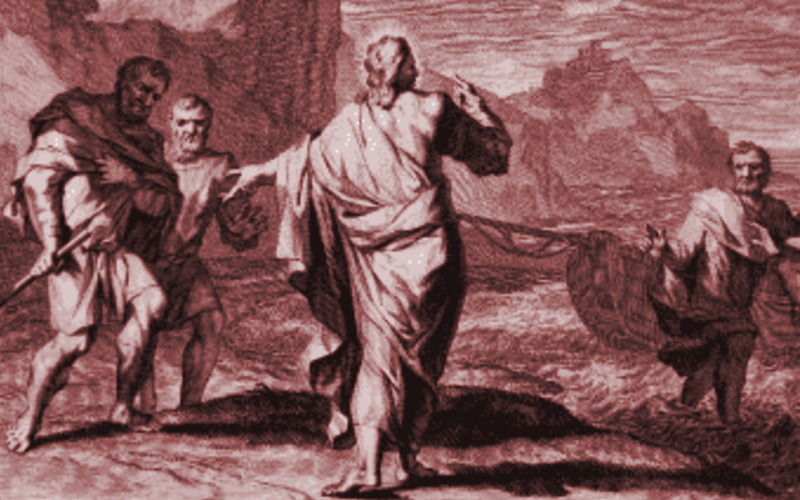
“Follow Me”

Jesus Calls the First Apostles

Go therefore and make disciples of all the nations, baptizing them in the name of the Father and the Son and the Holy Spirit, teaching them to observe all that I commanded you; and lo, I am with you always, even to the end of the age” (Matthew 28:19-20).

In the Great Commission, Jesus told His apostles to go out and make disciples. A disciple is a follower of Jesus. Therefore, the Great Commission was about finding people who would follow Jesus.

This is also what Jesus did while on the earth – He made disciples. But while His apostles would call people to follow Jesus, He would tell them, “Follow Me.

There are a few examples in the gospels in which Jesus offered this invitation – “Follow Me.” In this article, we are going to look at these statements in the book of Matthew and make some applications.Continue Reading

What Are Our Priorities? (Sermon #45)

Subscribe: iTunes | Stitcher | RSS

What Are Our Priorities? (Sermon #45)

We’re taking a break this month from our regular episodes. During this break, we’ll be posting audio sermons instead. The sermon for today is titled, What Are Our Priorities?, and was preached on December 29, 2019 at the Eastside church of Christ in Morgantown, KY.

Read the article: What Are Our Priorities?

If you have a question you would like to hear addressed in a podcast episode, please fill out the form at the following link:

Questions for the Plain Bible Teaching Podcast

If you found this episode to be useful, please share it with others. Also, if you enjoyed the podcast, please leave a rating on iTunes or Stitcher. This also helps others hear about the podcast. Thanks.

Are We Putting Jesus First?

Man reading

[This article was written by Jeffrey Burnett.]

Maybe it is just the fact that I am getting older, but life truly seems to get busier every year. There is so much to do and so little time to get it all done and some things just have to be put off until a later time. Our lives are filled with legitimate concerns that we wrestle with each day often leaving little time for thinking of spiritual things, and that is precisely the problem.

Because every person has a different set of obligations it is difficult to place these concerns in any order of priority. God demands that we work with our hands in order to provide for ourselves and for the needs of others (1 Thess. 4:11-12; Eph. 4:28). Paul told Timothy that “if anyone does not provide for his own, and especially for those of his household, he has denied the faith and is worse than an unbeliever” (1 Tim. 5:8). Then there is the duty of parents raising children, not only being sure that they have clean clothes and good food, but bringing them up “in the discipline and instruction of the Lord” (Eph. 6:4). This is a serious job that cannot be put off until tomorrow. Most of us, occasionally, need a break from work to simply relax or get some kind of recreation to just have fun. All of these things take up our time and somehow, we must find time to give to each item in keeping with its importance.Continue Reading

Social Issues (Part 12): Busyness

Social Issues

Busyness is familiar to all of us. It is the condition in which we have a great deal to do and not enough time to do it. This could be due to actual responsibilities, perceived duties, self-imposed obligations, and also time-wasting activities.

Those who argue in favor of busyness will often do so by contrasting it with laziness or idleness (even though these are not exact opposites). Those who view busyness as a virtue typically believe they are simply making the most of their time rather than wasting it.Continue Reading