The resurrection of Jesus Christ happened almost two thousand years ago, yet it is still remembered, is still talked about, and continues to impact the lives of people throughout the world. The preaching of the apostles was filled with it (Acts 2:22-24, 32; 3:15; 4:10; 5:30; 10:38-43; 13:29-31; 17:31; 26:23). Today, we continue to proclaim the resurrection of Jesus from the dead. But why? And what evidence do we have that this event happened? Let us consider a few points.
Why the Resurrection Is Important
Before investigating the historicity of Jesus’ resurrection, we need to recognize why it matters. After all, being convinced that an inconsequential event happened will not make much difference in one’s life. However, the resurrection of Christ is anything but inconsequential. In fact, there is no event in the history of the world as important as this. What makes it so significant?
- The resurrection proved that Jesus was the Son of God – “Who was declared the Son of God with power by the resurrection from the dead, according to the Spirit of holiness, Jesus Christ our Lord” (Romans 1:4). The Father already announced this plainly on two different occasions while Jesus was on the earth (Matthew 3:17; 17:5). Jesus also claimed to be the Son of God (John 5:17-18). If that claim were not true, God would not raise Him from the dead, because “we know that God does not hear sinners” (John 9:31).
- The resurrection proved that we are accountable to God – “Therefore having overlooked the times of ignorance, God is now declaring to men that all people everywhere should repent, because He has fixed a day in which He will judge the world in righteousness through a Man whom He has appointed, having furnished proof to all men by raising Him from the dead” (Acts 17:30-31). This was the conclusion to Paul’s sermon on Mars Hill in Athens. Jesus was given authority to execute judgment (John 5:27), and will do so when He returns (Hebrews 9:27-28). Paul explained that “we must all appear before the judgment seat of Christ” (2 Corinthians 5:10), and Jesus’ resurrection proves that we must take this seriously.
- The resurrection provides hope beyond this life – “But now Christ has been raised from the dead, the first fruits of those who are asleep. […] For as in Adam all die, so also in Christ all will be made alive” (1 Corinthians 15:20, 22). Jesus’ resurrection was not just so He could defeat death for Himself. The Hebrew writer explained that He defeated death to free us from the fear of death (Hebrews 2:14-15). And this hope is available to all those who obey the gospel (Romans 6:3-5).
What Happened After Jesus’ Death
Jesus was crucified on a Roman cross outside the city of Jerusalem. However, He was not the only one to suffer such a cruel and humiliating death. In fact, at the same time, two thieves were crucified on either side of Him (Mark 15:27). Yet what happened after Jesus’ death proved that He was unique.
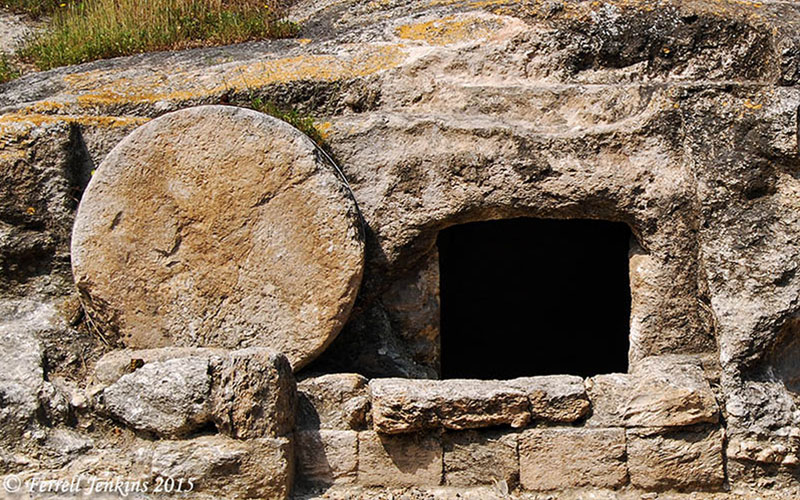
- He was buried – “When it was evening, there came a rich man from Arimathea, named Joseph, who himself had also become a disciple of Jesus. This man went to Pilate and asked for the body of Jesus. Then Pilate ordered it to be given to him. And Joseph took the body and wrapped it in a clean linen cloth, and laid it in his own new tomb, which he had hewn out in the rock; and he rolled a large stone against the entrance of the tomb and went away” (Matthew 27:57-60). Joseph of Arimathea, in addition to being a disciple, was also a member of the Council (Mark 15:43). He did not consent to Jesus’ death (Luke 23:51). He gathered the courage to ask Pilate for the body of Jesus and he buried Him in his own tomb with the help of Nicodemus (John 19:39-40). This was a fulfillment of Isaiah’s prophecy: “His grave was assigned with wicked men, yet He was with a rich man in His death, because He had done no violence, nor was there any deceit in His mouth” (Isaiah 53:9).
- The women visited the tomb – “When the Sabbath was over, Mary Magdalene, and Mary the mother of James, and Salome, bought spices, so that they might come and anoint Him. Very early on the first day of the week, they came to the tomb when the sun had risen. They were saying to one another, ‘Who will roll away the stone for us from the entrance of the tomb?’ Looking up, they saw that the stone had been rolled away, although it was extremely large. Entering the tomb, they saw a young man sitting at the right, wearing a white robe; and they were amazed. And he said to them, ‘Do not be amazed; you are looking for Jesus the Nazarene, who has been crucified. He has risen; He is not here; behold, here is the place where they laid Him’” (Mark 16:1-6). They saw the angels at the tomb (cf. Luke 24:4), who told the women to inform Jesus’ disciples (Mark 16:7). Jesus then appeared to one of them – Mary Magdalene (Mark 16:9-10).
- Peter and John visited the tomb – “So Peter and the other disciple went forth, and they were going to the tomb. The two were running together; and the other disciple ran ahead faster than Peter and came to the tomb first; and stooping and looking in, he saw the linen wrappings lying there; but he did not go in. And so Simon Peter also came, following him, and entered the tomb; and he saw the linen wrappings lying there, and the face-cloth which had been on His head, not lying with the linen wrappings, but rolled up in a place by itself. So the other disciple who had first come to the tomb then also entered, and he saw and believed. For as yet they did not understand the Scripture, that He must rise again from the dead. So the disciples went away again to their own homes” (John 20:3-10). As John honestly pointed out, they did not understand what was transpiring. The disciples initially did not believe the women when they reported that Jesus was alive (Mark 16:11). They thought it sounded like “nonsense” (Luke 24:10-11). This is significant because it makes the change that occurred with the disciples later even more remarkable.
- Jesus appeared to His disciples – “To these He also presented Himself alive after His suffering, by many convincing proofs, appearing to them over a period of forty days and speaking of the things concerning the kingdom of God” (Acts 1:3). After this, He ascended back to heaven while angels promised His disciples that Jesus would return again in the same way (Acts 1:9-11).
Evidences for the Resurrection
Understanding the significance of the resurrection and the uniqueness of Jesus’ death, how can we know that this really happened?
First, we can examine eyewitness testimony. Paul discussed the resurrection extensively in his first letter to the church in Corinth. He began by listing the eyewitnesses who saw Jesus alive after His crucifixion.
“For I delivered to you as of first importance what I also received, that Christ died for our sins according to the Scriptures, and that He was buried, and that He was raised on the third day according to the Scriptures, and that He appeared to Cephas, then to the twelve. After that He appeared to more than five hundred brethren at one time, most of whom remain until now, but some have fallen asleep; then He appeared to James, then to all the apostles; and last of all, as to one untimely born, He appeared to me also” (1 Corinthians 15:3-8).
Most of the hundreds of eyewitnesses were still alive when Paul wrote that letter, which meant that they could be questioned. The apostles, especially, were chosen to be witnesses of Jesus and His resurrection (John 15:26-27; Acts 1:8, 21-22; 1 John 1:1-3). The presence of so many witnesses, who were able to confirm and corroborate one another’s testimony, made this a historical fact. All history is based upon verifiable eyewitness accounts, and the number of witnesses to Jesus’ resurrection means we can be assured that it really happened without having to take a “leap of faith.”*
Second, we can evaluate the claims of Jesus’ enemies. The chief priests and Pharisees, after orchestrating the death of Jesus, appealed to Pilate to “give orders for the grave to be made secure until the third day, otherwise His disciples may come and steal Him away and say to the people, ‘He has risen from the dead,’ and the last deception will be worse than the first” (Matthew 27:64). The Roman governor granted their request and guards were assigned to guard the tomb. But when Jesus rose from the dead, the chief priests had to come up with a way to obscure the truth of what occurred.
“Now while they were on their way, some of the guard came into the city and reported to the chief priests all that had happened. And when they had assembled with the elders and consulted together, they gave a large sum of money to the soldiers, and said, ‘You are to say, “His disciples came by night and stole Him away while we were asleep.” And if this should come to the governor’s ears, we will win him over and keep you out of trouble.’ And they took the money and did as they had been instructed; and this story was widely spread among the Jews, and is to this day” (Matthew 28:11-15).
After Jesus was raised from the dead, His enemies had to come up with a story to explain it away. The claim that Jesus’ disciples stole His body while the guards slept became the “official narrative,” but this story had significant holes in it.
- How would the guards know who stole the body if they were asleep?
- Why were none of the guards punished for their failure to keep the tomb secure?
Only those who refused to think critically or those who trusted that their leaders would never hide the truth from them would fall for this. Objectively, there was no way that this claim could have been accurate.
Third, we can see the change in the apostles. Following the crucifixion of Jesus, His disciples were hiding in fear:
“So when it was evening on that day, the first day of the week, and when the doors were shut where the disciples were, for fear of the Jews, Jesus came and stood in their midst and said to them, ‘Peace be with you’” (John 20:19).
Forty days later, they were publicly and boldly preaching Jesus as the Son of God, who had been raised from the dead (Acts 1:3; 2:14-41). All of the apostles suffered for their preaching, and most of them were killed. Jesus even warned them this would happen so they could be prepared for it (John 16:2). Yet in the decades that followed, NONE of them disavowed or altered their testimony. They could not stop speaking about it (Acts 4:19-20; 5:27-33), and they rejoiced when they were persecuted for the sake of Christ (Acts 5:40-42).
Finally, we can consider the continuation of the church. Gamaliel, a prominent and respected teacher among the Jews, advised the council about how to handle the apostles’ continued preaching in Jerusalem.
“But when they heard this, they were cut to the quick and intended to kill them. But a Pharisee named Gamaliel, a teacher of the Law, respected by all the people, stood up in the Council and gave orders to put the men outside for a short time. And he said to them, ‘Men of Israel, take care what you propose to do with these men. For some time ago Theudas rose up, claiming to be somebody, and a group of about four hundred men joined up with him. But he was killed, and all who followed him were dispersed and came to nothing. After this man, Judas of Galilee rose up in the days of the census and drew away some people after him; he too perished, and all those who followed him were scattered. So in the present case, I say to you, stay away from these men and let them alone, for if this plan or action is of men, it will be overthrown; but if it is of God, you will not be able to overthrow them; or else you may even be found fighting against God.’” (Acts 5:33-39).
Gamaliel’s advice was simple. If the apostles’ teaching and the growth of the church were not from God, they would fizzle out, and history had proved this to be the case, as he cited two examples. However, if it were from God, they would not be able to stop it. Two thousand years later, the Lord’s church is still here. Before His death on the cross, Jesus made this promise to Peter and the rest of His disciples:
“I also say to you that you are Peter, and upon this rock I will build My church; and the gates of Hades will not overpower it. I will give you the keys of the kingdom of heaven; and whatever you bind on earth shall have been bound in heaven, and whatever you loose on earth shall have been loosed in heaven” (Matthew 16:18-19).
Establishing a kingdom from heaven that would never be destroyed was a fulfillment of the prophecy found in Nebuchadnezzar’s dream (Daniel 2:44-45). If Jesus were a deceiver, the movement composed of His followers would soon have come to nothing. The continuation of the church is proof that Jesus is the Son of God who was raised from the dead.
Conclusion
Jesus’ resurrection from the dead is a historical fact, and there is sufficient evidence for us to believe it. Because the apostles were sure of the resurrection, they boldly preached the gospel without fearing death. For us today, the resurrection of Christ provides hope for eternal life if we will faithfully follow Him.
———
* For more on this point, see the article, A Leap of Faith.