Using Our Bodies as Instruments of Righteousness

Romans 6:13

Therefore do not let sin reign in your mortal body so that you obey its lusts, and do not go on presenting the members of your body to sin as instruments of unrighteousness; but present yourselves to God as those alive from the dead, and your members as instruments of righteousness to God. For sin shall not be master over you, for you are not under law but under grace” (Romans 6:12-14).

Our bodies can be used one of two ways – either for God or for sin. As Christians, we are to present our bodies as living sacrifices to God (Romans 12:1). Our bodies are “for the Lord” (1 Corinthians 6:13); therefore, Paul said, “Glorify God in your body” (1 Corinthians 6:20).

How do we use the members of our bodies as instruments of righteousness? Let us consider what the Scriptures teach about this.
Continue Reading
The Root of the Problem (Part 7): Arrogance

The Root of the Problem: Why We Sin & How We Can Overcome

The Bible plainly labels arrogance as a sin. James tells us that “God is opposed to the proud” (James 4:6). The Proverb writer lists pride as one of the things which the Lord hates (Proverbs 6:16-17).

Arrogance is often mentioned in lists of sins – the sins of the Gentiles (Romans 1:30), those which Paul feared would be found among the saints in Corinth (2 Corinthians 12:20), and the sins of false teachers (2 Timothy 3:2). The reason it can be found in these lists is because arrogance is usually connected to other sins. We can think of arrogance as a “gateway” sin. It opens the door to many others. Often it is the beginning of our downfall.
Continue Reading

Reading Denominational Authors

Reading

With the rise of social media in our modern age, it is easy to share information with others. The information we share often includes what books and articles we have read. I have observed that, in general, brethren read a lot that is written by denominational authors on spiritual topics – possibly more than they read the writings of other brethren.

It is not necessarily wrong for brethren to read the writings of denominational authors. In some cases it can even be helpful. However, we need to be careful. Let me offer the following considerations.
Continue Reading

The Root of the Problem (Part 6): Rebellion

The Root of the Problem: Why We Sin & How We Can Overcome

A rebel is one who acts against authority. Such action can be good when those who are in authority are corrupt and oppose God (Acts 5:29). But those who refuse to submit to such authorities are not simply being rebellious. They are acting in submission to the higher authority – God. But there are some who simply refuse to submit to anyone in authority – parent, teacher, employer, police officer, government official, even God. They want to be free to do as they please without restrictions placed upon them by others.

Sin occurs when we fail to submit to God. If we want to overcome sin, we must obey God, for sin is a transgression of His law.
Continue Reading

Righteous Lot

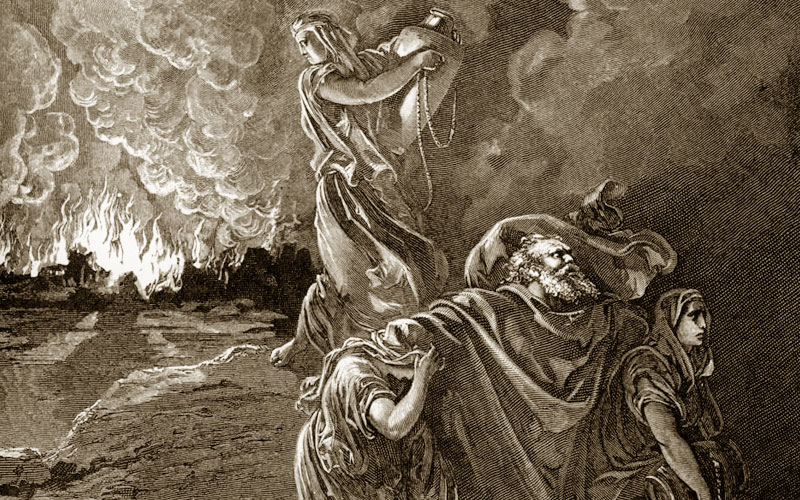
Flight of Lot

And if He condemned the cities of Sodom and Gomorrah to destruction by reducing them to ashes, having made them an example to those who would live ungodly lives thereafter; and if He rescued righteous Lot, oppressed by the sensual conduct of unprincipled men (for by what he saw and heard that righteous man, while living among them, felt his righteous soul tormented day after day by their lawless deeds), then the Lord knows how to rescue the godly from temptation, and to keep the unrighteous under punishment for the day of judgment” (2 Peter 2:6-9).

The inspired apostle Peter described Lot as being “righteous.” Yet this righteous man was not without his faults – he pitched his tent toward Sodom (Genesis 13:12), lived in Sodom (Genesis 14:12), and had to be taken by the hand to flee the city before it was destroyed (Genesis 19:16). In Lot we see one who was righteous; yet he too often focused on the wrong thing, tolerated too much, and compromised with the world.

There are some important lessons we can learn from Lot’s example – both good and bad. We will consider these lessons here.

Continue Reading

The Root of the Problem (Part 5): Deception

The Root of the Problem: Why We Sin & How We Can Overcome

An effective tactic used by the devil is deception. Jesus calls him the “father of lies” (John 8:44). Satan used deception to first introduce sin in the beginning. This threat continues even today.

But I am afraid that, as the serpent deceived Eve by his craftiness, your minds will be led astray from the simplicity and purity of devotion to Christ” (2 Corinthians 11:3).

Christians are not immune from the devil’s deceptive tactics. Paul feared the possibility of the brethren in Corinth falling away, being deceived as Eve was. We should not underestimate Satan’s deceit. After all, he is the one who “deceives the whole world” (Revelation 12:9).
Continue Reading

The Root of the Problem (Part 4): Ignorance

The Root of the Problem: Why We Sin & How We Can Overcome

Laws are often violated by those who do not know that they are breaking a law. In these cases, a transgression is made, regardless of the offender’s knowledge of the statute. It is not uncommon for one to claim that he was unaware of the law he was breaking. Even if this is true, he still stands to be punished for his violation.

This concept is not hard to understand in our society’s legal system. Yet when it comes to God’s law, people often choose to look at it very differently. As long as they do not know that what they are doing is wrong, they are perfectly content to assume that they are doing right. They refuse to consider the fact that our sins will still condemn us. Ignorance is no more of an excuse to be used before God than it is for human authorities.
Continue Reading