From time to time, the question arises as to whether or not one who has been baptized needs to be baptized again. This is an important question to answer given the emphasis the New Testament places upon baptism. Some may be quick to point out that we do not read of a second baptism, or “rebaptism” in Scripture. But the fact that a second baptism is not mentioned does not automatically mean that the practice is unauthorized. However, since it is not specifically mentioned, we must consider certain principles to help us answer the question.
Continue Reading
February 1, 2007
Rebaptism
January 5, 2007
Looking at the Big Picture
“The sum of Your word is truth” (Psalm 119:160).
Considering only one verse to prove a point can be dangerous. Many verses, when taken out of context, have several plausible interpretations. But if we settle on one interpretation without considering the sum of God’s word, we can easily find ourselves with an improper understanding of God’s will. Consider the following example with reference to salvation:
Continue Reading
December 1, 2006
What Is Baptism?
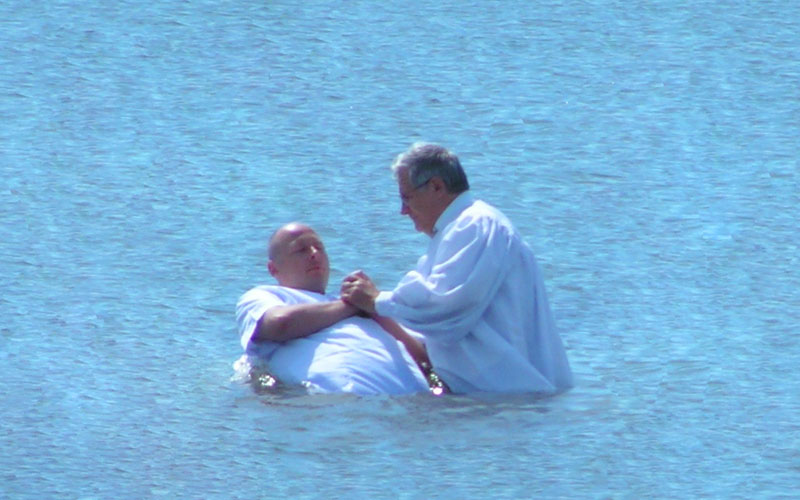
Baptism is discussed numerous times throughout the New Testament. There are also different baptisms that are mentioned. John the Baptist mentioned three baptisms – the baptism of John, the Holy Spirit, and fire (Matthew 3:11). In his letter to Corinth, Paul made reference to baptism for the dead (1 Corinthians 15:29). There is also the baptism that is done in the name of Jesus (Acts 2:38). It is this baptism that is repeatedly referred to in the New Testament as being applicable to men today (Matthew 28:19; Acts 10:48; 19:5).
Many people have various opinions about baptism. Some believe baptism is unnecessary because they believe we are saved by faith alone. Others believe baptism is merely a confession of faith – an outward sign of an inward grace. Some see baptism as necessary for gaining membership into a local church, but that one is already saved before being baptized. Still others believe that baptism is for the remission of sins and through it one gains entrance into the universal church. It is important that we understand what baptism is. Part of our “platform for unity” is the “one baptism” (Ephesians 4:5). Let us consider what the New Testament teaches about baptism so we can unite around that teaching.
Continue Reading
November 1, 2006
A False Sense of Security
The prophet Amos said, “Woe to those who are at ease in Zion and to those who feel secure in the mountain of Samaria” (Amos 6:1). Amos was prophesying of the coming judgment against the nation of Israel. Despite the warnings, the people felt at ease. They believed they were safe and that nothing could happen to them. Yet they were not safe. They had a false sense of security.
Just before this he spoke of the “day of the Lord” (Amos 5:18). Throughout Scripture, this phrase is used to denote judgment – punishment of the wicked and reward of the righteous. Those who were “at ease” and felt “secure” (Amos 6:1) would look forward to this day. The righteous should always look forward to the day of the Lord. Yet these people had no reason to look forward to it.
Continue Reading
June 1, 2006
Calling on the Name of the Lord
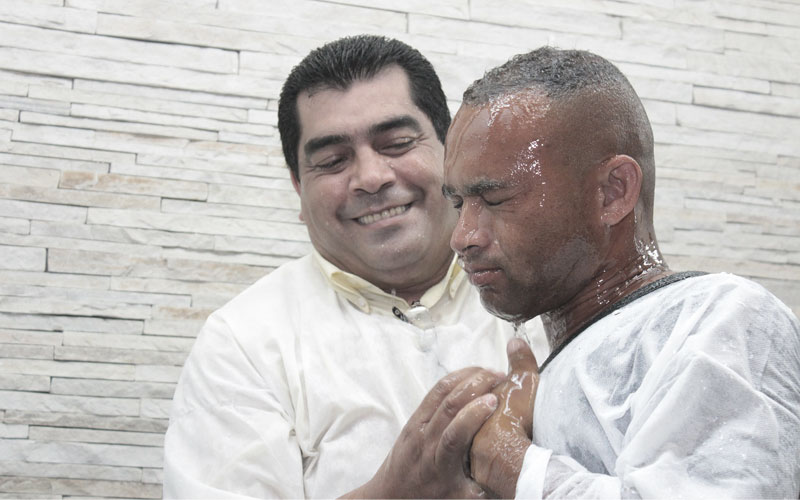
The Scriptures plainly teach that calling on the name of the Lord results in salvation. Nowhere is this affirmed more plainly than in Romans 10:13 – “For ‘Whoever will call on the name of the Lord will be saved.’” I would imagine that the vast majority of professing Christians believe that we must call on the name of the Lord in order to be saved. The point in which we have controversy is how we call on His name.
Continue Reading
January 1, 2006
What Shall We Do?
Shortly after Jesus had ascended back into heaven, the disciples were gathered in Jerusalem. Being the day of Pentecost (Acts 2:1), a Jewish feast day, there were many Jews from different regions who had come to Jerusalem (Acts 2:5, 9-11). It is at this time that Peter delivered what we often refer to as the first gospel sermon. In a sense, the gospel had been preached before. It was preached in promise to Abraham (Galatians 3:8). When Jesus began His public teaching, He taught the “gospel of God” (Mark 1:15). But this was the first time the gospel was preached in its fullness. The gospel was the good news of salvation from God made available by Jesus’ death on the cross and His resurrection from the dead which gave us hope of eternal life. Before, this was said to be coming. By the day of Pentecost in Acts 2, it was a reality. This was the first time the gospel was preached since all these things were fulfilled.
Continue Reading
September 1, 2005
What About the Thief on the Cross?

When talking to others from various denominations about the subject of salvation, we can see that man has many different ideas as to how one is saved. Some will tell you that in order to be saved, you just need to receive Jesus into your heart and accept Him as your personal Savior. Some will say you need to pray the “sinner’s prayer” and ask God to forgive you of your sins. Others will tell you that as long as you believe in God, then that is all that is necessary to receive salvation. Usually no passage is cited to prove their assertion. When one is, it has been taken out of context and misapplied. When we study the New Testament, we see one consistent message showing what man must do in order to be saved. We must believe in Christ, repent of our sins, be baptized in water, and live faithfully in service to God from that point forward (John 8:24; Mark 16:16; Luke 13:3; Acts 2:38; 22:16; 1 Peter 3:21; Revelation 2:10).
When pointing out these things to others, a question will often come up – “What about the thief on the cross?” Notice what Luke recorded:
Continue Reading