Hearers and Doers

James 1:22

Therefore, putting aside all filthiness and all that remains of wickedness, in humility receive the word implanted, which is able to save your souls. But prove yourselves doers of the word, and not merely hearers who delude themselves” (James 1:21-22).

James made a contrast between those who are hearers only and those who are doers. When it comes to receiving the word of God, we must do more than just hear it; we must practice it. Our obedience is tied to the salvation of our souls (cf. 1 Peter 1:22).
Continue Reading


What Must One Believe to Be Saved?

Standing by a Mountain Lake

He who has believed and has been baptized shall be saved; but he who has disbelieved shall be condemned” (Mark 16:16).

Brethren have debated the meaning of this verse with those in denominations for years. The disagreement is over baptism. Brethren teach that Jesus’ words indicate that one must be baptized (in addition to believing) to be saved. Those in denominations teach that since baptism is not mentioned in the second clause, then one must only believe to be saved.

It is clear that belief is essential for salvation. If one does not believe, he will be condemned. But what exactly is it that one must believe to be saved? I would suggest that once we find the answer to this in the Bible, it will also settle the debate on baptism. So what does the Bible teach that one must believe to be saved?
Continue Reading

Start with the Right Foundation

Stone Wall

The Unitarian Universalist church is an interesting denomination. While it does share roots, historically, with Protestant churches, it is not really a “Christian” denomination. Perhaps it is more accurate to say that “Christianity” is only a part of its identity. This group welcomes and accepts various forms of Christianity, Judaism, Islam, Buddhism, and even atheism. They simply ignore the things that most obviously divide these groups and focus on personal “spiritual” growth.

There is one of these churches that I pass on my way to and from work everyday. On their sign by the road, they have a message board they change once a week or so. They use this to provide concise messages to the public, reflecting their liberal religious (and even political) views. These messages sometimes say things that other churches/Christians do or believe, but will not admit. The most recent message is an example of this:
Continue Reading

How to Become a Christian

Paul before Agrippa

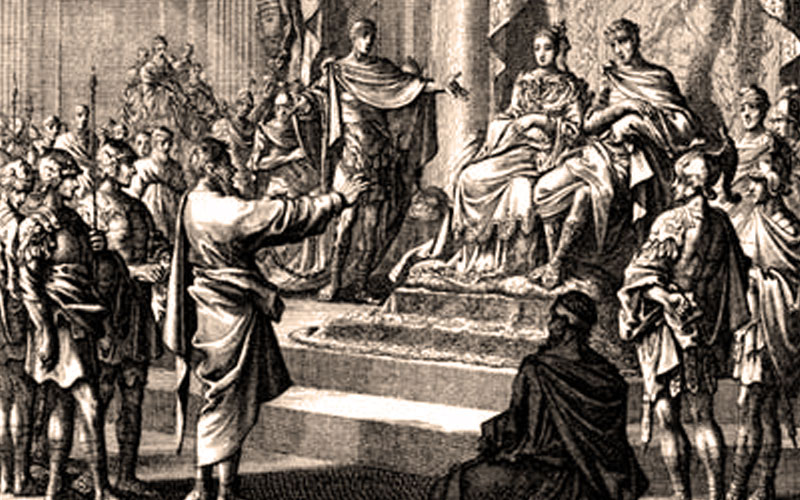
As Paul was provided time to make a defense before Agrippa, he took advantage of the opportunity to teach the king and all those who were present about the gospel. When Paul asked him if he believed the Prophets, Agrippa replied, “In a short time you will persuade me to become a Christian” (Acts 26:28). The wording of Agrippa’s response may be different in your Bible, depending on which translation you have. Another version says, “Almost thou persuadest me to be a Christian” (KJV). Regardless of which translation you use, it is plain to see that Agrippa understood Paul’s intention. He was trying to persuade the king to become a Christian.

Paul replied to the king, “I would wish to God, that whether in a short or long time, not only you, but also all who hear me this day, might become such as I am, except for these chains” (Acts 26:29). Paul was a Christian. He wanted all those around him to also be Christians. But how does one become a Christian? We can look and see how Paul became one and learn what we must do to become such as he is.
Continue Reading

Belief or Disbelief?

He who has believed and has been baptized shall be saved; but he who has disbelieved shall be condemned” (Mark 16:16).

This is a pretty easy verse to understand. Jesus specifically states two things that are necessary for salvation – belief and baptism.
Continue Reading

Those Who Will Be Saved

Open Bible

Shortly before His ascension, Jesus gave His apostles the Great Commission: “Go into all the world and preach the gospel to all creation. He who has believed and has been baptized shall be saved; but he who has disbelieved shall be condemned” (Mark 16:15-16). This passage succinctly tells us who it is that will be saved. Those who believe and are baptized will be saved.

This order seems pretty simple. A person believes, then they are baptized, and then they are saved. Though this seems simple, many have the order wrong. They think that a person believes, then they are saved, and sometime later they are baptized. This is not what Jesus taught. He taught that those who will be saved are those who believe and are baptized.
Continue Reading

What Is Baptism?

Baptism

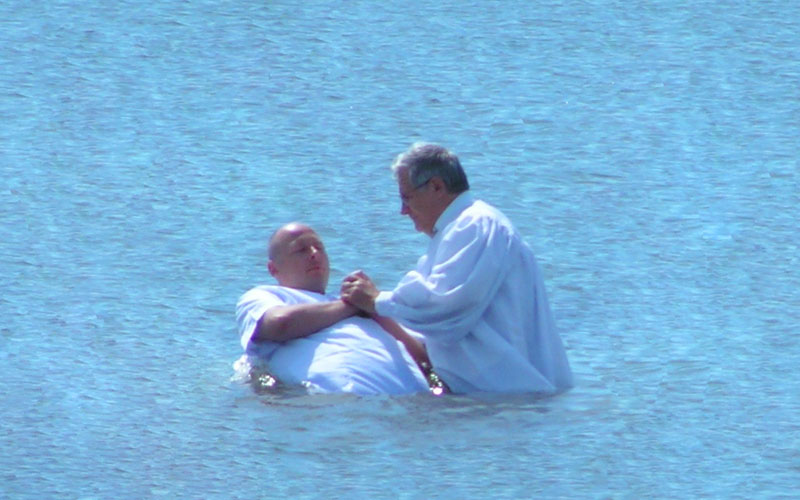
Baptism is discussed numerous times throughout the New Testament. There are also different baptisms that are mentioned. John the Baptist mentioned three baptisms – the baptism of John, the Holy Spirit, and fire (Matthew 3:11). In his letter to Corinth, Paul made reference to baptism for the dead (1 Corinthians 15:29). There is also the baptism that is done in the name of Jesus (Acts 2:38). It is this baptism that is repeatedly referred to in the New Testament as being applicable to men today (Matthew 28:19; Acts 10:48; 19:5).

Many people have various opinions about baptism. Some believe baptism is unnecessary because they believe we are saved by faith alone. Others believe baptism is merely a confession of faith – an outward sign of an inward grace. Some see baptism as necessary for gaining membership into a local church, but that one is already saved before being baptized. Still others believe that baptism is for the remission of sins and through it one gains entrance into the universal church. It is important that we understand what baptism is. Part of our “platform for unity” is the “one baptism” (Ephesians 4:5). Let us consider what the New Testament teaches about baptism so we can unite around that teaching.
Continue Reading