How to Make Error Harder to Accept

Man Reading Bible

False teachers are deceptive and destructive (2 Corinthians 11:13-15; 2 Timothy 2:16-18). The threat they pose is ever-present (2 Peter 2:1). We can guard against them by always being on the alert (Acts 20:28; 1 Peter 5:8) and by heeding the warnings when false teachers are marked by faithful brethren (Romans 16:17-18).

In addition to these preventative measures, there are three fundamental attitudes we must have if we hope to protect ourselves from the threat of false teachers. If we resolve to adopt the following, we will be much better equipped to deal with error whenever it is introduced.
Continue Reading
Audio: Why Was Paul Amazed at the Apostasy in Galatia?

Paul’s letter to the Galatians was addressed to the churches of that region – Antioch of Pisidia, Iconium, Lystra, and Derbe. These churches were established during Paul’s first preaching journey (Acts 13-14). The Christians in this region experienced a lot of opposition to the gospel, yet this was not what caused them to slide into apostasy. Instead, their apostasy was caused by something much more subtle. This lesson examines the history of the establishment of these churches and what eventually threatened to lead them away from Christ.
Continue Reading

Josiah: The Courage to Restore

Take Courage

A restoration took place in the days of Josiah, king of Judah. He sought to restore the practices of the Law of Moses that had been abandoned.
Continue Reading

Audio: Gospel Meeting at the Eastside church of Christ

I had the privilege of speaking in a Gospel Meeting at the Eastside church of Christ in Morgantown, KY this past week – October 17-19, 2013. The three lessons I preached are listed below.
Continue Reading

Why Were They Prophets of Baal?

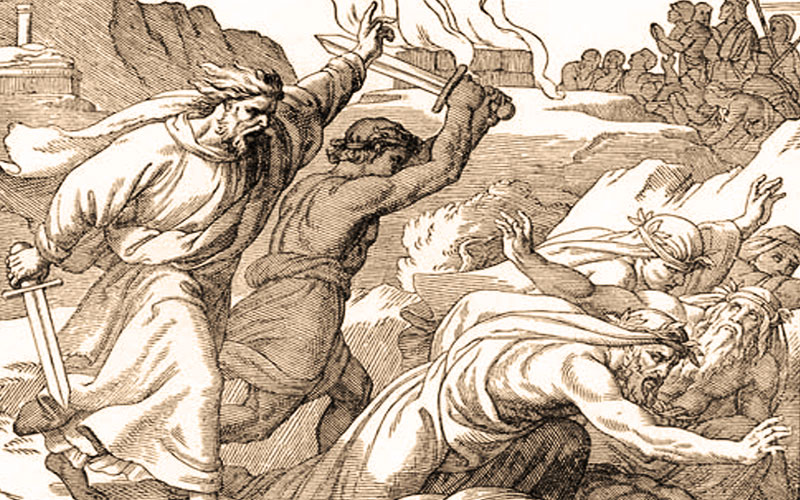
Elijah and the Prophets of Baal

1 Kings 18 records the familiar story of the contest between Elijah and the prophets of Baal on Mount Carmel. I will not take time in this brief article to review the account. If you are unfamiliar with it, I encourage you to read of the event in 1 Kings 18:17-40.

When we consider this contest, we often focus on Elijah with his great example of faith and willingness to stand alone for God with 450 prophets of Baal opposing him. We also sometimes consider the people’s unwillingness to commit to following either God or Baal. But in this article, I want us to consider the prophets of Baal themselves and ask the question: Why were they prophets of Baal?
Continue Reading

Jeremiah’s Commission

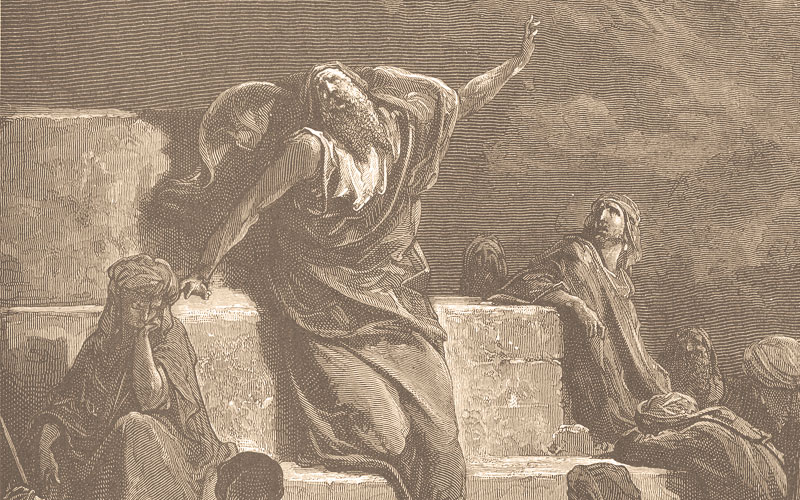
Jeremiah

Even before he was conceived, Jeremiah was specifically appointed by God as a prophet (Jeremiah 1:5). We may not be called to do the work of a prophet today (cf. 1 Corinthians 13:8-10), but we can still learn from the instructions which were given to Jeremiah. We are obligated to teach and defend the truth (1 Timothy 3:15; Philippians 1:16-17). Studying Jeremiah’s commission helps us to learn how to do this.

Then the Lord stretched out His hand and touched my mouth, and the Lord said to me, ‘Behold, I have put My words in your mouth. See, I have appointed you this day over the nations and over the kingdoms, to pluck up and to break down, to destroy and to overthrow, to build and to plant’” (Jeremiah 1:9-10).

There were six things that Jeremiah would do in his prophesying – (1) pluck up, (2) break down, (3) destroy, (4) overthrow, (5) build, and (6) plant. These are the same six things we must do in our teaching today.

Before we consider these six things, it is important to note that all of this would be accomplished with the words of God (Jeremiah 1:9). In the same way, we will accomplish these six things by speaking “as the oracles of God” (1 Peter 4:11, NKJV). We must not look to human wisdom, commandments, traditions, or opinions to accomplish our goals in teaching. Instead, we must look exclusively to the word of God.

So let us notice the six things we must do as we teach God’s word.
Continue Reading

“Raccoon” John Smith: Hard Preaching

During the time when “Raccoon” John Smith (1784-1868) was preaching, the erroneous tenets of Calvinism were widely believed by those around him in the religious world. Smith himself had believed Calvinism early in his life before learning the truth. After learning the truth, he ardently opposed it in his preaching.

His wife Nancy, however, thought that he was “too hard” against Calvinism. In the following excerpt, Smith explained to her why he preached the way he did.
Continue Reading