When Disaster Strikes

Tornado Damage

Whenever a disaster occurs – whether it is a terrorist attack, natural disaster, or some tragic accident – people often wonder if God was somehow involved. If so, they wonder if the event was an execution of divine judgment against the victims or the greater nation/society as a whole.

Questions like these are nothing new. Jesus commented on this concept when He discussed a couple of tragedies with which His audience was familiar.

Now on the same occasion there were some present who reported to Him about the Galileans whose blood Pilate had mixed with their sacrifices. And Jesus said to them, ‘Do you suppose that these Galileans were greater sinners than all other Galileans because they suffered this fate? I tell you, no, but unless you repent, you will all likewise perish. Or do you suppose that those eighteen on whom the tower in Siloam fell and killed them were worse culprits than all the men who live in Jerusalem? I tell you, no, but unless you repent, you will all likewise perish’” (Luke 13:1-5).

It is important that we know why these things happen. As Jesus made clear, we should not be quick to attribute these things to God’s direct operation. Yet even when an event occurs without direct, divine involvement, there are still lessons we can learn from these disasters.
Continue Reading

Finding Purpose Amidst the Vanity of Life

Man in Field

As we deal with the regular trials and pressures of this life, it is not uncommon to have periods in which we are down and might struggle to see the value in our normal pursuits. The wise man articulated these feelings in the book of Ecclesiastes. He opened with these words: “Vanity of vanities! All is vanity” (Ecclesiastes 1:2). He then went on to mention several regular pursuits of this life that he considered vain:
Continue Reading

Be Filled With The Spirit

In the letter to the church at Ephesus, Paul commanded, “And do not get drunk with wine, for that is dissipation, but be filled with the Spirit” (Ephesians 5:18). Many believe that a Christian being filled with the Spirit is wholly dependent upon some direct action by God. This is puzzling, considering that Paul phrases this as a command. A commandment implies a responsibility to obey. Therefore, we are responsible for being “filled with the Spirit.” So how are we to do this?

Continue Reading

Blessings and Burdens of Spiritual Independence

Earlier this week, Americans celebrated Independence Day, commemorating the day when the thirteen colonies declared their independence from England. In breaking ties, the colonies affirmed that they were able to govern themselves and no longer needed to be dependent upon a distant monarch.

There were certainly blessings that came from this independence. The most notable were freedom and having a government that could better relate to the concerns of the people. However, with independence also comes burdens – additional responsibilities that must now be fulfilled by the independent entity since they would no longer be dependent upon others as they were previously.

Blessings and burdens will exist anytime a person or a people determine to be independent from others. It was true with the thirteen American colonies. At the time of the Exodus when the Israelite people became independent from the Egyptians, they enjoyed blessings (freedom from bondage) and faced burdens (they could no longer rely upon the Egyptians to provide for them – Exodus 16:3). When a young adult moves out of the house and becomes independent from his parents, there are blessings in his new independence and burdens in the greater responsibilities since he now has to provide for himself. Independence, in any context, contains both blessings and burdens.

In this article, I want us to examine our independence as it pertains to spiritual matters. Through the provisions He has given, God has made it so that each one of us can faithfully serve Him, regardless of what others might choose to do. This is not to say that we should not work together or that we cannot help one another; rather, we must take responsibility as individuals for our own spiritual lives.Continue Reading

The Path to Citizenship

Oath of citizenship

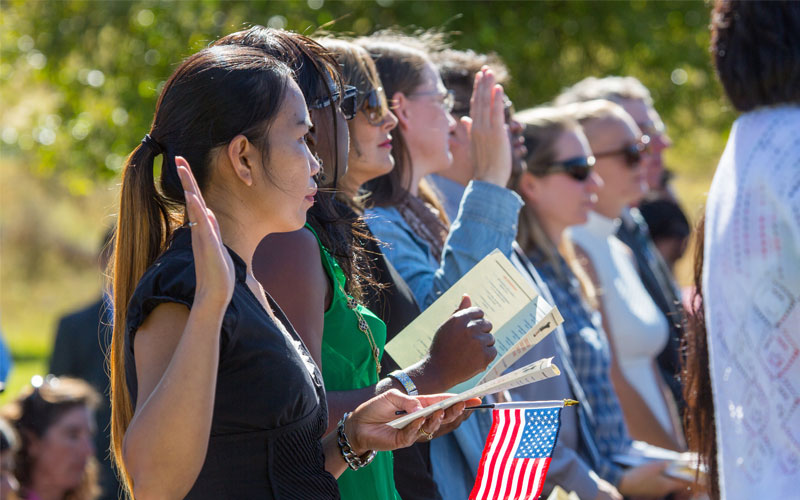
The debate over illegal immigration is a hot topic in our country. For various reasons, millions of people from other countries have decided their lives would be better in the United States of America. This country has always welcomed immigrants and has established a system through which they can go in order to obtain citizenship in the United States.

Many pursue residence in this country and later citizenship through the established legal path. Many others, however, begin their pursuit by entering the country illegally. There are now millions of “illegal immigrants” currently residing within our borders, resulting in a great political debate as to what to do about these individuals. Should they be made to follow the immigration laws that have already been established? Should the government enact some sort of new law that would grant citizenship to those who, for whatever reason, chose to ignore the current law and enter this country illegally.

We likely all have our opinions as to what we believe the civil authorities ought to do on this issue, but this is not the place to discuss those opinions. I bring this up because in this debate we can draw a spiritual application regarding the greatest and most blessed citizenship. As Christians, “our citizenship is in heaven” (Philippians 3:20). Let us notice some parallels between our heavenly citizenship and the current immigration debate.
Continue Reading

For The Truth

Bible

For we can do nothing against the truth, but only for the truth” (2 Corinthians 13:8).

In this verse, Paul was not discussing what is or is not possible. Rather, he was speaking of the determination of faithful disciples of Christ. We must choose one of two sides – we can be for the truth or against the truth. As Christians who have committed to being on the side of truth, let us notice what we can do to benefit and support it.
Continue Reading

The Justice of God

Ezekiel 18:4

Ezekiel 18 addresses the justice of God – how He treats individuals, both the righteous and the wicked, and how He will judge us. Let us examine what this chapter teaches us about God and His justice.
Continue Reading