You Shall Not Neglect the Levite (3/16)

Thought from today’s Bible reading from Deuteronomy 14-16.

Also you shall not neglect the Levite who is in your town, for he has no portion or inheritance among you” (Deuteronomy 14:27).

The tribe of Levi was unique in the nation of Israel. Unlike the other tribes, the Levites did not receive a possession when the promised land was divided among the tribes. The reason for this had to do with the specific duty God gave to the Levites.

To the sons of Levi, behold, I have given all the tithe in Israel for an inheritance, in return for their service which they perform, the service of the tent of meeting. […] Only the Levites shall perform the service of the tent of meeting, and they shall bear their iniquity; it shall be a perpetual statute throughout your generations, and among the sons of Israel they shall have no inheritance. For the tithe of the sons of Israel, which they offer as an offering to the Lord, I have given to the Levites for an inheritance; therefore I have said concerning them, ‘They shall have no inheritance among the sons of Israel’” (Numbers 18:21-24).

The Levites were devoted to a spiritual work. Therefore, God made this provision for them. Though they had no inheritance in the land, they would receive their livelihood from the tithes given by the people.
Continue Reading

"We Used to Eat Free in Egypt" (2/28)

Thought from today’s Bible reading from Numbers 11-13.

The rabble who were among them had greedy desires; and also the sons of Israel wept again and said, ‘Who will give us meat to eat? We remember the fish which we used to eat free in Egypt, the cucumbers and the melons and the leeks and the onions and the garlic, but now our appetite is gone. There is nothing at all to look at except this manna’” (Numbers 11:4-6).

The complaints of the children of Israel were a frequent occurrence in the wilderness. It is amazing that those who had seen the power of God first-hand would so quickly lose faith in Him.

Yet we see something about human nature here. Many people want someone to regularly provide for them, even if there are strings attached. They want consistency in their lives, even if their circumstances are not ideal. They do not desire true freedom, for this requires contentment, diligence, personal responsibility, and a trust in the providence of God.
Continue Reading

A Daughter Eating of Her Father’s Food (2/20)

Thought from today’s Bible reading from Leviticus 22-23.

In Leviticus 22, instructions were given regarding who could and could not eat of the gifts that were offered to the Lord. One of these rules affected the daughters of the priests:

If a priest’s daughter is married to a layman, she shall not eat of the offering of the gifts. But if a priest’s daughter becomes a widow or divorced, and has no child and returns to her father’s house as in her youth, she shall eat of her father’s food; but no layman shall eat of it” (Leviticus 22:12-13).

A rule was given that no layman was to eat of this food that was dedicated to the Lord. This food was reserved for the priests. A priest’s daughter could eat only under certain conditions.
Continue Reading

"Leave Them for the Needy" (2/19)

Thought from today’s Bible reading from Leviticus 19-21.

Sadly, helping the poor is a contentious issue in our society. It is not so much that people do not want to help the poor – most good, moral people want help to be provided. The issue is over how to best help the poor and whether this help should come from individuals, churches, charities, or government agencies.

The Law of Moses contains a way to help the poor and the stranger among the people. While we do not live under the same Law or with the same circumstances, there are principles that should help us determine how we can best help those in need.
Continue Reading

By the Grace of God

Paul

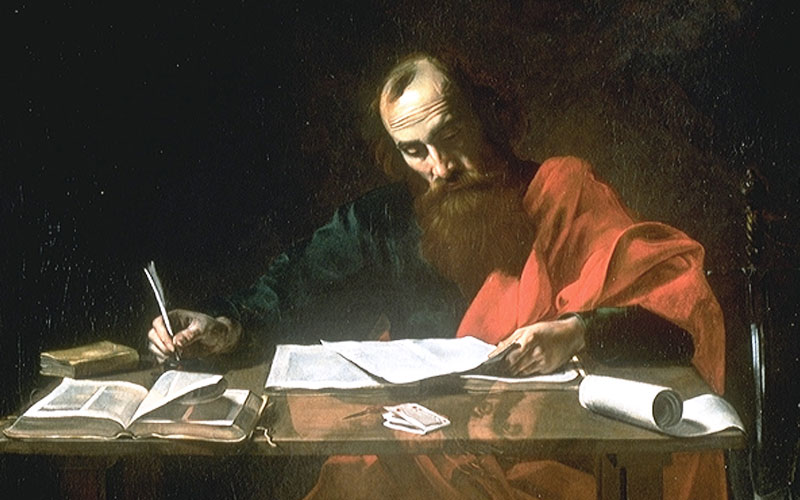
In presenting evidence to support the resurrection of Christ, Paul told the brethren in Corinth of several eyewitnesses who could verify that Jesus did in fact rise from the dead. The last of these eyewitnesses that Paul mentioned was himself: “And last of all, as to one untimely born, He appeared to me also” (1 Corinthians 15:8).

At this point, Paul took a short break from his discussion about the historicity of Jesus’ resurrection to make a point about the grace of God:

For I am the least of the apostles, and not fit to be called an apostle, because I persecuted the church of God. But by the grace of God I am what I am, and His grace toward me did not prove in vain; but I labored even more than all of them, yet not I, but the grace of God with me. Whether then it was I or they, so we preach and so you believed” (1 Corinthians 15:9-11).

Paul made four points in these three verses about the grace of God. Let us consider these briefly.
Continue Reading

“During Plowing Time and Harvest You Shall Rest” (2/10)

Thought from today’s Bible reading from Exodus 33-35.

Though the Sabbath law had already been given to the Israelites, the Lord provided further instructions regarding the application of the command:

You shall work six days, but on the seventh day you shall rest; even during plowing time and harvest you shall rest” (Exodus 34:21).

From the beginning, God has expected man to work hard (Genesis 3:19). The wise man gives this admonition: “Whatever your hand finds to do, do it with all your might” (Ecclesiastes 9:10). Paul tells Christians: “Whatever you do, do your work heartily, as for the Lord rather than for men” (Colossians 3:23). So this instruction to the Israelites was not advocating slothfulness but that they strictly obey the commandment of God.
Continue Reading

Is Taking Time to Worship God a Sign of Laziness? (1/31)

Thought from today’s Bible reading from Exodus 4-6.

There are many people today who cannot seem to take time away from their busy schedules to worship God or assemble with the saints. If there is work to be done, that takes priority in the minds of many. Pharaoh exhibited a similar attitude when he was first told to let the Israelites leave Egypt to go out into the wilderness to sacrifice to the Lord (Exodus 5:1). He gave the following instructions to their taskmasters:

But the quota of bricks which they were making previously, you shall impose on them; you are not to reduce any of it. Because they are lazy, therefore they cry out, ‘Let us go and sacrifice to our God.’ Let the labor be heavier on the men, and let them work at it so that they will pay no attention to false words” (Exodus 5:8-9).

God’s people are certainly to be hard workers (Ecclesiastes 9:10; Colossians 3:23). But serving the Lord must always come first (Matthew 6:33).
Continue Reading








