Too Quick to Make Peace (3/25)

Thought from today’s Bible reading from Joshua 9-11.

The Israelites were given instructions to not make a covenant with any of the inhabitants of Canaan (Deuteronomy 7:2). Yet they let their guard down and allowed themselves to be tricked by the inhabitants of Gibeon into making peace with them.

They went to Joshua to the camp at Gilgal and said to him and to the men of Israel, ‘We have come from a far country; now therefore, make a covenant with us,’ The men of Israel said to the Hivites, ‘Perhaps you are living within our land; how then shall we make a covenant with you?’ But they said to Joshua, ‘We are your servants.’ Then Joshua said to them, ‘Who are you and where do you come from?’ They said to him, ‘Your servants have come from a very far country because of the fame of the Lord your God… So our elders and all the inhabitants of our country spoke to us, saying, “Take provisions in your hand for the journey, and go to meet them and say to them, ‘We are your servants; now then, make a covenant with us.'”‘ […]

So the men of Israel took some of their provisions, and did not ask for the counsel of the Lord. Joshua made peace with them and made a covenant with them, to let them live; and the leaders of the congregation swore an oath to them.

It came about at the end of three days after they had made a covenant with them, that they heard that they were neighbors and that they were living within their land” (Joshua 9:6-16).

Continue Reading

"Drive Out All the Inhabitants of the Land" (3/9)

Thought from today’s Bible reading from Numbers 33-34.

Before crossing over into Canaan, the Lord gave instructions to the Israelites regarding what they were to do with the current inhabitants of the promised land.

When you cross over the Jordan into the land of Canaan, then you shall drive out all the inhabitants of the land from before you, and destroy all their figured stones, and destroy all their molten images and demolish all their high places; and you shall take possession of the land and live in it, for I have given the land to you to possess it” (Numbers 33:51-53).

But if you do not drive out the inhabitants of the land from before you, then it shall come about that those whom you let remain of them will become as pricks in your eyes and as thorns in your sides, and they will trouble you in the land in which you live. And as I plan to do to them, so I will do to you” (Numbers 33:55-56).

The instructions were very simple: drive out the inhabitants of the land. While this would certainly require much effort and sacrifice, the actual command was simple and easy to understand.
Continue Reading

Shall One Man Sin and God Be Angry with All the Congregation? (3/2)

Thought from today’s Bible reading from Numbers 16-17.

If one person within a congregation sins, will all members of that congregation stand condemned before God? It depends.

This was the situation in the rebellion of Korah, Dathan and Abiram. A relatively small number of people rebelled, yet God was prepared to destroy the whole congregation.

Then the Lord spoke to Moses and Aaron, saying, ‘Separate yourselves from among this congregation, that I may consume them instantly.’ But they fell on their faces and said, ‘O God, God of the spirits of all flesh, when one man sins, will You be angry with the entire congregation?’ Then the Lord spoke to Moses, saying, ‘Speak to the congregation, saying, ‘Get back from around the dwellings of Korah, Dathan and Abriram’” (Numbers 16:20-24).

Moses and Aaron thought it would be unfair for God to punish all the people for the sins of a few. Yet God intended to punish the guilty. This is why He gave the instruction to separate themselves from the rebels. Those Israelites who continued to accept the rebels and have fellowship with them also became guilty before the Lord.
Continue Reading

What Makes One a False Teacher?

Error

The existence of false teachers is a sad reality. Just as there were false prophets in the past, Peter said, “There will also be false teachers among you” (2 Peter 2:1). Our responsibility is to mark and turn away from them (Romans 16:17), have no fellowship with them (2 John 10-11), and refute their error (Titus 1:9; 2 Corinthians 10:5).

But what is it that makes one a false teacher? The seemingly obvious answer to this question – teaching what is false – is disputed by many. The argument is made that teaching what is wrong does not necessarily make one a false teacher; rather, one would be a false teacher based on evil intentions and deliberate attempts to deceive.

So, is one a false teacher based on his message or his motive? Let us notice a few passages to help answer this question.
Continue Reading

Placing Membership with a Local Church

Saul at Jerusalem

The New Testament stresses the importance of Christians being part of a local congregation. But how does one join or place membership with a local church? At what point does one become a part of a congregation of God’s people? If we look at Saul’s effort to join the church in Jerusalem, we will see that there are two steps necessary for one to place membership with a local church.
Continue Reading

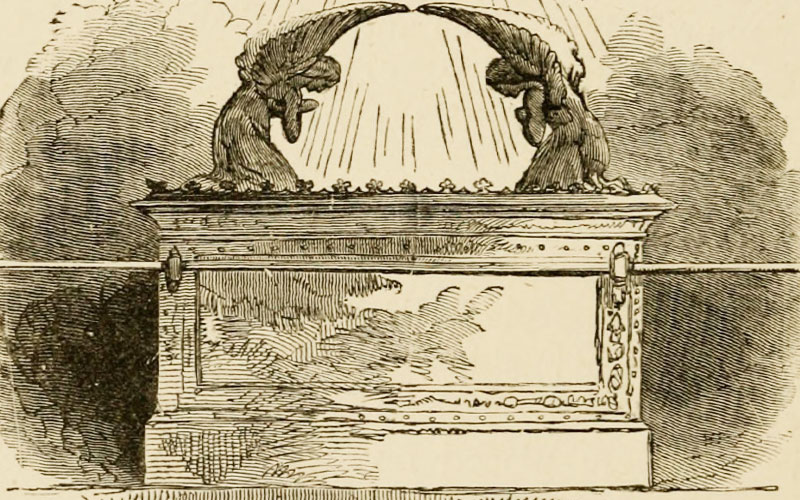
The Death of Eli

Ark of the Covenant

Eli, a man who judged Israel for forty years, died on a day of great conflict between the children of Israel and the Philistines. He did not die in battle, nor was he killed by the sword of his enemy. Instead, he died a sad death upon hearing news of the battle.

The man said to Eli, ‘I am the one who came from the battle line. Indeed, I escaped from the battle line today.’ And he said, ‘How did things go, my son?’ Then the one who brought the news replied, ‘Israel has fled before the Philistines and there has also been a great slaughter among the people, and your two sons also, Hophni and Phinehas, are dead, and the ark of God has been taken.’

When he mentioned the ark of God, Eli fell off the seat backward beside the gate, and his neck was broken and he died, for he was old and heavy. Thus he judged Israel forty years” (1 Samuel 4:16-18).

There were four troubling pieces of news that Eli received before he died.
Continue Reading

Conservative vs. Liberal

Conservative vs. Liberal

These two terms are used a lot in discussions about religion and politics. For this study, we want to focus on the use of these terms in the area of religion, particularly as they relate to our approach to God’s word. Should we have a conservative or a liberal approach to the Scriptures? Does it matter? While the Bible does not use these terms, it does address the concepts. One of them describes the mindset we must have when studying and seeking to apply the word of God.

First, we must be clear about these terms. What do we mean by conservative and liberal? One who is conservative favors traditional views and values and tends to oppose change. As it relates to Bible study, this means a strict adherence to the word of God and opposing changes to the gospel. One who is liberal does not view themselves as being limited to established or traditional attitudes or views. Regarding Bible interpretation, a liberal approach favors a loose or approximate view of the Scriptures rather than a strict, literal interpretation. Basically, one with a liberal approach to the Bible believes there are a number of ways in which one may acceptably interpret God’s word, while a conservative approach seeks to find the one way that God intended us to receive His word.
Continue Reading