Subscribe: iTunes | Stitcher | RSS
In this season, we’re going to be discussing some lessons from Paul’s letters to Timothy and Titus.
Most Christians recognize the need to pray for our leaders. But why are we to do so? The passage that contains the instruction for Christians to pray for those in authority also contains the reason why we are to pray for them. Some may be surprised for the reason given by the apostle Paul. This episode discusses the instruction to pray for our leaders and why we are told to do so.
Article: Pray for Those in Authority
Mentioned in this episode:
If you found this episode to be useful, please share it with others. Also, if you enjoyed the podcast, please leave a rating on iTunes or Stitcher. This also helps others hear about the podcast. Thanks.
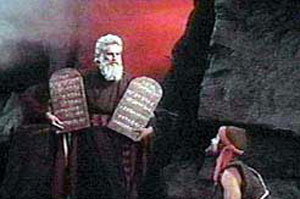 The Ten Commandments (Exodus 20:1-17) – the laws engraved onto stone which God delivered to Moses for the children of Israel – give us the blueprint for the foundation of any godly or righteous society. These Ten Commandments are regularly assaulted by those on the “left” as having no place in our government or our schools. The stated reason for their opposition is that the Ten Commandments represent a religious element that has no place in anything related to government. Yet the Ten Commandments represent more than just religion. The reason there is such strong opposition to the display of the Ten Commandments by the “left” is because the Ten Commandments stand in direct opposition to the Liberal’s ideal for society.
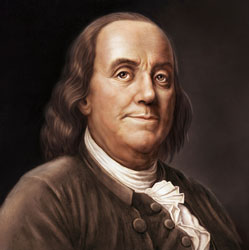 Benjamin Franklin famously said, “They who can give up essential liberty to obtain a little temporary safety, deserve neither liberty nor safety.” A common variation of this quote is, “People willing to trade their freedom for temporary security deserve neither and will lose both.” Though the founding father and those who use this quote today are referring to matters relating to civil government, there is a spiritual truth contained in the statement. How this principle applies to our spiritual lives is of far greater importance than how it applies to the power of human government. So let us consider the spiritual implications of this principle.









