"The Arrogance of Your Heart Has Deceived You" (7/1)

Thought from today’s Bible reading from Obadiah 1; Psalm 82-83.

Obadiah prophesied of the coming destruction of Edom because of their sin. They would be ransacked (v. 6), overpowered (v. 7), and slaughtered (v. 9).

Yet Edom, in their arrogance, refused to believe that such destruction could come upon them. They believed they were secure in their position and that no harm could befall them. While they were in a good strategic position “in the clefts of the rock” (v. 3) to defend against attacks, they were no match for God.

‘The arrogance of your heart has deceived you, you who live in the clefts of the rock, in the loftiness of your dwelling place, who say in your heart, “Who will bring me down to earth?” Though you build high like the eagle, though you set your nest among the stars, from there I will bring you down,’ declares the Lord” (Obadiah 3-4).

Their arrogance deceived them, causing them to think they had no reason to correct their sin for fear of divine punishment. Because of this, God would bring them down.
Continue Reading

Solomon’s Plan to Build the Temple (6/11)

Thought from today’s Bible reading from 1 Kings 5-6; 2 Chronicles 2-3.

When Solomon was about to build the temple, he contacted Hiram (or Huram, depending on the translation), the king of Tyre to receive workers and materials from him that would be necessary for the project. In his message to Hiram, we see four attitudes that Solomon possessed that are important for us to emulate.

Behold, I am about to build a house for the name of the Lord my God, dedicating it to Him, to burn fragrant incense before Him and to set out the showbread continually, and to offer burnt offerings morning and evening, on sabbaths and on new moons and on the appointed feasts of the Lord our God, this being required forever in Israel” (2 Chronicles 2:4).

We first see that Solomon had a desire to worship God according to the pattern He had given to Israel. In building the temple, Solomon was not trying to do things his way, but God’s way.
Continue Reading

What Not to Do After Hurting Someone (5/11)

Thought from today’s Bible reading from 2 Samuel 10; 1 Chronicles 17; Psalm 20.

When the king of the Ammonites died, David sent some of his servants to Hanun, the son and successor of the deceased king, in order to comfort him and show him kindness. However, Hanun was convinced by his princes that David’s servants were there to spy out the city and overthrow it (2 Samuel 10:1-3).

So Hanun took David’s servants and shaved off half of their beards, and cut off their garments in the middle as far as their hips, and sent them away. When they told it to David, he sent to meet them, for the men were greatly humiliated. And the king said, ‘Stay at Jericho until your beards grow, and them return’” (2 Samuel 10:4-5).

Hanun, based on false assumptions about David’s intentions, humiliated these men. Upon realizing this, he could have admitted wrongdoing and sought to make things right. But instead, he became defensive, causing the situation to escalate.
Continue Reading

The Character of Ruth (4/7)

Thought from today’s Bible reading from Ruth 1-4.

So Boaz took Ruth, and she became his wife, and he went in to her. And the Lord enabled her to conceive, and she gave birth to a son” (Ruth 4:13).

So they named him Obed. He is the father of Jesse, the father of David” (Ruth 4:17).

Ruth was a Moabite woman who had married one of the children of Israel (Ruth 1:2-4). Yet after her husband died (Ruth 1:5), she was not only welcomed by God, but gave birth to David’s grandfather, Obed. More importantly, she was part of the genealogy of Christ (Matthew 1:5).
Continue Reading

“Surely I Am More Stupid Than Any Man”

Man looking away

Agur described himself as being “more stupid than any man” (Proverbs 30:2). Yet this man demonstrated that he possessed valuable insight and wisdom that we would do well to learn.

Surely I am more stupid than any man, and I do not have the understanding of a man. Neither have I learned wisdom, nor do I have the knowledge of the Holy One. Who has ascended into heaven and descended? Who has gathered the wind in His fists? Who has wrapped the waters in His garment? Who has established all the ends of the earth? What is His name or His son’s name? Surely you know!

Every word of God is tested; He is a shield to those who take refuge in Him. Do not add to His words or He will reprove you, and you will be proved a liar” (Proverbs 30:2-6).

In these first few verses of this chapter, there are several bits of wisdom we should consider. Notice some of the things which this “stupid” man understood.
Continue Reading

By the Grace of God

Paul

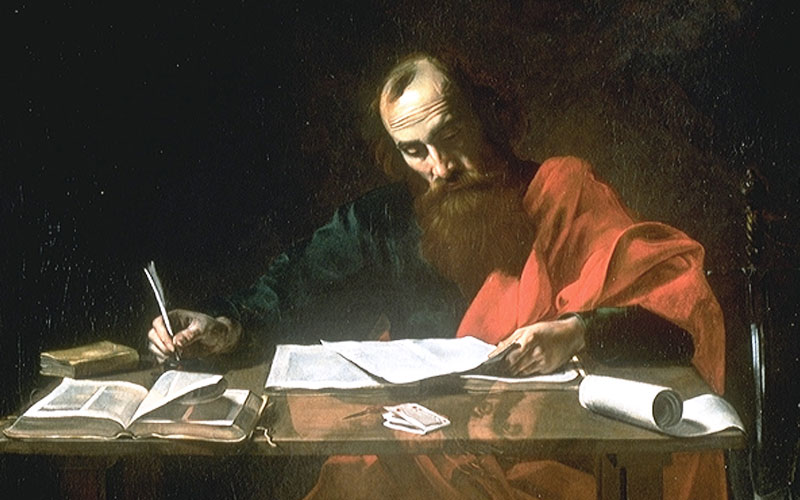
In presenting evidence to support the resurrection of Christ, Paul told the brethren in Corinth of several eyewitnesses who could verify that Jesus did in fact rise from the dead. The last of these eyewitnesses that Paul mentioned was himself: “And last of all, as to one untimely born, He appeared to me also” (1 Corinthians 15:8).

At this point, Paul took a short break from his discussion about the historicity of Jesus’ resurrection to make a point about the grace of God:

For I am the least of the apostles, and not fit to be called an apostle, because I persecuted the church of God. But by the grace of God I am what I am, and His grace toward me did not prove in vain; but I labored even more than all of them, yet not I, but the grace of God with me. Whether then it was I or they, so we preach and so you believed” (1 Corinthians 15:9-11).

Paul made four points in these three verses about the grace of God. Let us consider these briefly.
Continue Reading

It is Not in Me; God Gives the Answer (1/26)

Thought from today’s Bible reading from Genesis 41-42.

When Pharaoh was troubled over two dreams which he had, he was told of a young Hebrew in prison who could interpret dreams. Pharaoh sent for him immediately to teach him the meaning of these dreams.

Joseph then answered Pharaoh, saying, ‘It is not in me; God will give Pharaoh a favorable answer’” (Genesis 41:16).

Joseph knew that he was not the one who possessed such great insight and wisdom. Independently, he was incapable of interpreting Pharaoh’s dreams. He knew that without God’s revelation to him, he could not accurately explain them. He was also humble enough to admit this. It did not matter to Joseph that Pharaoh gave him credit. Joseph wanted it to be clearly understood that he merely explaining the interpretation which God was revealing to him. He wanted God to receive the glory, not himself.
Continue Reading