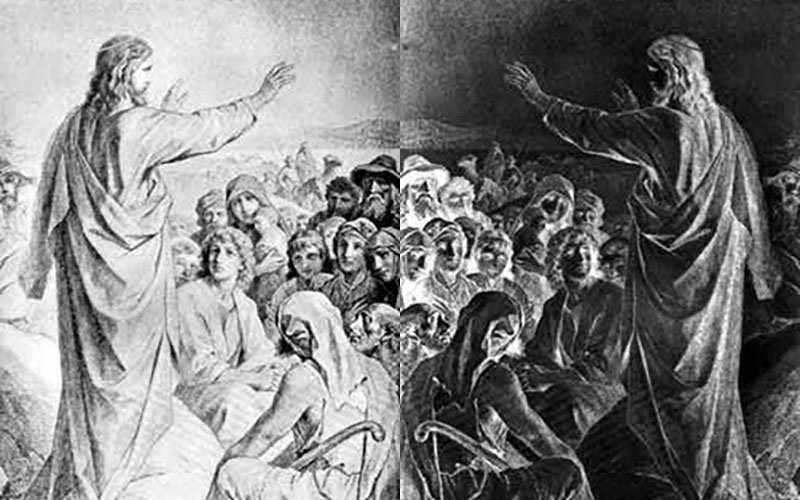
Another Jesus

Two Jesus

There are certain times of the year when the religious world pays special attention to Jesus. One is the Christmas season in which they celebrate the birth of Christ. The other is Easter when they focus on His death and resurrection.

Why is there such a focus on these things about Jesus? Remembering a baby Jesus reminds people of the grace of God in sending Him to earth – not to mention the fact that nearly everyone loves babies. In the death and resurrection of Christ, we see a Savior who died for our sins and gives us the hope of heaven. It is no wonder why people celebrate these events. These things make people feel good. Anymore in religion, if something makes people feel good, that is what they choose to believe and practice.

But the Bible has much more to say about Jesus than just these things. Sure, we must remember the birth, death, and resurrection of Jesus. But by only focusing on these things and ignoring so much of what the Bible teaches about the Christ, many in the religious world have accepted another Jesus (2 Corinthians 11:4). They have molded Him to suit their desires. For this study, let us consider some of the other things the word of God has to say about Jesus that many have forgotten, ignored, or have never known.
Continue Reading


Whose Place Did Jesus Take on the Cross?

Crosses

Jesus’ death on the cross is part of the foundation of our faith. Yet for an event so important and familiar, many have misconceptions about it. One common misconception is the idea that Jesus died in our place or in our stead. We sometimes hear the terminology that calls this sacrifice the vicarious death of Christ. Vicarious simply means a substitute. This is the idea that many have – Jesus died in our place as a substitute for us.

Let us notice a common illustration that is used to emphasize the presumed vicarious nature of Christ’s sacrifice. [I say this is a common illustration because I have personally heard it, or something very close to it, used on multiple occasions by gospel preachers from the pulpit.] The illustration goes something like this: You are a defendant in a court of law and, being found guilty, are sentenced to pay some outrageous fine that you could never be able to pay. Since you cannot pay, you are going to be sent to prison. Then someone you do not know steps forward and agrees to pay the debt for you. He takes your place. It is as if he was the one who committed the offense because the punishment for your offense fell on him. Your debt is transferred to and paid by him. As a result, you are free.

The parable described above is used to depict Jesus as one who willingly took our place and acted as a substitute for us. The punishment we were due for our sin, He endured. We are thus free from the penalty for sin. This is a heart-warming metaphor. But as we shall see, it is not Biblical.
Continue Reading








