Teaching Questions

Jesus as a Boy in the Temple

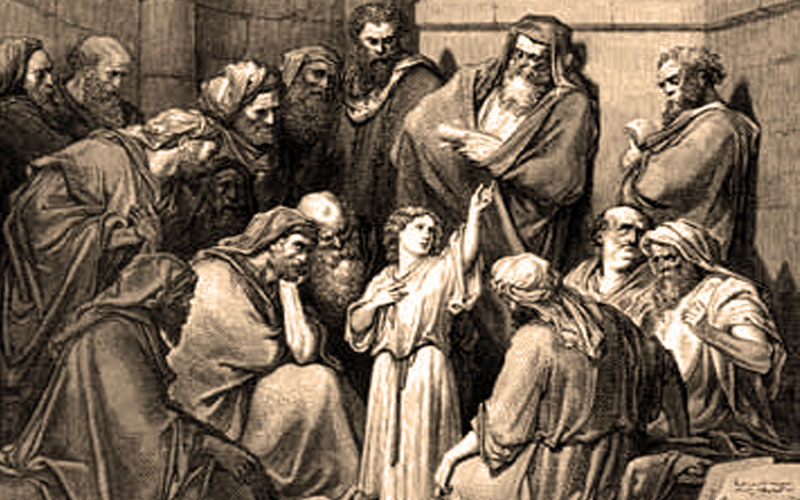
In our last article, we looked at some good questions asked of a teacher that related to spiritual things. However, not all questions are asked by those needing information. Sometimes questions are asked by a teacher as a way to challenge his audience. Notice the example of Jesus when He was a young boy:

Then, after three days they found Him in the temple, sitting in the midst of the teachers, both listening to them and asking questions. And all who heard Him were amazed at His understanding and His answers” (Luke 2:46-47).

Jesus was God in the flesh (John 1:1, 14). He was not asking questions because He lacked understanding and was seeking instruction. He asked questions as a way to teach. The understanding and answers He imparted while His flesh and blood body was just twelve years old amazed those who heard Him.

This was not the only time Jesus employed this method of teaching. In this article, we will notice just a few examples in the Scriptures of questions that were asked by teachers as a way to lead their hearers to the truth.
Continue Reading


Seated at the Right Hand of God

At the beginning of the book of Hebrews, the writer began by reminding the brethren that Jesus was God’s spokesman for “these last days” (Hebrews 1:2). He then explained how Jesus was qualified for this position:

And He is the radiance of His glory and the exact representation of His nature, and upholds all things by the word of His power. When He had made purification for sins, He sat down at the right hand of the Majesty on high” (Hebrews 1:3).

In this short article, I want to focus on part of this description of Christ. So for a few moments, I invite you to consider with me the last part of this verse: “When He had made purification for sins, He sat down at the right hand of the Majesty on high.” If we understand this phrase, we will have a fundamental understanding of the gospel of Christ and why His new law is superior to the Law of Moses.
Continue Reading

What All Men Have in Common

Handshake

People are different. Sadly, there are some who unfairly judge or even hate others simply because they are of a different race, culture, economic class, etc. Christians are to “judge with righteous judgment” (John 7:24) and “abound in love for one another, and for all people” (1 Thessalonians 3:12). In order to do this, we need to remember what all men have in common rather than focus too much on certain differences that may exist.

In this article, we will consider seven things which all of us have in common.
Continue Reading

“Do Not Let Your Heart Envy Sinners”

Bar

Christians are not to be envious of anyone since “envying” is a work of the flesh (Galatians 5:19-21). Yet it is particularly important that we not envy those who live their lives in such a way that is contrary to the will of God. Solomon gave a clear warning: “Do not let your heart envy sinners, but live in the fear of the Lord always” (Proverbs 23:17).

Why did Solomon have to explicitly state that God’s people were not to be envious of those who were not of His people? Sadly it is because it is common for the righteous to envy the unrighteous. Notice the words of the psalmist: “For I was envious of the arrogant as I saw the prosperity of the wicked” (Psalm 73:3).
Continue Reading

Trading Liberty for Security

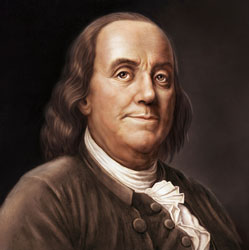
Benjamin FranklinBenjamin Franklin famously said, “They who can give up essential liberty to obtain a little temporary safety, deserve neither liberty nor safety.” A common variation of this quote is, “People willing to trade their freedom for temporary security deserve neither and will lose both.” Though the founding father and those who use this quote today are referring to matters relating to civil government, there is a spiritual truth contained in the statement. How this principle applies to our spiritual lives is of far greater importance than how it applies to the power of human government. So let us consider the spiritual implications of this principle.

Continue Reading

“Raccoon” John Smith: A Conscience Not For Sale

The conscience, if properly trained and used, will help one to be faithful to the Lord. Once one knows the truth, his conscience helps motivate him to practice it. If he does not, his conscience strikes him with guilt, motivating him to repentance.

Unfortunately, there are many who know the truth, but choose not to practice it. They may feel guilty at first, but eventually they become “seared in their own conscience as with a branding iron” (1 Timothy 4:2). They have forfeited their good conscience and all the benefits of it. Many sacrifice their conscience for such things as riches, comfort, security, and the approval of others.

This was the test put against “Raccoon” John Smith when he left the Baptist church in order to practice and preach the simple gospel of Christ. Yet Smith made it clear that his conscience could not be bought with any earthly enticements.
Continue Reading

Jeremiah’s Commission

Jeremiah

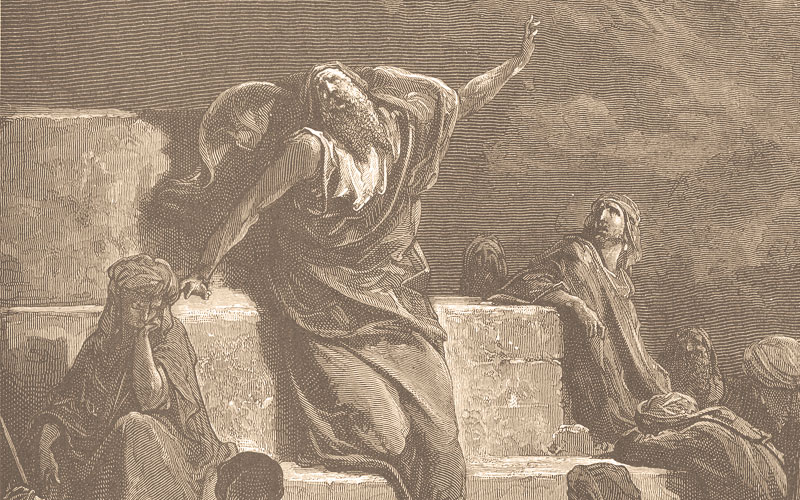
Even before he was conceived, Jeremiah was specifically appointed by God as a prophet (Jeremiah 1:5). We may not be called to do the work of a prophet today (cf. 1 Corinthians 13:8-10), but we can still learn from the instructions which were given to Jeremiah. We are obligated to teach and defend the truth (1 Timothy 3:15; Philippians 1:16-17). Studying Jeremiah’s commission helps us to learn how to do this.

Then the Lord stretched out His hand and touched my mouth, and the Lord said to me, ‘Behold, I have put My words in your mouth. See, I have appointed you this day over the nations and over the kingdoms, to pluck up and to break down, to destroy and to overthrow, to build and to plant’” (Jeremiah 1:9-10).

There were six things that Jeremiah would do in his prophesying – (1) pluck up, (2) break down, (3) destroy, (4) overthrow, (5) build, and (6) plant. These are the same six things we must do in our teaching today.

Before we consider these six things, it is important to note that all of this would be accomplished with the words of God (Jeremiah 1:9). In the same way, we will accomplish these six things by speaking “as the oracles of God” (1 Peter 4:11, NKJV). We must not look to human wisdom, commandments, traditions, or opinions to accomplish our goals in teaching. Instead, we must look exclusively to the word of God.

So let us notice the six things we must do as we teach God’s word.
Continue Reading