Sowing and Reaping

Sowing

Do not be deceived, God is not mocked; for whatever a man sows, this he will also reap” (Galatians 6:7).

God created this world, which operates according to the rules He has established. This was part of the foundation of His promise to Noah after the flood: “While the earth remains, seedtime and harvest, and cold and heat, and summer and winter, and day and night shall not cease” (Genesis 8:22). Each of these represented a natural cycle that God established in His creation. Yet one of these cycles – “seedtime and harvest” – referred to more than just a period of time. Harvest indeed follows seedtime or sowing. Yet the outcome of the harvest would depend – at least in part – on what was planted, when it was done, and how it was conducted.

This idea is universally familiar to us. Even if we do not engage in the work of farming, we understand this principle. So this illustration of sowing and reaping is used throughout the Bible to discuss more than just agriculture. We will notice a few passages that teach us about sowing and reaping to see what we are to do, what we are to avoid, and what the consequences are of our choices.Continue Reading

The Peace of Depending on God

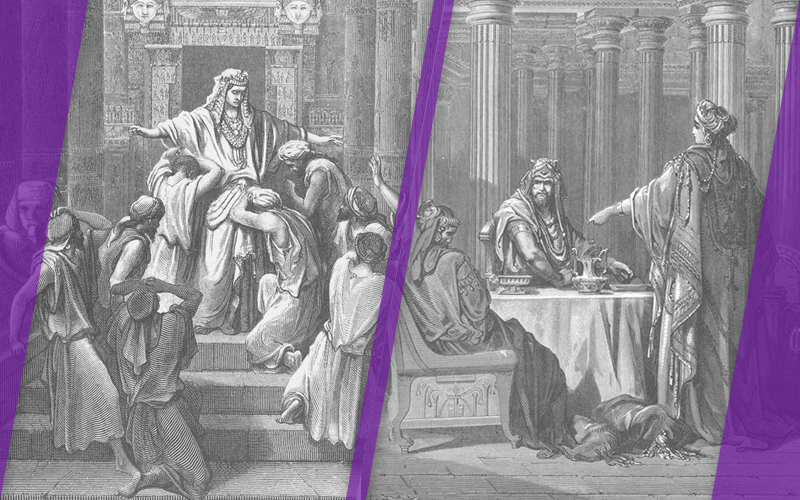
Joseph and Esther

In this article, we will examine the lives of two young people we can read about in the Bible – Joseph and Esther. Their lives were separated by about 1,400 years, and they are both much further separated from us today. Yet their examples teach us some important lessons.

Many young people are tempted to sin in various ways (using bad language, dressing immodestly, using drugs or alcohol, identifying themselves with the LGBTQ ideology, etc.) because they feel the need to have the approval of others. Of course, this problem is not limited to those who are young – everyone can face these same pressures. What makes them especially challenging for young people is that they have not yet learned how to deal with these pressures. Because of this, they feel as if they are, in a sense, dependent upon the approval of those around them. This can be difficult and stressful because other people are constantly changing their values, priorities, morals, etc. What they want from us can differ from one day to the next.

However, there is a peace that comes by being dependent upon God. This will make us, in a sense, independent of the approval of others. In other words, gaining the favor of the world for our opinions and behaviors will not seem nearly as important when we focus on God and gaining His approval. Yet in order for this to work correctly, we must never see ourselves as independent from God.

So let us consider what we can learn from Joseph and Esther – how they demonstrated their dependence upon God and how we can do the same today.Continue Reading

Act As Free Men

Birds freed from cage

The United States was built upon the foundation of freedom. Every fourth of July, the nation celebrates Independence Day. Freedom was the theme of the Declaration of Independence, the founding document that declared that all men are equal and possess the inalienable rights to life, liberty, and the pursuit of happiness. Those of us who live in the United States have enjoyed the blessing of freedom that many people throughout history could not even imagine.

However, this concept – that freedom is the preferred environment in which mankind should live – was not just the opinion of the nation’s founding fathers. This is rooted in God’s plan for the human race. Notice what Peter wrote:

Act as free men, and do not use your freedom as a covering for evil, but use it as bondslaves of God” (1 Peter 2:16).

Man in his natural state is free – in speech, thought, action, association, and religion. God has given us free will to choose what we will do in life. This is why Joshua challenged the people of Israel: “Choose for yourselves today whom you will serve” (Joshua 24:15). Yet this free will does not mean we are unaccountable. God will judge us for what we have done in this life (cf. Ecclesiastes 11:9; 12:14; 2 Corinthians 5:10). In the passage above, Peter explained that our “freedom” was not to be used to do “evil,” but that we were to act “as bondslaves of God.”

From the beginning, Satan has worked diligently to bring man into bondage by taking away the freedom offered by the Lord. Why would he do this? A lack of freedom (being in a state of bondage or tyranny) hinders one from serving God and fully enjoying a relationship with Him.Continue Reading

Will All Good People Be Saved?

Woman at sunset

Many believe that as long as someone is a “good” person, then that individual will go to heaven. But how do we define “good”? The Scriptures say that “there is none who does good” (Romans 3:12). Jesus said, “No one is good except God alone” (Luke 18:19).

When we talk about “good” people, we are using a man-made definition. If people think an individual is a “good” person, they classify them in that way. Does having this designation mean that a particular person will be saved? Unfortunately not.

In this article, we will notice a few examples in the New Testament of “good” people who still needed to be saved. Then we will notice why simply being “good” alone will not save anyone.Continue Reading

Pressing On Toward the Goal

Mountain Path

At the start of the new year, we focus a lot on goals we want to reach in the future. We may set goals regarding our health, work, or relationships. All of these may be good, but we need to make sure we never lose sight of what should be our primary goal. In writing about his goal to “attain to the resurrection from the dead” (Philippians 3:11), Paul said this:

Not that I have already obtained it or have already become perfect, but I press on so that I may lay hold of that for which also I was laid hold of by Christ Jesus. Brethren, I do not regard myself as having laid hold of it yet; but one thing I do: forgetting what lies behind and reaching forward to what lies ahead, I press on toward the goal for the prize of the upward call of God in Christ Jesus” (Philippians 3:12-14).

In these verses, Paul described three things that he was doing and that we also need to do as Christians. Let us consider them here.Continue Reading

Hope for the Future

Lighthouse against the night sky

Throughout the book of Proverbs, a contrast is made between wisdom and foolishness. Since the wisdom described in the book comes from above, those who follow after this and live according to its precepts will be righteous. Conversely, those who reject the way of wisdom will inevitably find themselves engaged in wickedness.

Despite their rejection of godly wisdom, the wicked often prosper in life. They may appear to be better off than the righteous. Not only that but the apparent prosperity and success of the wicked often seem to come at the expense of the righteous.

This sense of injustice is nothing new. We often see those who reject the wisdom from above seem to escape the negative consequences of their sin, laziness, wastefulness, ignorance, and more. The same was true when the wise man wrote the Proverbs. Yet notice what he wrote:

My son, eat honey, for it is good, yes, the honey from the comb is sweet to your taste; know that wisdom is thus for your soul; if you find it, then there will be a future, and your hope will not be cut off. Do not lie in wait, O wicked man, against the dwelling of the righteous; do not destroy his resting place; for a righteous man falls seven times, and rises again, but the wicked stumble in time of calamity. Do not rejoice when your enemy falls, and do not let your heart be glad when he stumbles; or the Lord will see it and be displeased, and turn His anger away from him. Do not fret because of evildoers or be envious of the wicked; for there will be no future for the evil man; the lamp of the wicked will be put out” (Proverbs 24:13-20).

In the passage above, Solomon explained that the righteous who follow after wisdom have hope for the future. Therefore, rather than getting discouraged about their current situation (or that of the wicked), there were certain things they were told to do and not do. Let us consider his points and see what we can learn from them.Continue Reading

Answering Basic Questions (Part 7): What Is the Plan of Salvation?

Answering Basic Questions

Jesus came to earth and died on the cross in order to make salvation possible. But how can we take advantage of His sacrifice and be saved? The New Testament shows how this can be done.

So what is the plan of salvation? Let us consider four points in this article.Continue Reading