How to Become a Christian

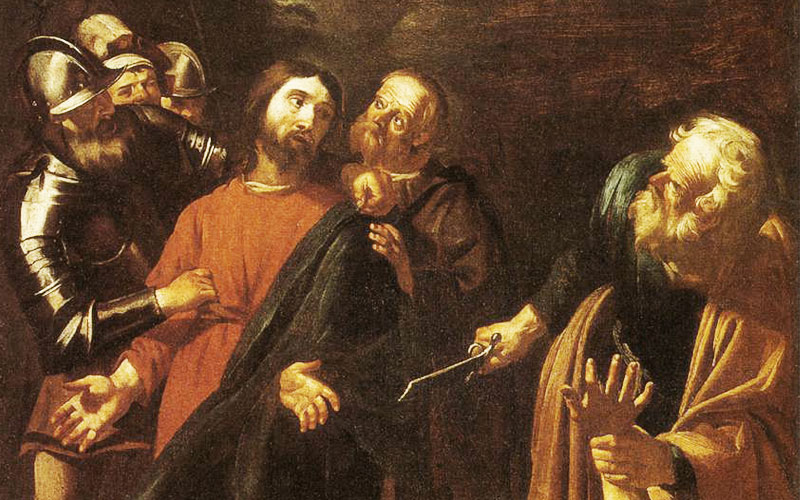
Paul before Agrippa

As Paul was provided time to make a defense before Agrippa, he took advantage of the opportunity to teach the king and all those who were present about the gospel. When Paul asked him if he believed the Prophets, Agrippa replied, “In a short time you will persuade me to become a Christian” (Acts 26:28). The wording of Agrippa’s response may be different in your Bible, depending on which translation you have. Another version says, “Almost thou persuadest me to be a Christian” (KJV). Regardless of which translation you use, it is plain to see that Agrippa understood Paul’s intention. He was trying to persuade the king to become a Christian.

Paul replied to the king, “I would wish to God, that whether in a short or long time, not only you, but also all who hear me this day, might become such as I am, except for these chains” (Acts 26:29). Paul was a Christian. He wanted all those around him to also be Christians. But how does one become a Christian? We can look and see how Paul became one and learn what we must do to become such as he is.
Continue Reading

Jesus – The Great Debater

Jesus Debating

One aspect about Jesus that is often ignored is His ability to debate. There is a reason for this. To say that religious debates are not popular in our time is an understatement. Yet the ability to debate is a valuable skill for those who would endeavor to teach the gospel to others. Jesus was so effective that Luke recorded four occasions in just one chapter (Luke 20) in which Jesus silenced His opponents. He did so by presenting arguments that could not be combated.

Paul described the work of spreading the gospel as “destroying speculation and every lofty thing raised up against the knowledge of God, and we are taking every thought captive to the obedience of Christ” (2 Corinthians 10:5). We are not to try to force anyone or trick anyone into obeying the gospel. We persuade people by dismantling the arguments used against the truth.

When Jesus silenced His opponents four times in Luke 20, He was able to do so without turning the common people against Him (Luke 19:48; 21:38). We must develop our abilities to confound our opponents while also persuading the people. In order to help us do this, let us notice how Jesus silenced His opponents.
Continue Reading

Faith Healers or Fake Healers?

Faith Healing

There are many people today who believe that there are still men who can perform miraculous healing. These “faith healers” attract large crowds and supposedly heal many people of their diseases and injuries. However, these “faith healers” are deceivers. If we compare their “miracles” with those recorded in the Bible, there is really no comparison.

Let us notice the example of Peter healing the lame man at the gate of the temple (Acts 3:1-10). Notice the facts about this miracle and how they differ from the “miracles” men supposedly perform today:
Continue Reading

The Inauguration of a New President

Tuesday, January 20, Barack Obama was sworn in as the 44th President of the United States.

I know there are many Christians who are not happy about this. Given some of his positions and beliefs, this is understandable. However, I won’t take time to discuss the grievances now.

The New Testament does not teach that we must be happy with our leaders. It does not teach that we must agree with them either. We do not even have to follow and support them above and beyond what the law requires of us.

What does the New Testament teach we must do in regards to our leaders?
Continue Reading

New Location for the PBT Blog

I had been using Blogger for this blog for over 2 years. Now I’ve switched over to WordPress. As a result, the blog at the old address will no longer be updated. If you have the page bookmarked, please update to the new link.
Continue Reading

American Individualism and Ecumenism in Religion

On January 14, 2009, The Christian Science Monitor posted an article about the growing trend in this country of those who claim to be Christians deciding on their own what they will believe instead of relying on some church or denomination. The following paragraph does a fair job summarizing the main points in the article:

“A sizable majority of the country’s faithful no longer hew closely to orthodox teachings, and look more to themselves than to churches or denominations to define their religious convictions, according to two recent surveys. More than half of all Christians also believe that some non-Christians can get into heaven.”

Continue Reading

The Deity of Christ in Hebrews 1

Hebrews

Jesus is the Son of God (Matthew 3:17). While He was on the earth “all the fullness of Deity [dwelt] in bodily form” (Colossians 2:9). Yet there are some who reject the Deity of Christ, claiming that He surrendered His Deity when He came to earth.

The Hebrew writer appealed to his audience to not go back to the Old Law. He made several points about why the new way with Christ was better than the old way. He began the book by talking about Christ. In the first chapter alone, there are several statements that show us that Jesus is God:
Continue Reading