The Eternal Gospel

Crosses

We generally divide Biblical history into three dispensations: the Patriarchal age, Mosaic age, and the Gospel age. When people speak of “dispensations,” they are simply referring to the method by which God revealed His will to man. First He revealed His will to the heads of families (Patriarchal age). Then He gave the nation of Israel the Law of Moses (Mosaic age). Finally, the gospel of Christ was revealed (Gospel age). We live in this third and final dispensation.

While these are perfectly acceptable distinctions, we need to recognize that the gospel is different from the other messages that have been delivered. In the book of Revelation, this final message is described as “an eternal gospel” (Revelation 14:6). When we talk about the three dispensations, we ought to recognize that the gospel had its beginning before either of the first two.

The term gospel simply means “good news.” The “good news” is the message of Christ and His salvation. As we can see from the Scriptures, this good news began long before we read of it in the New Testament.
Continue Reading


Do Not Move the Ancient Boundary

Landmark

Do not move the ancient boundary which your fathers have set” (Proverbs 22:28).

This short proverb refers to instructions that were given in the Law of Moses (Deuteronomy 19:14; 27:17). Job gave us a reason why someone would want to move these boundary marks: “Some remove the landmarks; they seize and devour flocks” (Job 24:2).
Continue Reading

Campaign Promises

During this time of political campaigns in our country, particularly since this is a Presidential election year, the citizens listen to the promises of the candidates as they decide how to vote. Many people look for the candidate who promises to do the most for them – education, health care, money, etc.

Often, there is no regard for where the money comes from to pay for these benefits. People just want their “free” health care, education, and tax rebates in excess of the tax they paid. They want these things even if it means that the government takes the money from others who earned it.

This type of greed and selfishness is to be expected of those in the world. But it has no place in the life of a Christian. Notice the words of Paul:
Continue Reading

Those Who Are of “The Way”

One Way

There is an interesting description of the Lord’s people in the book of Acts. In a few places, the Lord’s church is called, “The Way.

Saul went to Damascus “so that if he found any belonging to the Way, both men and women, he might bring them bound to Jerusalem” (Acts 9:2).

Later, after Saul (then Paul) became a follower of Christ, he was preaching in Ephesus. “But when some were becoming hardened and disobedient, speaking evil of the Way before the people, he withdrew from them and took away the disciples” (Acts 19:9).

Answering his accusers before Felix, Paul said, “But this I admit to you, that according to the Way which they call a sect I do serve the God of our Fathers” (Acts 24:14).
Continue Reading

The Indwelling of the Holy Spirit

Bible Reading

The indwelling of the Holy Spirit is a controversial issue among professed Christians. Even among brethren there is disagreement and uncertainty on what the Bible teaches. Let us consider what the word of God has to say on the subject.
Continue Reading

The Importance of the Assembly

Pews

The New Testament instructs us of the importance of assembling with the local church. The Hebrew writer warned that we must “not [forsake] our own assembling together, as is the habit of some, but encouraging one another; and all the more as you see the day drawing near” (Hebrews 10:25).

The assembly is important. Let us notice why it is important.
Continue Reading

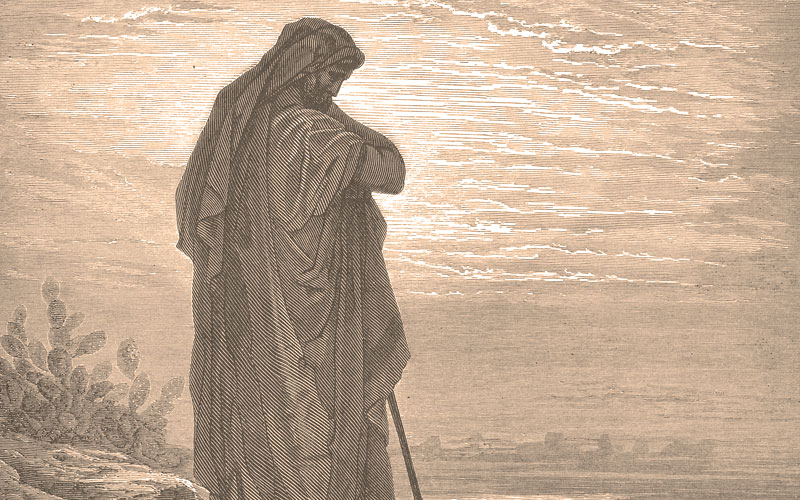
Amos the Herdsman

The Prophet Amos

Preaching the gospel is a noble work. Paul wrote, “How beautiful are the feet of those who bring good news of good things” (Romans 10:15). Yet for many, the work of preaching the gospel has evolved into an occupation. They preach in order to make a living. If a congregation cannot pay them enough, they either move on or send out requests far and wide for outside support. If this does not yield any results, then they quit preaching.

Paul told Timothy, “Do the work of an evangelist, fulfill your ministry” (2 Timothy 4:5). That was the instruction. He did not say, “Do the work of an evangelist and fulfill your ministry as long as you can make a living doing so and do not have to work a secular job to support yourself.” Yes, Paul also instructed that “those who proclaim the gospel [should] get their living from the gospel” (1 Corinthians 9:14). However, this instruction was given to a congregation telling them to support those who preach. It was not given to a preacher instructing him to solicit support from other congregations until he receives a comfortable living.
Continue Reading