Of First Importance

For I delivered to you as of first importance what I also received, that Christ died for our sins according to the Scriptures, and that He was buried, and that He was raised on the third day according to the Scriptures” (1 Corinthians 15:3-4).

Paul told the Corinthians that he had and was presently preaching the gospel to them (1 Corinthians 15:1). The reason why it was important is because the gospel brings salvation (1 Corinthians 15:2). It is “the power of God for salvation” (Romans 1:16). In the preaching of the gospel, that which is “of first importance” is the death, burial, and resurrection of Christ.
Continue Reading

Local Church Autonomy

The Bible teaches that each local church is to be autonomous. That is, they are not answerable to another local church or council of churches. Elders are to shepherd the flock which is among them (Acts 20:28; 1 Peter 5:1-2). No man or group of men has been given authority in the New Testament to rule or govern any other congregation(s).

Sometimes though, the Bible teaching of local church autonomy is misapplied or abused by brethren. Many believe that autonomy means we cannot be critical of what another congregation practices or teaches. When a concerned brother does speak out against error or apostasy in another local church, “autonomy” is the club used to attack this man. After all, to speak out against the error or apostasy in another congregation is to violate that church’s autonomy. Really?
Continue Reading

“Preach Christ, Not the Church”

Crosses

In the religious world, we have what seems to be a countless number of churches. All have their particular name, creed, organization, and practices. But when we turn to the pages of the New Testament, we read of the one true church. Jesus promised to build one church (Matthew 16:18). Jesus purchased one church (Acts 20:28). Jesus is the head of one church (Ephesians 1:22-23). The one true church is the universal body of the saved.

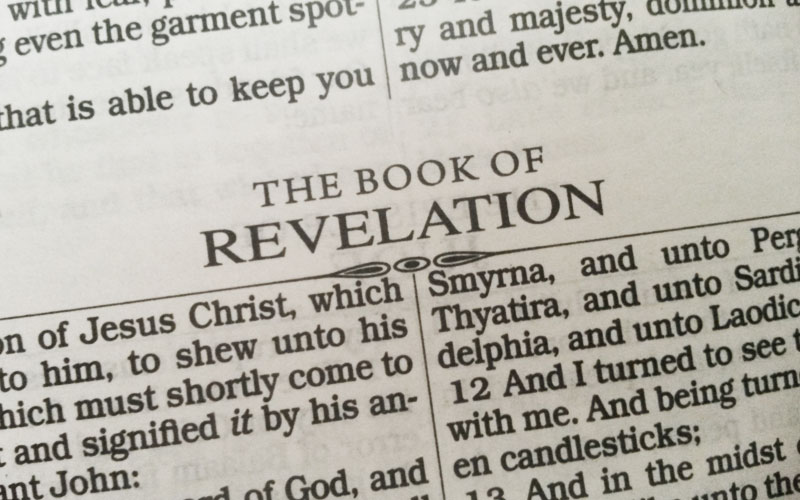
Whenever we read of churches (plural) in the New Testament, it refers to local churches. “All the churches of Christ greet you” (Romans 16:16). Paul wrote “to the churches of Galatia” (Galatians 1:2). The book of Revelation was addressed to the “seven churches” in Asia (Revelation 1:11). Notice these are all local churches, not confederations of local churches, or denominations (i.e. the Baptist church, Methodist church, Episcopal church, etc.).

Yet this teaching that there is but one true church is not popular. Most professed Christians believe that one church is as good as another. People are told to join the church of their choice. After all, they all believe in Christ, so they are all basically the same. This is the mentality of many. They do not want to condemn or be critical of any other church. They do not think we should do so either. So they tell us to preach Christ, not the church.
Continue Reading

Did Alexander Campbell Start the Church of Christ?

[This article was written by Justin Monts.]

Church of Christ 1710Alexander Campbell did not start the church of Christ. The church of Christ began in 30 AD on the Day of Pentecost (Acts 2:38, 47). Campbell was born in 1788, long after the first century. Jesus Christ founded the church that bears his name. In Matthew 16:18, Jesus said, “I will build my church.” God gave him to be head over all things to the church which is his body (Ephesians 1:22-23). Further, the Hebrew writer tells us that Jesus is the minister of the true tabernacle which the Lord erected and not man (Hebrews 8:2). Since Jesus Christ erected his own church, Campbell could not have possibly started the church of Christ. The apostle Paul wrote in 58 AD, “The churches of Christ salute you” (Romans 16:16).
Continue Reading

Rightly Dividing the Word

Paul gave this instruction to the young evangelist Timothy: “Be diligent to present yourself approved to God as a workman who does not need to be ashamed, accurately handling [rightly dividing, KJV] the word of truth” (2 Timothy 2:15). We need to learn how to handle God’s word accurately in order to be approved before Him.
Continue Reading

“Return to Me”

[Article written by Matt Nevins. Originally published in his email newsletter “The Lamp.”]

A reoccurring theme found within the Bible connected to the salvation of man’s soul, is the desire for the return of God’s children. I was reminded recently of Zechariah 1:3 where the prophet was instructed to plea for the people to “Return to Me.” The forefathers had not heeded the repeated pleas made by God’s prophets in the past which resulted in the Babylonian captivity for the nation of Judah. Their example needed to resonate with the people of Zechariah’s day in order to receive the blessings God was willing to give. The call to return is an invitation to leave wickedness and to pursue righteousness.
Continue Reading

Crucified with Christ

I have been crucified with Christ; and it is no longer I who live, but Christ lives in me; and the life which I now live in the flesh I live by faith in the Son of God, who loved me and gave Himself up for me” (Galatians 2:20).

All Christians have been “baptized into Christ” and “baptized into His death” (Romans 6:3). It is in baptism that we become “united with Him in the likeness of His death” (Romans 6:5). This is when we, like Paul, are “crucified with Christ.
Continue Reading