Faith on Man’s Terms

The Scriptures are clear in describing faith as essential. The Hebrew writer said, “And without faith it is impossible to please Him” (Hebrews 11:6). Yet too many have a conditional faith. In other words, even though the Bible tells us that faith is based upon the word of God (Romans 10:17), this is not enough for some people. They will not believe unless they see, receive, or otherwise experience something beyond the revealed will of God.

This is nothing new. Even during the first century, there were those who would only have faith on their terms, rather than have faith based upon what God had chosen to reveal to them. In this article we will notice a few of these conditions that men have placed upon their faith. At the end, we will also see what genuine faith looks like.
Continue Reading

Jesus’ Resurrection: Just an Optical Illusion?

The resurrection of Christ is fundamental to our faith. Paul lists it with the death and burial of Christ as being “of first importance” in the gospel (1 Corinthians 15:3-4). We are “born again to a living hope through the resurrection of Jesus Christ from the dead” (1 Peter 1:3). If the resurrection of Christ did not happen, Paul tells the brethren in Corinth, “Your faith is worthless; you are still in your sins” (1 Corinthians 15:17).

Since the time of Jesus’ resurrection, His opponents have denied that this event happened (Matthew 28:11-13). Opponents of Christ and His truth continue to deny the resurrection today. A new theory about the resurrection has been proposed by Thomas de Wesselow, an art historian. His theory revolves around the Shroud of Turin – the alleged burial cloth that was used to wrap the body of Jesus after His death. He argues that the image on the Shroud “fooled the Apostles” by producing an “optical illusion” that made them believe they were seeing their risen Lord.
Continue Reading

He Hangs the Earth on Nothing (1/10)

Thought from today’s Bible reading from Job 24-28.

He stretches out the north over empty space and hangs the earth on nothing” (Job 26:7).”

This is one of those passages that helps reinforce the validity and inspiration of the Bible. How were the ancients to know that the earth was suspended in space? How were they to know the earth was not resting upon some foundation, whether that foundation was the backs of elephants, turtles, or something else? Myths like these existed, but Job believed something that was not only different, but correct.
Continue Reading

A Leap of Faith

Leap of Faith

It is not uncommon to hear one talk about taking a leap of faith. Often this phrase is used to refer to some aspect of our response to God – believing in His existence, acknowledging His work in Creation, accepting the Bible, meeting His terms of salvation, or trusting that His way is best.

What is a leap of faith? While it may be true that people use this phrase in different ways, it seems that there is one way in which it is generally used. For many, a “leap of faith” is a willingness to believe something even if they have their doubts about it. If something cannot be proven, a “leap of faith” is required to accept it. Again, not everyone will use this phrase in this way, but this is generally the way in which it is used. Therefore, this is the definition we will consider in this article.
Continue Reading

The Proof of God in Man

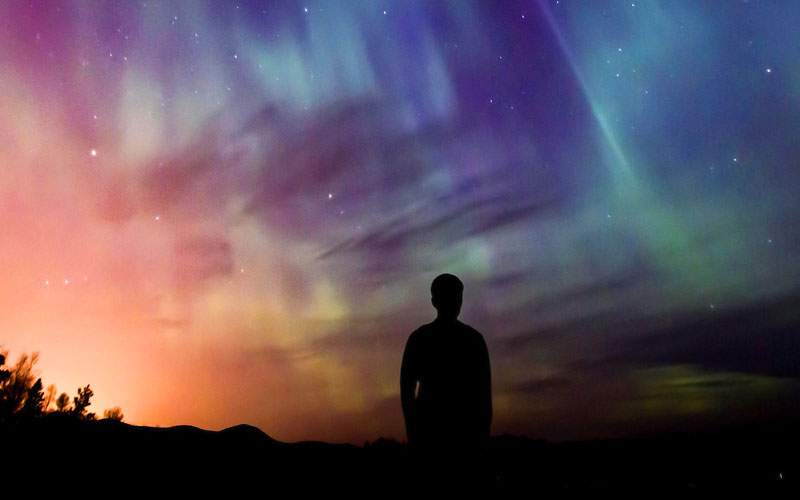
Man and Northern Lights

[This article was written by Tim Haile.]

If the Bible is what it claims to be, then God does exist. Conversely, if God does exist, then it is reasonable to believe that He would reveal Himself to His creatures, and particularly to a sentient creature like man. It is important to remember that, if the Bible is true, all unbelievers will experience the kind of pain that one would experience if he were to be cast into a lake of burning sulfur (Rev. 21:8). The difference is that the lake of judgment will inflict pain and torment to the soul, not the body (Matthew 10:28), and that the punishment will be experienced for ever and ever (Revelation 20:10; 14:11). Such a prospect behooves us to consider these matters soberly and fully.
Continue Reading