Appalling and Horrible and the People Love It So!

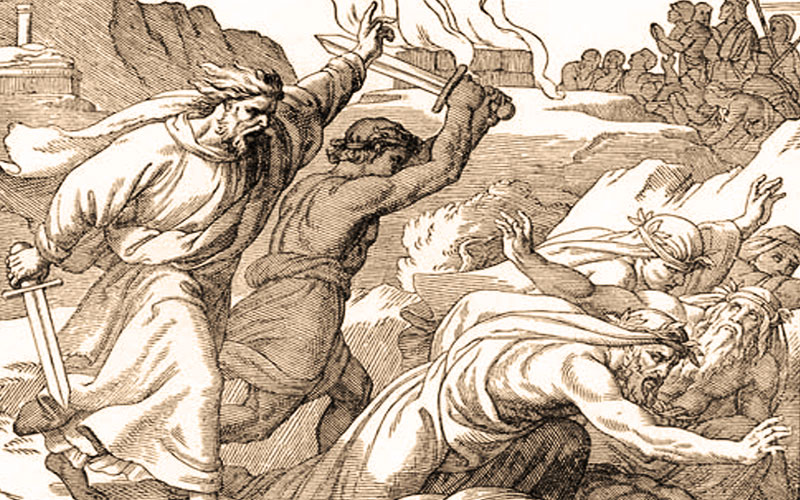
At the time when Jeremiah prophesied, God was preparing to send Judah into Babylonian captivity in order to punish them for their sins (Jeremiah 1:14-16). But it was not just the common people that had devolved into a state of spiritual corruption. The prophets and priests were involved as well.

An appalling and horrible thing has happened in the land: The prophets prophesy falsely, and the priests rule on their own authority; and My people love it so!” (Jeremiah 5:30-31).

The inhabitants of Judah had learned to tolerate and celebrate sin. “Where they ashamed because of the abomination they have done? They were not even ashamed at all; they did not even know how to blush” (Jeremiah 6:15). The prophets spoke lies and the priests followed their own rule. “For from the least of them even to the greatest of them, everyone is greedy for gain, and from the prophet even to the priest everyone deals falsely. They have healed the brokenness of My people superficially, saying ‘Peace, peace,’ but there is no peace” (Jeremiah 6:13-14). Yet even as judgment was planned because of these things, God invited His people to repent and turn back to Him.
Continue Reading

What Makes One a False Teacher?

Error

The existence of false teachers is a sad reality. Just as there were false prophets in the past, Peter said, “There will also be false teachers among you” (2 Peter 2:1). Our responsibility is to mark and turn away from them (Romans 16:17), have no fellowship with them (2 John 10-11), and refute their error (Titus 1:9; 2 Corinthians 10:5).

But what is it that makes one a false teacher? The seemingly obvious answer to this question – teaching what is false – is disputed by many. The argument is made that teaching what is wrong does not necessarily make one a false teacher; rather, one would be a false teacher based on evil intentions and deliberate attempts to deceive.

So, is one a false teacher based on his message or his motive? Let us notice a few passages to help answer this question.
Continue Reading

Dealing with Threats to Unity within a Local Church

Recently I’ve preached  a few lessons about things that threaten unity within a local church. The outlines have been posted on my other site – DIY Sermon Outlines. Below is a list with links to the various lessons in that series.
Continue Reading

The Danger Posed by False Teachers

Danger sign

Near the close of his letter to the Romans, Paul issued a serious warning about the danger posed by false teachers and told the brethren what they must do about it.

Now I urge you, brethren, keep your eye on those who cause dissensions and hindrances contrary to the teaching which you learned, and turn away from them. For such men are slaves, not of our Lord Christ but of their own appetites; and by their smooth and flattering speech they deceive the hearts of the unsuspecting” (Romans 16:17-18).

This command to mark (identify) and avoid false teachers is often forsaken today in favor of ignoring, tolerating, or even accepting one who brings a different gospel. Why is that?

I will not get into the possible reasons for the failure to do what Paul said to do here. Each one should examine his own heart (cf. 2 Corinthians 13:5). But whatever the reason, failure to follow this command is a problem that needs to be corrected. Aside from the desire we ought to have to follow divine commandments (John 14:15), the New Testament gives several other reasons why we should not ignore, tolerate, or accept false teaching/teachers.
Continue Reading

How to Use the Bible to Teach Error

Bible on podium

The presence of false teachers in the world is a reality that we cannot ignore. Peter warned, “There will also be false teachers among you” (2 Peter 2:1). These were ones who taught “a different gospel,” which Paul explained “is really not another; only there are some who are disturbing you and want to distort the gospel of Christ” (Galatians 1:6-7).

But how is this done? A false teacher does not come in, take away your Bible, and replace it with one that has different content which supports his error. He also does not refrain from citing or quoting Bible passages. Yet he teaches error. How? As Paul said, the false teacher must distort the gospel. He uses a Bible in proclaiming his error. This should not surprise us. Satan even quoted Scripture in tempting Jesus (Matthew 4:5-6). We need to understand how this is done so we will be better prepared to identify, expose, and combat error.
Continue Reading

The Progression from Sound Doctrine to False Teaching

Sound Doctrine to False Teaching

Paul gave the young evangelist Timothy this charge: “Preach the word; be ready in season and out of season; reprove, rebuke, exhort, with great patience and instruction” (2 Timothy 4:2). Why was it so important for Timothy to do this? Paul continued: “For the time will come when they will not endure sound doctrine; but wanting to have their ears tickled, they will accumulate for themselves teachers in accordance to their own desires, and will turn away their ears from the truth and will turn aside to myths” (2 Timothy 4:3-4).

Apostasy was coming. At some point, those who were once receptive to the pure, unadulterated gospel would want something different. How does such a change happen? It certainly does not happen overnight. There is a progression that takes place that leads Christians away from sound doctrine and into false teaching.
Continue Reading

Is Jesus the Only Way to Salvation?

One Way

A recent report has found that a minority of Presbyterians believe that “only followers of Jesus Christ can be saved.” Only 39% of members agree or strongly agree with that statement along with just 35% of pastors and 45% of elders.

Before you might jump to conclusions, understand that this was not a report done by a group that is biased against the Presbyterian church, making their findings unreliable. The article linked above cites the latest “Religious and Demographic Profile of Presbyterians” report and was released by the Presbyterian church itself.
Continue Reading