The Root of the Problem (Part 20): No Fear of God

The Root of the Problem: Why We Sin & How We Can Overcome

When Paul indicted all under sin, he quotes several passages from the Old Testament to describe the sinful state of man: there is none righteous, there is none who does good, their feet are swift to shed blood, etc. (Romans 3:9-17). At the end he reveals the mindset that leads to all these failings:

There is no fear of God before their eyes” (Romans 3:18).

When one does not fear God, there is no motivation to listen to God. In both the Old and New Testaments, fearing God is connected with one’s obedience.
Continue Reading

How People Approach the Judgment

Clouds

And inasmuch as it is appointed for men to die once and after this comes judgment” (Hebrews 9:27).

Death is a reality for everyone. This fact is generally understood. However, many people do not recognize the reality or the seriousness of the other event mentioned by the Hebrew writer – judgment. Paul wrote, “For we must all appear before the judgment seat of Christ, so that each one may be recompensed for his deeds in the body, according to what he has done, whether good or bad” (2 Corinthians 5:10). Even though we will all face this judgment, not everyone approaches this appointment in the same way. Let us briefly consider five ways in which people approach the judgment.
Continue Reading

Qualities of Good Leaders

Moses and Jethro

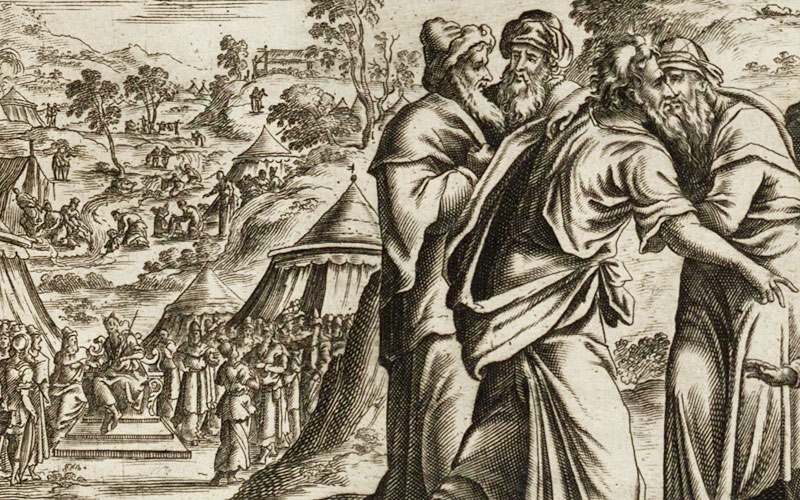
When Jethro came to visit Moses, he observed how his son-in-law judged the people “from the morning until the evening” with no one to assist him in this enormous task (Exodus 18:13-14). He warned Moses that this arrangement was not good: “You will surely wear out, both yourself and these people who are with you, for the task is too heavy for you; you cannot do it alone” (Exodus 18:18). So Jethro advised Moses to appoint leaders over the people who could help act as judges. But he did not tell Moses to select just anyone – they had to possess certain qualities in order to be good leaders.

Furthermore, you shall select out of all the people able men who fear God, men of truth, those who hate dishonest gain; and you shall place these over them as leaders of thousands, of hundreds, of fifties and of tens” (Exodus 18:21).

Continue Reading

The Most Frightening Verse in the Bible

Scared of the Bible

The Bible teaches that our fundamental purpose in life is to “fear God and keep His commandments” (Ecclesiastes 12:13). This fear of God, coupled with obedience, is necessary for one to be accepted by Him. Peter told the household of Cornelius, “I most certainly understand now that God is not one to show partiality, but in every nation the man who fears Him and does what is right is welcome to Him” (Acts 10:34-35).

Besides just telling us that we need to fear God, the Bible provides us with enough information for us to appreciate the fact that “it is a terrifying thing to fall into the hands of the living God” (Hebrews 10:31). Notice just a few examples:
Continue Reading

Stagnant in Spirit

Swamp

The following is a portion of the revelation against Jerusalem that was received by the prophet Zephaniah:

It will come about at that time that I will search Jerusalem with lamps, and I will punish the men who are stagnant in spirit, who say in their hearts, ‘The Lord will not do good or evil!’ Moreover, their wealth will become plunder and their houses desolate; yes, they will build houses but not inhabit them, and plant vineyards but not drink their wine’” (Zephaniah 1:12-13).

This prophecy was against those who were “stagnant in spirit” or “settled in complacency” (NKJV). As it was in the days of Zephaniah, complacency is still a threat to God’s people today. Complacency keeps us focused on the here and now rather than fixing our eyes on the goal of heaven. Complacency keeps us from improving our service to God and forsaking our sins. Complacency keeps us from being pleasing to God, thereby setting us up for punishment. So let us consider how these people were “stagnant in spirit” so that we might not be the same.
Continue Reading

“Consider Your Ways!”

Haggai 1:7

Haggai prophesied during the reign of King Darius (Haggai 1:1). This man was referred to elsewhere as “Darius the Mede” (Daniel 5:31) and “Darius king of Persia” (Ezra 4:24). He was the head of the Medes and Persians when they overthrew Babylon (Daniel 5:28, 30-31).

Haggai prophesied about the need to rebuild the temple. This was necessary because the temple – as well as the city of Jerusalem – had previously been destroyed by the Babylonians (2 Kings 25:8-9). Later, God called Cyrus king of Persia to allow the temple to be rebuilt (Ezra 1:1-2). However, these reconstruction efforts were stopped by threat of force (Ezra 4:4-7, 23-24). Work on the temple would not resume again until the reign of Darius (Ezra 4:24; Haggai 1:1).

As the people were instructed to rebuild the temple, they were also told to consider their ways (Haggai 1:5, 7). It is important for us to consider the lessons revealed by the prophet Haggai.
Continue Reading

David: The Courage to Fight

Take Courage

The next example in our series is David who had the courage to fight. There are several examples in David’s life of him courageously fighting against his enemies (and God’s enemies). But for our lesson, we will focus on his fight against the Philistine giant, Goliath.
Continue Reading