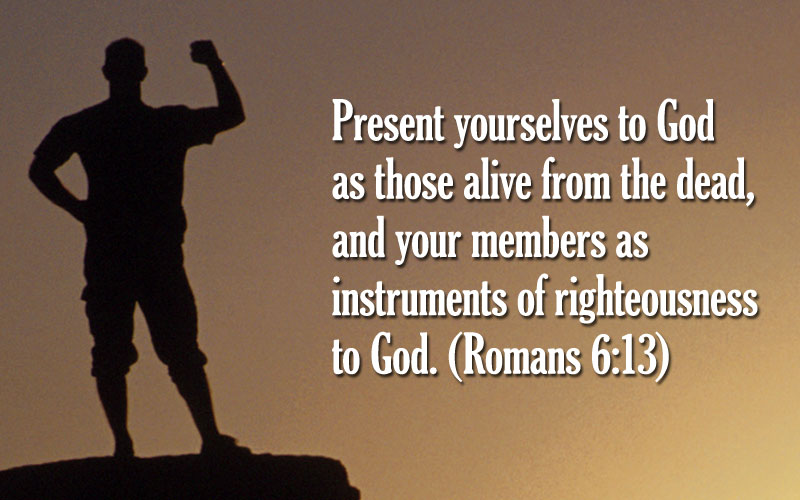
Using Our Bodies as Instruments of Righteousness

Romans 6:13

Therefore do not let sin reign in your mortal body so that you obey its lusts, and do not go on presenting the members of your body to sin as instruments of unrighteousness; but present yourselves to God as those alive from the dead, and your members as instruments of righteousness to God. For sin shall not be master over you, for you are not under law but under grace” (Romans 6:12-14).

Our bodies can be used one of two ways – either for God or for sin. As Christians, we are to present our bodies as living sacrifices to God (Romans 12:1). Our bodies are “for the Lord” (1 Corinthians 6:13); therefore, Paul said, “Glorify God in your body” (1 Corinthians 6:20).

How do we use the members of our bodies as instruments of righteousness? Let us consider what the Scriptures teach about this.
Continue Reading
The Shepherd and the Sheep

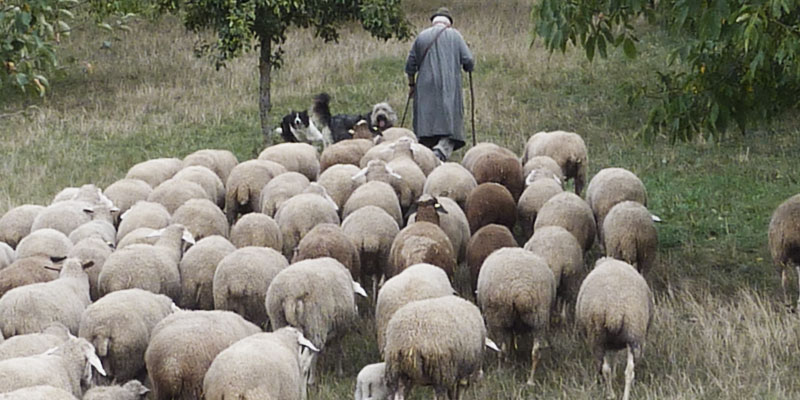
Shepherd

Jesus described Himself as “the good shepherd [who] lays down His life for the sheep” (John 10:11). A shepherd provides guidance, sustenance, and protection for the flock. No one is able to provide the same care for us as Jesus. He willingly sacrificed Himself for us (John 10:17-18). Therefore, it is vitally important that we have Christ as our shepherd.

How do we become one of His sheep? And how do we remain in His fold? Notice what Jesus said:

My sheep hear My voice, and I know them, and they follow Me” (John 10:27).

Let us briefly examine this phrase to see how we can take advantage of the care provided by the Good Shepherd.
Continue Reading

William Hayden: “I Did Not Mean to Believe Him; But I Could Not Help Believing Him”

As was common among the early figures of the Restoration Movement, William Hayden (1799-1863) had to leave the denominational errors and Calvinistic theories that he had previously been taught. In the following excerpt, Hayden describes the first opportunity he had to listen to Alexander Campbell.
Continue Reading

“These Were More Noble-Minded”

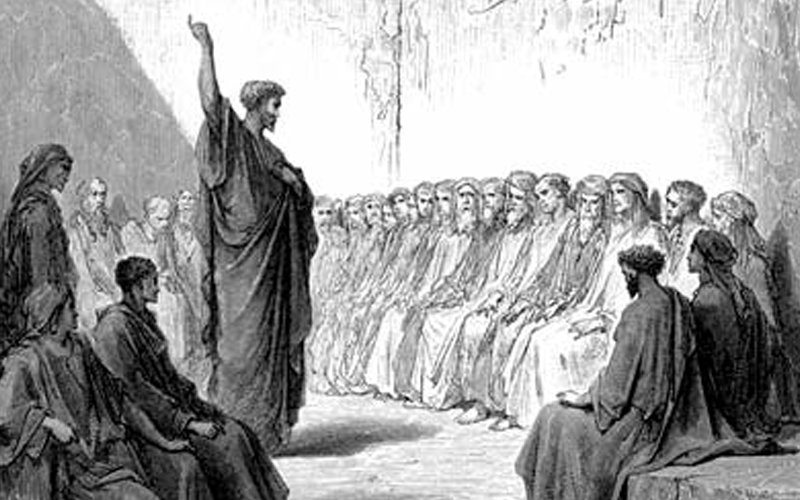
Paul preaching in Thessalonica

Paul was in Thessalonica for just three weeks when he had to quickly leave the city under the cover of darkness because of the uproar that was caused by his preaching (Acts 17:1-10). When he left, he went to Berea. Undeterred by his experience in Thessalonica, he preached in this new city as well. Luke noted the significant reaction of the Bereans:

Now these were more noble-minded than those in Thessalonica, for they received the word with great eagerness, examining the Scriptures daily to see whether these things were so” (Acts 17:11).

Luke compared the Thessalonians and the Bereans in their reaction to the gospel. The Bereans were “more noble-minded” in that they “received the word with great eagerness.” This does not mean that everyone in Thessalonica rejected the gospel – some were persuaded (Acts 17:4). This also does not mean that everyone in Berea accepted the gospel – the Jews of Thessalonica were able to come to Berea and turn “the crowds” against Paul (Acts 17:13). But there is an important difference between the first recipients of the gospel in each city – those in the synagogues (Acts 17:2, 10). Notice what Luke recorded about Paul’s custom in preaching.
Continue Reading

Practical Ways for Developing a Better Understanding of God’s Word

Bible Study

At the start of the new year, many have made the determination to increase their knowledge and understanding of the Bible. This is certainly commendable. The Bible is the inspired word of God (2 Timothy 3:16). It contains the “words of eternal life” (John 6:68). The gospel is “the power of God for salvation” (Romans 1:16). No book is more deserving of our attention than the Bible.

It is one thing to want to grow in knowledge of the Bible. It is another to actually do it. So as we begin this new year, I want to consider some practical ways in which each one of us can develop a better understanding of the word of God.
Continue Reading

How to Grow in Knowledge of God’s Word

2 Peter 3:18

Grow in the grace and knowledge of our Lord and Savior Jesus Christ” (2 Peter 3:18).

All Christians have an obligation to increase in their knowledge and understanding of the Lord. To do this, we must become more acquainted with His word. But how are we to do this? In this article we will notice six things we can do to grow in knowledge of the word of God.
Continue Reading

Soldiers of the Victorious Lamb

It is an inescapable reality that we are involved in a war – not the type of war that nations wage for wealth, resources, or territory; but a spiritual war for the souls of men (2 Corinthians 10:3-5). While the final outcome of a physical war is always unknown, the result of this spiritual war is certain. Notice what the book of Revelation says about the victory of Christ:

These will wage war against the Lamb, and the Lamb will overcome them, because He is Lord of lords and King of kings, and those who are with Him are the called and chosen and faithful” (Revelation 17:14).

Jesus will lead His army to victory. There is no uncertainty to this. What is uncertain is which side we will join. Will we choose to be on the Lord’s side? Or will we choose to fight against Him?
Continue Reading