Safe and Sane Solutions

Sommer: Safe and Sane Solutions

Few preachers associated with the Restoration Movement fought so strongly and effectively against innovations and apostasy than Daniel Sommer (1850-1940). His efforts were motivated by a profound respect for the word of God, and his ability to defend the truth as he did was possible because of his diligence in studying the Scriptures. This respect and diligence can be seen in the quote below from Allen Sommer – the son of Daniel Sommer – as he recalled the memory of his father.

“When he was home, as a child I remember going to bed at night leaving Father seated at a writing table with the Book open before him, and a piece of heavy paper or card-board bent around the coal-oil lamp chimney, to shade his eyes … there he was—reading and writing—always writing and reading … And when I sleepily drifted into the room next morning, there he was—reading that Book, and writing … always writing and reading. I wondered if he’d been there all night … Sometimes he’d pause, lift his massive head and shoulders and gaze straight ahead. I wondered then what he saw. Later I concluded he was turning over in his mind a scripture, looking under, around, and behind, for safe-and-sane solution…” (Faith and Facts Quarterly, Volume 48, Number 2, p. 19).

Daniel Sommer had such a habit of Bible study that his young son wondered if he ever went to sleep or stayed up all night with the word of God open before him. This diligence is commendable. We all need to strive to maintain such a habit of studying the Scriptures. Yet there was more involved in the study done by Sommer than just the time he spent in it. His young son noticed the time, but as Allen Sommer grew up, he realized that his father’s approach to the Scriptures – looking for a “safe-and-sane solution” to the issue at hand – enabled him to teach and defend the truth so effectively.Continue Reading

The Seven Churches (Part 1): Ephesus

The Seven Churches (Part 1): Ephesus

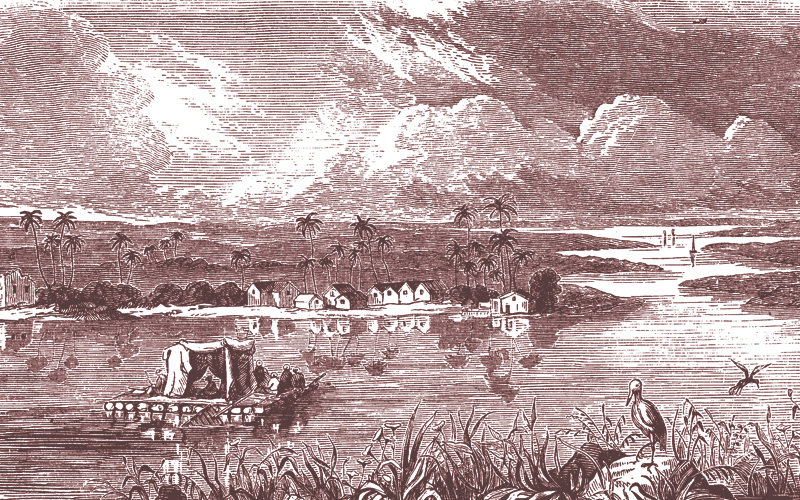
The first of the seven churches addressed by the Lord in the book of Revelation was located in Ephesus. The New Testament tells us more about this church and the city in which it was located than any of the other churches of Revelation. This letter teaches us the importance of doing what is right for the right reason.

To the angel of the church in Ephesus write: The One who holds the seven stars in His right hand, the One who walks among the seven golden lampstands, says this: ‘I know your deeds and your toil and perseverance, and that you cannot tolerate evil men, and you put to the test those who call themselves apostles, and they are not, and you found them to be false; and you have perseverance and have endured for My name’s sake, and have not grown weary. But I have this against you, that you have left your first love. Therefore remember from where you have fallen, and repent and do the deeds you did at first; or else I am coming to you and will remove your lampstand out of its place—unless you repent. Yet this you do have, that you hate the deeds of the Nicolaitans, which I also hate. He who has an ear, let him hear what the Spirit says to the churches. To him who overcomes, I will grant to eat of the tree of life which is in the Paradise of God’” (Revelation 2:1-7).

Continue Reading

Questions about Signs and the End Times

Destruction of Jerusalem

After Islamist militants attacked Israeli civilians on October 7, 2023, Israel went to war against Hamas – the Palestinian militant Islamist group in Gaza. Israel’s stated mission was to wipe them out.

When this conflict escalated, many wondered how it might fit into the prophecies contained in the Bible. There was speculation that it could be a possible sign of the “end times.” This is nothing new. Anytime there is a significant military conflict involving Israel, these discussions arise.

It is helpful to know what (if anything) the Bible says about this. Matthew 24 is a key chapter to help us on this point. Unfortunately, many people misunderstand and misinterpret this chapter. However, understanding what Jesus taught there will help us answer questions about whether some current event is a sign of the end.Continue Reading

The Seven Churches: Introduction

The Seven Churches: IntroductionAfter the Lord’s church began in the city of Jerusalem, it expanded throughout the Roman Empire until it reached the capital city of Rome. The inspired history recorded by Luke ends here (Acts 28:16, 30-31), but the message of the gospel continued to spread throughout the world. Wherever it was preached, and people were converted, local churches were formed, made up of those who were turning to the Lord.

The last book of the New Testament, Revelation, was written in order to encourage Christians to remain faithful to the Lord as they endured suffering and persecution, knowing that the Lord would judge His enemies, punish the wicked, and reward the faithful. Anyone who reads the book of Revelation can profit from it (Revelation 1:3), but it was initially written to seven churches in Asia: Ephesus, Smyrna, Pergamum, Thyatira, Sardis, Philadelphia, and Laodicea.Continue Reading

Is It Possible to End Poverty?

Homeless

Many people – both Christians and non-Christians – are concerned about the poor. Individuals and families provide money and resources to help those who are in need. Charitable organizations have been established to provide assistance to the less fortunate. Many government programs are funded supposedly for the purpose of ending poverty. Yet poverty still exists.

Some hold to the idealistic notion that poverty can be eliminated. Yet, it is not possible to do this in the fallen world in which we live. Jesus said, “For you always have the poor with you, but you do not always have Me” (John 12:8). In other words, there will always be people in poverty. Why is that? To answer that question, let us first consider a few reasons why people are poor.Continue Reading

Book Review: The Great Dechurching

The Great Dechurching (cover)Much has been said about the changing religious landscape in our culture over the last several years. Society as a whole is becoming less religious. Among those who continue to practice religion, many are attending worship services less frequently. There is a rising number of “nones” – those whose religion is “nothing in particular.” This has led to the coining of a new term to refer to those who are leaving their churches. They are the “dechurched.”

In a new book – The Great Dechurching – authors Jim Davis and Michael Graham tackle this issue. In the opening paragraph of the first chapter, they highlighted this statistic: “About 40 million adults in America today used to go to church but no longer do, which accounts for around 16 percent of our adult population.” They added, “This is not a gradual shift; it is a jolting one.”Continue Reading

What Will Destroy a Congregation

Abandoned Church Building

If we were to think of potential threats to our local churches, a number of things could be added to the list. Paul made a list like this near the end of his second letter to the church in Corinth. Notice what the apostle wrote:

For I am afraid that perhaps when I come I may find you to be not what I wish and may be found by you to be not what you wish; that perhaps there will be strife, jealousy, angry tempers, disputes, slanders, gossip, arrogance, disturbances; I am afraid that when I come again my God may humiliate me before you, and I may mourn over many of those who have sinned in the past and not repented of the impurity, immorality and sensuality which they have practiced” (2 Corinthians 12:20-21).

When Paul wrote his first letter to these brethren, there were many problems he needed to address. When we read through the second letter, it is clear that they had made significant improvements. Even so, there were still issues that threatened the health of that congregation.

In the passage above, Paul described some things that would destroy a congregation. It would be helpful for all of us to consider these, even if we are not currently experiencing these problems in our church. If these problems ever do arise, we want to identify them and address them as quickly as possible.

As Paul described the things that would destroy a congregation, we can break them down into three main categories – destroying unity, destroying purity, and refusing help. Let us consider each of these.Continue Reading