Easter in the Bible

This Sunday is when many religious people celebrate Easter. Easter is used to commemorate the resurrection of Christ. Just when this day began to be observed is unknown. The practice is absent from the pages of the Bible.

However, we do have one mention of Easter in the Bible: “And when [Herod] had apprehended [Peter], he put him in prison, and delivered him to four quarternions of soldiers to keep him; intending after Easter to bring him forth to the people” (Acts 12:4, KJV).

Newer translations, however, do not use the word Easter. Instead, they use Passover. Why is that? Is it because the newer translations are inferior to the “authorized” King James Bible and are, therefore, wrong? No.
Continue Reading

Book Review: The Man of Galilee

man-of-galileeIn The Man of Galilee, Atticus Haygood sets out to show the reader that Jesus is the Son of God. He directs his writing toward the skeptic, and presents arguments that can be used to show the deity of Christ to someone before they believe that the Bible is the word of God.
Haygood addresses the claims that Jesus was an invention of the gospel writers and that Jesus was just a man. He makes his case by considering who the gospel writers were, and Jesus’ words, plans, worldview, and life to show that Jesus could be none other than the Christ, the Son of God. Overall, the material in the book was rather good.

However, there were a couple issues I had with the book. The first is the lack of Scripture citations. Granted, the author wrote this for the benefit of those who would not even acknowledge the Bible as God’s word. But even when one quotes a regular piece of literature or reference material, a citation is given. There is little to none of this in this book. So one who wants to verify that the quotations do in fact come from the Bible, or wishes to study them further, needs to have a concordance to find the verses Haygood cites.
Continue Reading

Hearers and Doers

James 1:22

Therefore, putting aside all filthiness and all that remains of wickedness, in humility receive the word implanted, which is able to save your souls. But prove yourselves doers of the word, and not merely hearers who delude themselves” (James 1:21-22).

James made a contrast between those who are hearers only and those who are doers. When it comes to receiving the word of God, we must do more than just hear it; we must practice it. Our obedience is tied to the salvation of our souls (cf. 1 Peter 1:22).
Continue Reading

Doctrine of Baptisms

Baptism

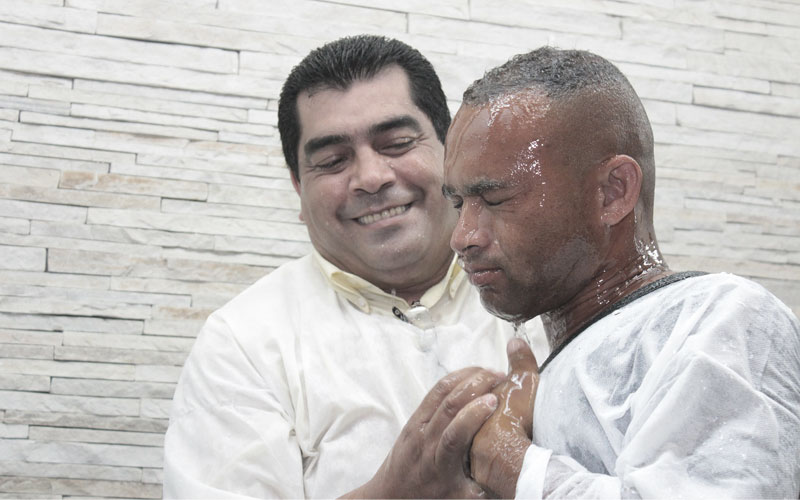
After rebuking his audience for their lack of spiritual growth, the Hebrew writer told them they needed to leave the elementary teachings – those things that made up the foundation of their faith – and press on to maturity (Hebrews 6:1). Included in this foundation was the “instruction about washings” or the “doctrine of baptisms” (Hebrews 6:2).
Continue Reading

Jerusalem’s Failings

Destruction of Jerusalem

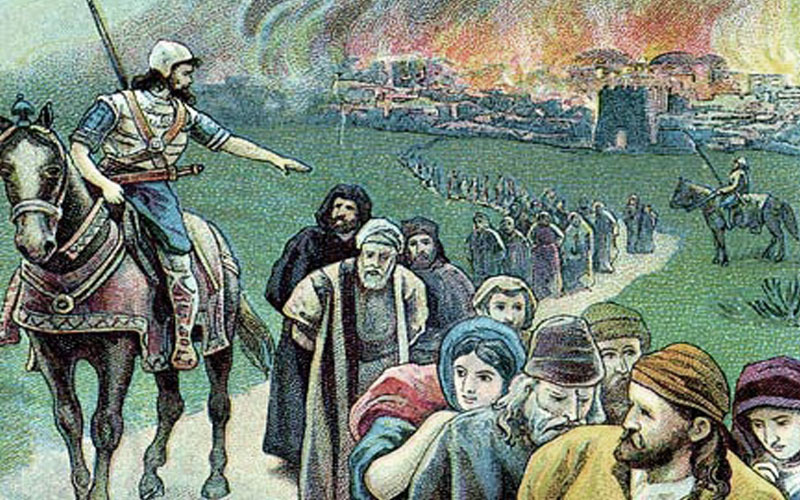
The prophet Zephaniah warned of the coming judgment against Jerusalem. It would be good for us to consider the reasons why judgment was coming. We can be punished, just as they were, for the same failings. So how did Jerusalem fail?

She heeded no voice, she accepted no instruction. She did not trust in the Lord, she did not draw near to her God” (Zephaniah 3:2).

Zephaniah gave four reasons why the people of Jerusalem were going to be punished. Let us consider each of these.
Continue Reading

A Worship “Experience”

Worship Experience

Many people in the religious world talk about the worship “experience.” What exactly is a worship experience? You will not find this term in the Bible. So what do people mean when they use it?

The worship experience has to do with the worship service in a local church. The experience refers to all the things involved in the service – the message, the music (typically performed by a band), the atmosphere (lighting, décor, etc.). All of these things are part of this “experience.” The things that one sees, hears, and feels make up the worship experience.
Continue Reading

What Must One Believe to Be Saved?

Standing by a Mountain Lake

He who has believed and has been baptized shall be saved; but he who has disbelieved shall be condemned” (Mark 16:16).

Brethren have debated the meaning of this verse with those in denominations for years. The disagreement is over baptism. Brethren teach that Jesus’ words indicate that one must be baptized (in addition to believing) to be saved. Those in denominations teach that since baptism is not mentioned in the second clause, then one must only believe to be saved.

It is clear that belief is essential for salvation. If one does not believe, he will be condemned. But what exactly is it that one must believe to be saved? I would suggest that once we find the answer to this in the Bible, it will also settle the debate on baptism. So what does the Bible teach that one must believe to be saved?
Continue Reading