Joshua Circumcised the People

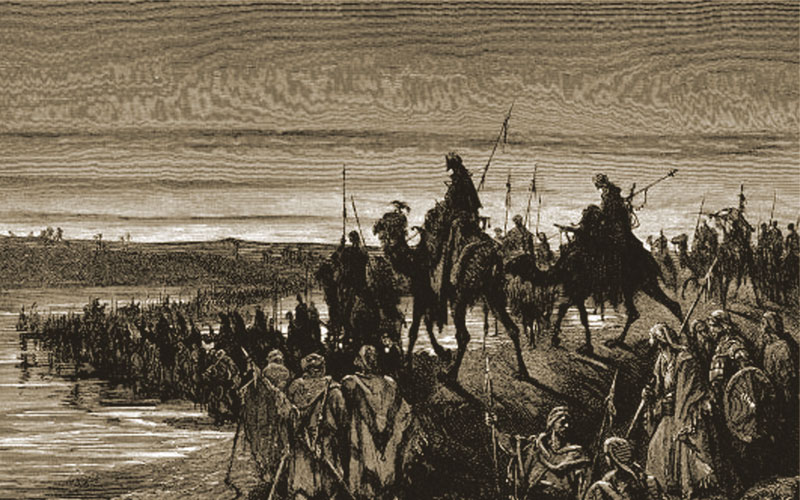
Crossing the Jordan River

At that time the Lord said to Joshua, ‘Make for yourself flint knives and circumcise again the sons of Israel the second time.’ So Joshua made himself flint knives and circumcised the sons of Israel at Gibeath-haaraloth.

This is the reason why Joshua circumcised them: all the people who came out of Egypt who were males, all the men of war, died in the wilderness along the way after they came out of Egypt. For all the people who came out were circumcised, but all the people who were born in the wilderness along the way as they came out of Egypt had not been circumcised. For the sons of Israel walked forty years in the wilderness, until all the nation, that is, the men of war who came out of Egypt, perished because they did not listen to the voice of the Lord, to whom the Lord had sworn that He would not let them see the land which the Lord had sworn to their fathers to give us, a land flowing with milk and honey. Their children whom He raised up in their place, Joshua circumcised; for they were uncircumcised, because they had not circumcised them along the way.

Now when they had finished circumcising all the nation, they remained in their places in the camp until they were healed. Then the Lord said to Joshua, ‘Today I have rolled away the reproach of Egypt from you.’ So the name of that place is called Gilgal to this day” (Joshua 5:2-9).

After crossing the Jordan river into the land of Canaan (Joshua 3), but before conquering the first city (Joshua 6), the Lord commanded Joshua to circumcise the sons of Israel. It is important that we understand the reasons why this was done because their physical circumcision is parallel to our spiritual circumcision. Let us consider some lessons that we can learn from this account.
Continue Reading

The Psalm of the Word (Introduction)

The Psalm of the Word

The longest chapter in the Bible is Psalm 119. Its one hundred seventy-six verses are divided up into twenty-two eight-verse stanzas. The entire psalm focuses on a single theme – the word of God.

While the psalm covers a single theme, each of the twenty-two stanzas emphasizes something different about God’s word. As we study the psalm, we learn what the word of God is, what it gives us, and what it requires of us.

In our study of The Psalm of the Word, we will examine each stanza individually and see how it fits with the overall theme. As we do this, we will make application to our lives as Christians.
Continue Reading

The Song of Moses

Passage of the Jews through the Red Sea - Aivazovsky

After crossing the Red Sea and witnessing the destruction of the Egyptian army by the power of God, Moses and the Israelites sang praises to the Lord. The song recorded mentioned several reasons why the Lord is worthy of praise. As we consider these reasons, we should also recognize that God is worthy of praise for the same reasons today.

Let us briefly consider the reasons why Moses and the Israelites praised the Lord on this occasion.
Continue Reading

Sharing the Gospel with Theophilus

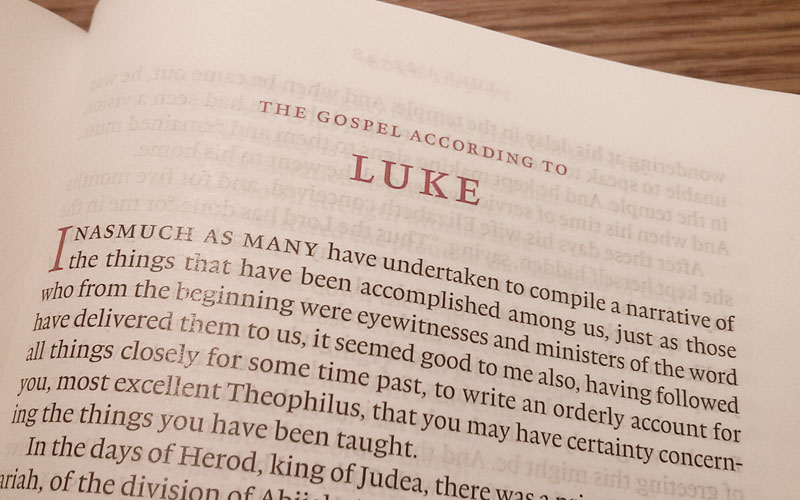
Luke

When Luke wrote his gospel account, he addressed it to an individual named Theophilus. If we look at the writer’s introduction to the book, we will see some important lessons that we can apply to our efforts to share the gospel with others today.

Inasmuch as many have undertaken to compile an account of the things accomplished among us, just as they were handed down to us by those who from the beginning were eyewitnesses and servants of the word, it seemed fitting for me as well, having investigated everything carefully from the beginning, to write it out for you in consecutive order, most excellent Theophilus; so that you may know the exact truth about the things you have been taught” (Luke 1:1-4).

Let us consider some points about Luke sharing the gospel with Theophilus.
Continue Reading

God’s Marriage Law

Wedding rings

There is much confusion and controversy today about marriage. Many believe they can marry whoever they want, define marriage however they want, and end it whenever they want. But God instituted marriage; therefore, His laws define and regulate it. Let us consider what the Bible teaches about God’s marriage law.

To begin, notice what Jesus taught on the subject:

Some Pharisees came up to Jesus, testing Him, and began to question Him whether it was lawful for a man to divorce a wife. And He answered and said to them, ‘What did Moses command you?’ They said, ‘Moses permitted a man to write a certificate of divorce and send her away.’ But Jesus said to them, ‘Because of your hardness of heart he wrote you this commandment. But from the beginning of creation, God made them male and female. For this reason a man shall leave his father and mother, and the two shall become one flesh; so they are no longer two, but one flesh. What therefore God has joined together, let no man separate.’

In the house the disciples began questioning Him about this again. And He said to them, ‘Whoever divorces his wife and marries another woman commits adultery against her; and if she herself divorces her husband and marries another man, she is committing adultery’” (Mark 10:2-12).

Continue Reading

“It Means What It Says”

Almon Beach Green (1808-1886) grew up in Norton, Ohio in the 19th century – a time in which many were beginning to question the conflicting teaching among the denominations. He determined to investigate the Scriptures for himself and began reading through the New Testament. As he read, he became more convinced that the Bible was inspired and not the product of mere men. When he reached Peter’s statement in Acts 2:38, he sought some help in understanding it.
Continue Reading

Who Is Affected By Sin?

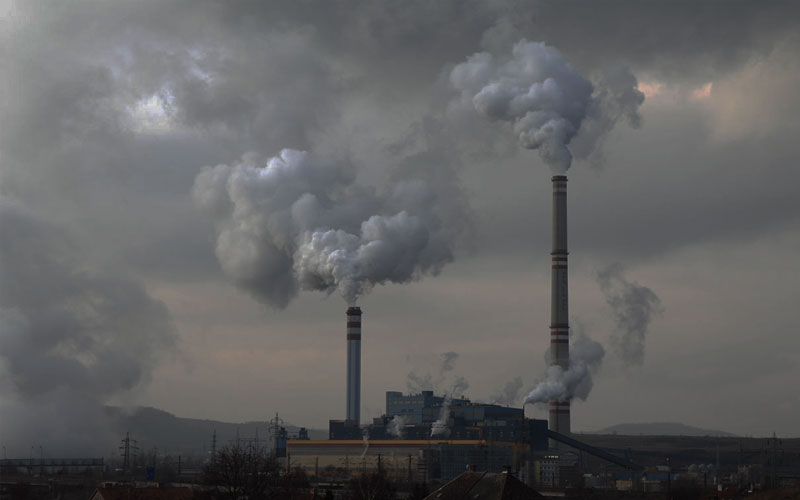
Pollution

Many people choose to ignore sin. Sadly, even some Christians do this. They ignore the sins of others because they see the sins as being between them and God and so they are of no concern. They often ignore their own sin believing that God’s grace will cover them. Yet sin cannot be ignored.

The earth is also polluted by its inhabitants, for they transgressed laws, violated statutes, broke the everlasting covenant” (Isaiah 24:5).

In the verse above, sin is described as pollution. This analogy is used because sin affects more than just the one who committed the sin. So in this article, I want us to consider this question: Who is affected by sin?
Continue Reading