“Lord, To Whom Shall We Go?”

Signpost

As a result of this many of His disciples withdrew and were not walking with Him anymore. So Jesus said to the twelve, ‘You do not want to go away also, do you?’ Simon Peter answered Him, ‘Lord, to whom shall we go? You have words of eternal life’” (John 6:66-68).

Public opinion can quickly change. This chapter in John’s gospel began with Jesus miraculously feeding five thousand people – and this number only included the men (John 6:1-13). As a result, the people concluded, “This is truly the Prophet who is to come into the world” (John 6:14). Believing this, they were ready “to come and take Him by force [and] make Him king” (John 6:15), even though this would require them to do battle against the powerful Roman army. But by the end of the chapter, all of them had left except for His twelve disciples (John 6:66-68).

Why did the crowd leave Jesus? There are at least two reasons for this:
Continue Reading

“How Will They Preach Unless They Are Sent?”

Paul sent from Antioch

After telling the Romans, “Whoever will call on the name of the Lord will be saved” (Romans 10:13), Paul proceeded to tell them of the critical role of preaching in salvation.

How then will they call on Him in whom they have not believed? How will they believe in Him whom they have not heard? And how will they hear without a preacher?” (Romans 10:14).

When Paul, the apostle who authored these words by inspiration of the Holy Spirit, needed to be saved, it was a preacher – Ananias – who was sent to tell him, “Now why do you delay? Get up and be baptized, and wash away your sins, calling on His name” (Acts 22:16). Jesus, despite appearing to Paul (then called Saul) on the road to Damascus (Acts 9:3-6), did not grant salvation to him there, nor did He speak from heaven to tell him what was required of him. Rather, Jesus said, “Get up and enter the city, and it will be told you what you must do” (Acts 9:6). Ananias was then sent to speak the Lord’s plan of salvation to Paul (Acts 9:10-12).
Continue Reading

Not Ashamed of the Gospel

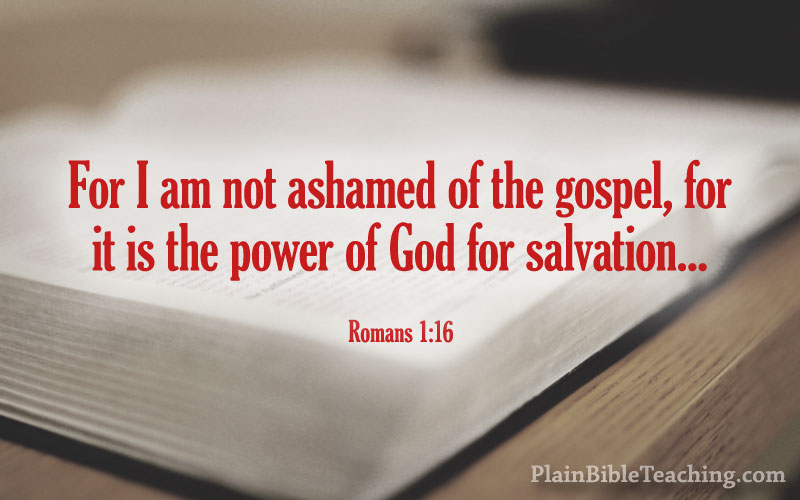
Romans 1:16

For I am not ashamed of the gospel, for it is the power of God for salvation to everyone who believes, to the Jew first and also to the Greek. For in it the righteousness of God is revealed from faith to faith; as it is written, ‘But the righteous man shall live by faith’” (Romans 1:16-17).

When Paul wrote to the saints in Rome, he said he was “not ashamed of the gospel” (Romans 1:16). Because of the confidence he had in Christ’s message, he was “eager to preach the gospel” (Romans 1:15) and do many other things in the cause of Christ.

We need to have the same confidence as Paul so that we can also say, “I am not ashamed of the gospel” (Romans 1:16). Can we say this? To answer that question, we need to consider what we would be willing to do with and for the gospel.
Continue Reading

If You Have Been Raised Up with Christ

Sun and clouds

The resurrection of Christ is one of the matters “of first importance” in the gospel (1 Corinthians 15:3-4). It provides us with hope beyond this life (1 Corinthians 15:17-22). We should always remember and give thanks for this event.

As Christ was raised, we must be “raised up with [Him]” (Colossians 3:1). When Paul wrote the letter to the Colossians, he was writing to those who had been raised with Christ. He explained what this obligated them to do. Let us consider what our responsibility is after being “raised up with Christ.
Continue Reading

Bible Lessons for Times of Civil Unrest

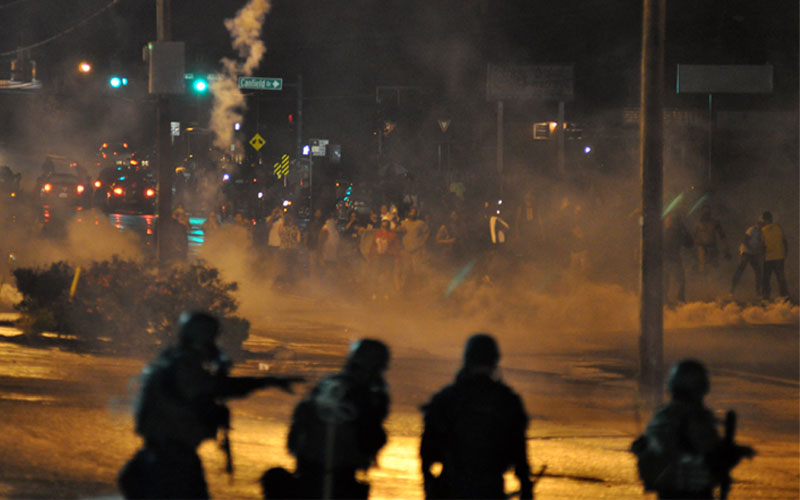
Ferguson Riots

Then all the city was provoked, and the people rushed together, and taking hold of Paul they dragged him out of the temple, and immediately the doors were shut. While they were seeking to kill him, a report came up to the commander of the Roman cohort that all Jerusalem was in confusion. At once he took along some soldiers and centurions and ran down to them; and when they saw the commander and the soldiers, they stopped beating Paul. Then the commander came up and took hold of him, and ordered him to be bound with two chains; and he began asking who he was and what he had done. But among the crowd some were shouting one thing and some another, and when he could not find out the facts because of the uproar, he ordered him to be brought into the barracks. When he got to the stairs, he was carried by the soldiers because of the violence of the mob; for the multitude of the people kept following them, shouting, ‘Away with him!’” (Acts 21:30-36).

In the passage above, Luke recorded an episode of civil unrest in the city of Jerusalem. When we see news stories about protesting, rioting, and looting in major cities, we need to remember that this is nothing new (cf. Ecclesiastes 1:9). The unrest in Jerusalem was marked by violence, confusion, an increased military presence, and protests. In a similar situation in Philippi, there was also injustice on display as the authorities had Paul and Silas wrongly beaten and imprisoned (Acts 16:22-24, 37). We see the same things today during times of civil unrest.

These news stories of protesting, rioting, and looting in response to an act of injustice (real or perceived) by law enforcement happen much too frequently in our society. During such times of civil unrest, while specific details may vary in each situation, there are certain Biblical principles that we need to remember. Let us be reminded of some of these principles now.
Continue Reading

Joshua’s Challenge to the People

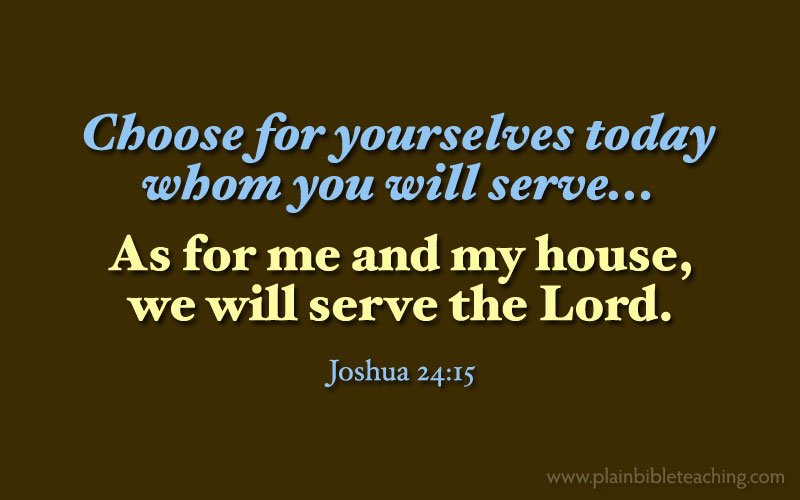
Joshua 24:15

Most of us probably remember Joshua’s statement: “As for me and my house, we will serve the Lord” (Joshua 24:15). His mind was already settled. No matter what the rest of the people decided when he challenged them, “Choose for yourselves today whom you will serve,” he was determined to follow God.

But what did serving the Lord include? What was he challenging the people to do? Notice Joshua’s entire statement:
Continue Reading

A Letter to Little Children

1 John

Seven times in John’s first epistle, he referred to his audience as “little children.” He was not writing to actual “little children.” He was writing to Christians. But Christians are to be like “little children” – innocent and in need of guidance and protection. We are also “children of God” (1 John 3:1). In this article, I want us to consider the seven instructions that John gave to the “little children” and see what we should also do today.
Continue Reading