God Does Great Things Which We Cannot Comprehend (1/13)

Thought from today’s Bible reading from Job 35-37.

God thunders with His voice wondrously, doing great things which we cannot comprehend” (Job 37:5).

As Elihu continued his response to Job, he affirmed God’s greatness and His place over all things. When you read through Job 37, you can see all the things mentioned by Elihu over which God has power. He focused primarily on the natural world – that which He created and which continues to be governed by the natural laws He established in the beginning.
Continue Reading

Hope in God (1/6)

Thought from today’s Bible reading from Job 10-13.

Though He slay me, I will hope in Him. Nevertheless I will argue my ways before Him” (Job 13:15).

Job was in a miserable state, unsure why he was suffering as he was. His friends had been telling him this was God’s doing, a divine punishment for some sin Job refused to acknowledge. With nowhere else to turn, Job wanted a chance to appeal directly to God.

But even with the suffering that God was allowing, though Job may not have understood it, he was determined to put his full faith and trust in God. He knew this was the only place of security. Any hope he had for the future rested in the Lord.
Continue Reading

Disputes with God (1/5)

Thought from today’s Bible reading from Job 6-9.

In truth I know that this is so; but how can a man be in the right before God? If one wished to dispute with Him, he could not answer Him once in a thousand times” (Job 9:2-3).

Far too often, man tries to argue with the Lord. It is not a direct confrontation like what may happen when two people argue over a matter, but it happens. Man believes he knows what is best, what is right, what is truth. Yet when we claim to be right, but are not conformed to His will, Paul says, “Let God be found true,” and “every man… a liar” (Romans 3:4). No matter how wise and discerning we believe we are, we cannot come close to even the “foolishness of God” (1 Corinthians 1:25). Having a thousand chances to prove ourselves right before Him will have the same result every time — God is always right. When we challenge Him, we are always wrong.
Continue Reading

Soldiers of the Victorious Lamb

It is an inescapable reality that we are involved in a war – not the type of war that nations wage for wealth, resources, or territory; but a spiritual war for the souls of men (2 Corinthians 10:3-5). While the final outcome of a physical war is always unknown, the result of this spiritual war is certain. Notice what the book of Revelation says about the victory of Christ:

These will wage war against the Lamb, and the Lamb will overcome them, because He is Lord of lords and King of kings, and those who are with Him are the called and chosen and faithful” (Revelation 17:14).

Jesus will lead His army to victory. There is no uncertainty to this. What is uncertain is which side we will join. Will we choose to be on the Lord’s side? Or will we choose to fight against Him?
Continue Reading

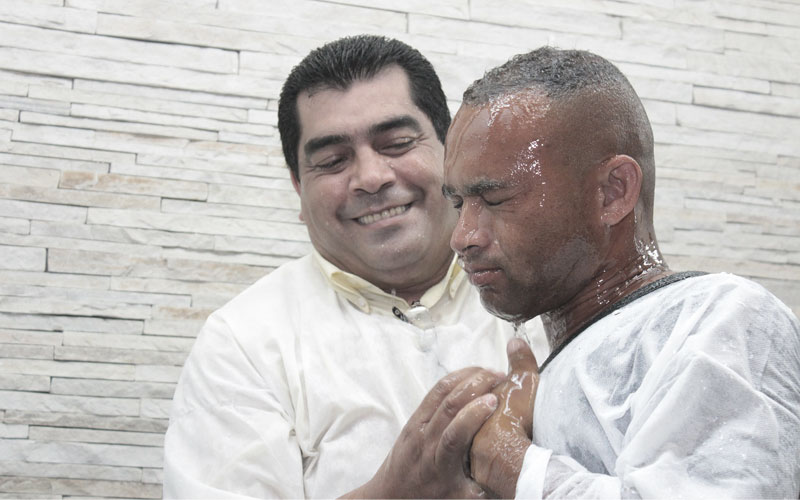
“What Prevents Me From Being Baptized?”

Standing by the Water

After leaving Samaria, Philip met a eunuch from Ethiopia traveling home from Jerusalem and reading from the prophet Isaiah (Acts 8:26-33). This man wanted to understand what he was reading so he asked Philip, “Please tell me, of whom does the prophet say this? Of himself or of someone else?” (Acts 8:34). At this point, “Philip opened his mouth, and beginning from this Scripture he preached Jesus to him” (Acts 8:35).

Every conversion, whether recorded in the New Testament or those that occur today, will begin with this. The story of Jesus is the heart of the gospel message (1 Corinthians 15:3-4). Jesus is the cornerstone of the foundation upon which we are built (Ephesians 2:19-21). Jesus is “the way, and the truth, and the life” (John 14:6). So Philip preached Jesus, just as we must do today.

The text implies the inclusion of baptism in Philip’s teaching about Jesus. The first thing we see after Luke recorded Philip preaching Jesus is this: “As they went along the road they came to some water; and the eunuch said, ‘Look! Water! What prevents me from being baptized?’” (Acts 8:36). This would be an odd question if Philip had not already been discussing baptism with the eunuch.
Continue Reading

Saved by Baptism Alone?

Baptism

The concept of salvation by faith alone is quite popular. Many have been deceived into thinking that all God requires of man is a simple mental affirmation of Jesus being the Savior. As long as one believes this, then he will be saved.

There are several passages that brethren use to refute the concept of salvation by faith alone. The clearest was written by James: “You see that a man is justified by works and not by faith alone” (James 2:24). If you get out your concordance and search for this phrase, you will find that this verse is the only one that says anything about “faith alone,” and it denies that we are saved on this basis.

The truth is that our salvation is attributed to many things – God’s grace (Ephesians 2:8), mercy (Titus 3:5), and love (John 3:16); the blood, death, and life of Christ (Romans 5:9-10); the gospel (Romans 1:16); our faith (John 8:24), repentance (Luke 13:3,5), confession (Romans 10:9-10), baptism (Mark 16:16), obedience (Hebrews 5:9), and more*. To claim that we are saved by faith alone is simply not compatible with Scripture.

One item in the list above that is vehemently attacked by sectarians is baptism. Despite the fact that Peter said, “Baptism now saves you” (1 Peter 3:21), many will adamantly deny that baptism is necessary for salvation. In light of this, truth teachers will often spend a good deal of time explaining the vital role of baptism in our salvation.
Continue Reading

How God Is Able to Establish You

Bible

As Paul concluded his epistle to the Romans, he praised God for His ability to establish them (Romans 16:25-27). This means He was able to make them strong, complete, and equipped to follow Him and to face the trials that exist in this life. Is God able to establish us today? If so, how?

Earlier in this letter, Paul expressed a desire to come to them in Rome: “For I long to see you so that I may impart some spiritual gift to you, that you may be established” (Romans 1:11). What were these spiritual gifts that Paul would impart to them in order to establish them? These miraculous gifts of the Spirit are enumerated in the first letter to Corinth and included such gifts as knowledge, prophecy, and the ability to speak in tongues (1 Corinthians 12:7-11). Do we need to have some miraculous spiritual gift in order to be established today? If so, we are in trouble because Paul later said that such miraculous spiritual gifts would be “done away” and replaced with the completed revelation in the word of God (1 Corinthians 13:8-10). This is what we need in order to be established today – the word of God. In our text, Paul described the word in several different ways, showing how it is able to establish us.
Continue Reading