Lessons for the Young (and the Not-So-Young)

Young Man Reading Bible

My son, give attention to my words; incline your ear to my sayings. Do not let them depart from your sight; keep them in the midst of your heart. For they are life to those who find them and health to all their body” (Proverbs 4:20-22).

In the book of Proverbs, the wise man sought to impart wisdom to his son. It is natural for one to want to help his children or other young people in this way. As we get older, we have lessons that have been shared with us by others, knowledge we have learned on our own, and wisdom we have gained from our experiences. The wise man of the book of Proverbs – as well as the others who wrote the words we can read in the Scriptures – had these words revealed to them by God (cf. 2 Timothy 3:16; 1 Corinthians 2:12-13). Therefore, the lessons we find in the Bible are particularly important.

So, what lessons are needed for young people today? We are going to briefly notice a few examples from the Scriptures. As was the case with the wise man’s words to his son in the book of Proverbs, these instructions are not just for young people. All of these instructions are good for both the young and the not-so-young. Let us consider seven lessons here.Continue Reading

Renewed Day by Day

Sunrise

Therefore we do not lose heart, but though our outer man is decaying, yet our inner man is being renewed day by day” (2 Corinthians 4:16).

Many see the start of a new year as a time of renewal – an opportunity to change the direction of their lives, to improve themselves in some way, and so on. The basic idea of this is good. However, as with all things, we need to think about it Biblically.

There are a few passages in the New Testament that talk about being renewed. When it is mentioned in the Bible, it is not tied to a certain day on the calendar. It is also not about just anything that might be new in our lives (new job, diet, exercise routine, etc.). Instead, the renewal discussed in the New Testament is always about improving our spiritual lives.

In this article, we will consider what the New Testament says about renewal – when it happens, what it means, and what the result of it is in our lives.Continue Reading

Onward and Upward (12.21.23)

Subscribe: Apple Podcasts | Google Podcasts | Spotify | RSS

Plain Bible Teaching Podcast

We’re nearing the end of the year, which has a lot of people looking for ways to improve their lives and make changes for the better. As Christians, we always need to be doing this – especially from a spiritual standpoint. When Paul wrote to the brethren in Philippi, he talked about pressing on toward the goal. What does that mean for us? We’re going to touch on some points in our episode today.Continue Reading

Pressing On Toward the Goal

Mountain Path

At the start of the new year, we focus a lot on goals we want to reach in the future. We may set goals regarding our health, work, or relationships. All of these may be good, but we need to make sure we never lose sight of what should be our primary goal. In writing about his goal to “attain to the resurrection from the dead” (Philippians 3:11), Paul said this:

Not that I have already obtained it or have already become perfect, but I press on so that I may lay hold of that for which also I was laid hold of by Christ Jesus. Brethren, I do not regard myself as having laid hold of it yet; but one thing I do: forgetting what lies behind and reaching forward to what lies ahead, I press on toward the goal for the prize of the upward call of God in Christ Jesus” (Philippians 3:12-14).

In these verses, Paul described three things that he was doing and that we also need to do as Christians. Let us consider them here.Continue Reading

“God Helps Those Who Help Themselves”

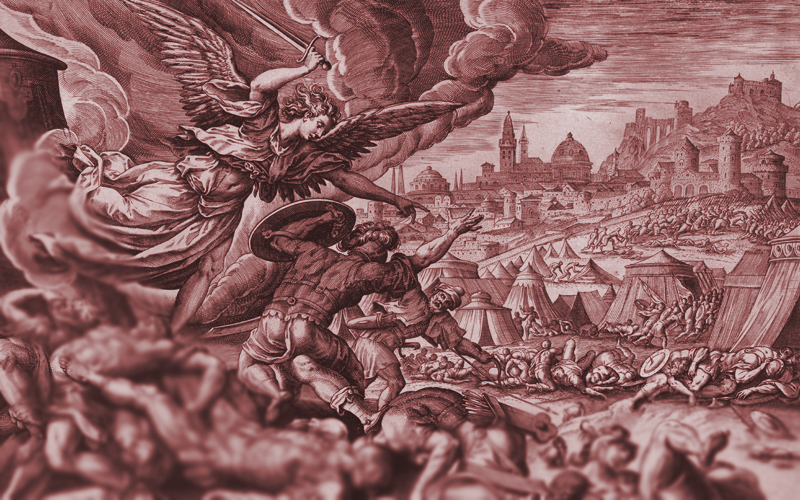
An angel defeats the Assyrian army

At least for those of us who live in the United States, we have all likely heard this phrase at some point: “God helps those who help themselves.” This statement is often attributed to Benjamin Franklin (1706-1790). It is also sometimes cited as an example of a phrase that people mistakenly think is in the Bible.

To be clear, this phrase is NOT in the Bible. However, the principle absolutely is. In order to take full advantage of what God offers to us, we must do what we are able to do.

We can see this concept when we read of the example of King Hezekiah and the actions he took when the Assyrian army invaded Judah and intended to make war with Jerusalem. Notice what the Scripture records:Continue Reading

Growing in Wisdom, Stature, and Favor

Jesus as a Boy in the Temple

The four gospels focus primarily on the public ministry of Jesus leading up to His crucifixion and resurrection – a period of approximately three years. In addition to this, Matthew and Luke include some information about His birth and infancy. Luke also briefly records one event in Jesus’ childhood – the time when He was “lost” in the temple at twelve years old (Luke 2:41-51).

We may be curious about what happened as Jesus grew up, but the Scriptures are mostly silent about this. However, the Holy Spirit did see fit to include a statement about the growth of Jesus:

And Jesus kept increasing in wisdom and stature, and in favor with God and men” (Luke 2:52).

This may seem somewhat obvious and, therefore, almost insignificant. Yet this statement was given for a reason. If Jesus grew in wisdom, stature, and favor, then it should be expected for us to do the same. In this article, we are going to consider how we can grow in each of these areas.Continue Reading

Daniel Sommer: Caring for Our Bodies Better Than We Do for Our Souls

Daniel Sommer: Caring for Our Bodies Better Than We Do for Our Souls

Daniel Sommer (1850-1940) lived ninety years and spent about seventy of those years preaching the gospel. This would be an amazing feat in our modern time; yet for one who was born in the mid-nineteenth century, his longevity was truly remarkable. However, while there are some who almost idolize their physical health to the neglect of their spiritual health, Sommer saw the folly of that. He recognized that the well-being of one’s soul was far more important than bodily nourishment or outward appearance. He made the following remark in one of his sermons:

“‘Man is what he eats.’ This is an old saying, and it is as true of man spiritually as it is of him physically. Man’s body is made up of that which he eats, or receives into his system by eating, drinking, and breathing. The same is true of him educationally, socially, politically, morally and spiritually. In view of this we do not wish our bodies to be imposed on, nor poisoned, with impure foods. But we are not, generally, so careful about food for our souls. Though, as a rule, we do not take the best care of our bodies, yet we care for them better than we do for our souls. We wash our hands and faces several times each day, and pay some attention to the hairs of our heads. As a rule, we are much more concerned about the appearance of our bodies before mankind than we are about the appearance of our souls before God. If we go into a picture gallery and have a photograph taken of our facial expression we may be so pleased with it that we will order an extra dozen photos made to hand around among our friends. But suppose we could have a picture taken of our souls, especially if we have not fed them well on the word of God. We certainly would not wish the extra dozen of such pictures made. But what avails a well-kept, well-nourished body, if our souls are in a starving condition?” (Plain Sermons, p. 107).

Continue Reading